Bill Gates Sounds Alarm on AI Risks After Trump Rages About 'Sick Conspiracy Going on Against AI'
Gates warns of AI risks as Trump rejects calls for new guardrails and claims there is a 'sick conspiracy' against the technology

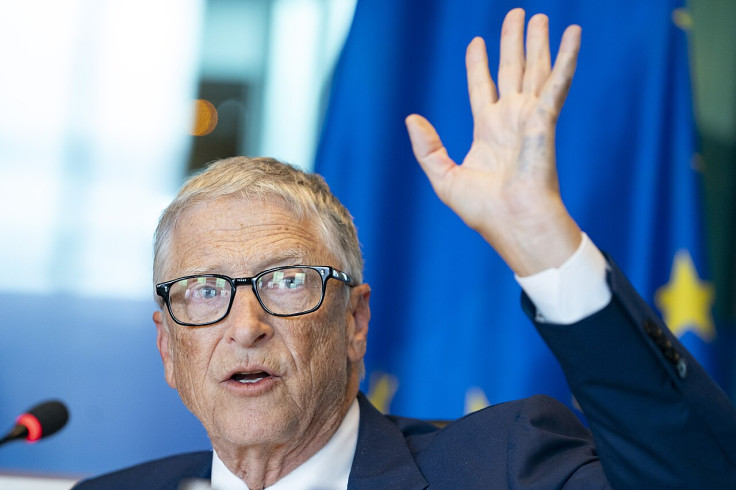
Days after President Donald Trump rejected calls for additional artificial intelligence guardrails, Microsoft co-founder and Gates Foundation chair Bill Gates warned that society may be underestimating AI risks.
On Truth Social, Trump wrote on 14 September that there was a 'SICK conspiracy going on against AI and Data Centres'. He argued that further restrictions could benefit China as the United States competes for leadership in the technology.
The exchange reflects a wider disagreement over how quickly AI should advance and how governments should respond to its risks.
Gates, in a CBS Mornings interview on 21 September 2026, backs wider access to the technology, but has also argued that its development requires stronger preparation for possible harms.
Bill Gates Warns Society Is Underestimating AI Risks
Gates said that many people still underestimate the pace of advances in large language models. 'Most of society is still not aware of how quickly it's moving,' he said.
He warned that AI could be misused for bioterrorism, financial attacks and other harmful activities. His concern was malicious uses of the technology, not a claim that such outcomes are inevitable.
Gates has also said society needs more time to prepare for the economic and social disruption that advanced AI could bring. In an essay published in August, he said he would probably support a credible global plan to slow AI advances.
He also acknowledged that such an agreement would be difficult to achieve. Economic and geopolitical incentives, Gates wrote, are pushing governments and companies towards continued rapid development.
Asked about Trump's position, Gates said the president was 'in the place that everybody else is in' when confronting an unfamiliar technological shift. He described the initial reaction as wondering whether AI resembles earlier technologies.
Gates added that leadership on AI could offer an opportunity for international cooperation. He said a leader who brings countries together on the issue would deserve positive recognition.
Trump has emphasised a different priority. In his 14 September post, he said his administration already had substantial criminal and regulatory authority over AI companies.
He also wrote that the only 'guardrails' AI needed were a 'STRONG AND SMART (High IQ!) PRESIDENT'. Trump framed the technology as an international competition and declared, 'WHOEVER WINS AI, WINS!'
The president also argued that opposition to AI and data centres could favour China. His comments placed maintaining the United States' technological lead at the centre of his position.
Bill Gates Backs AI Access Alongside His Warnings
Gates' warnings do not amount to a call to abandon artificial intelligence. The Gates Foundation is simultaneously committing substantial funding to broaden access to AI and AI-enabled services.
On 14 September, the foundation announced plans to spend at least $1 billion over two years. The money will support projects involving education, health care, agriculture and digital infrastructure.
About 40% of the funding is intended for education, with another 40% allocated to health care. Agriculture is expected to receive about 10%.
The remaining 10% is intended for infrastructure supporting more equitable AI, including datasets for languages that existing models do not adequately understand.
That language gap was also a focus of Gates' CBS appearance. He said AI could help patients in places with severe doctor shortages describe symptoms using their native languages.
'The quality of support for most of the world's languages is very, very poor,' Gates said. The foundation expanded that effort on 21 September, when 60 organisations announced a shared five-year goal to improve language access.
The initiative targets an estimated 3.4 billion people whose languages remain underrepresented in current AI models.
The coalition includes AI companies, researchers, governments, community organisations and philanthropic groups. Its stated aim is to make AI tools usable in people's own languages and voices while developing the data and infrastructure needed to support them.
© Copyright IBTimes 2026. All rights reserved.
- Recommended For You