

Hundreds of Heavy Crushers Deploy Across Gaza as UN Expert Accuses Israel of Erasing Atrocity Evidence
Gaza's ruins may hold the dead and the evidence of how they died, but a race to clear the rubble is raising urgent questions about what could be lost forever
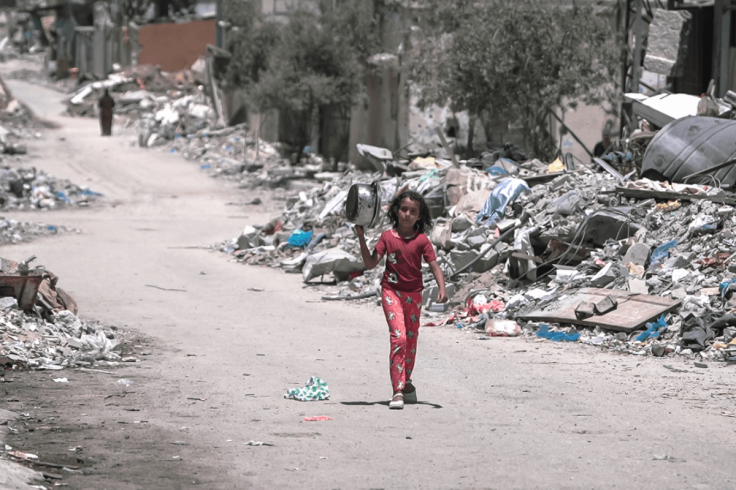
Gaza's rubble is at the centre of a new international controversy, with UN Special Rapporteur Francesca Albanese warning that large-scale clearance in areas under Israeli military control could destroy evidence of alleged atrocity crimes and hinder the recovery of human remains.
The warning comes as Gaza faces a grim contradiction. The territory needs millions of tonnes of debris removed before it can rebuild, yet recent recovery operations show that the ruins still contain the remains of people killed during the war.
the UN special rapporteur on the Palestinian territories, Francesca Albanese, warns large-scale removal of rubble in parts of Gaza under Israeli control risks removing evidence of Israeli “atrocity crimes”.
— Al Jazeera English (@AJEnglish) September 7, 2026
🔴 LIVE updates: https://t.co/rFxFCMZ0wc pic.twitter.com/xKpY9diKIk
A Mass Funeral From the Ruins
On September 6, Palestinians in Gaza City buried the remains of around 100 people recovered from destroyed homes in the Zeitoun neighbourhood. Most were women and children, according to Palestinian reports, with around 60 children among those recovered.
The remains had been retrieved from buildings destroyed during the war, after recovery crews and families spent weeks working through the ruins. The International Committee of the Red Cross assisted the recovery operation, while heavy equipment was used to clear collapsed structures.
The discovery followed another major recovery operation. On August 4, the remains of 112 members of the Abu Shariah and al-Hasayna families were buried after being recovered from rubble in Gaza City's Sabra neighbourhood, months after they were killed in a November 2023 strike.
These recoveries show why the debate over Gaza rubble removal is about far more than construction waste.
Israel's removal of rubble in areas of #Gaza cannot become a way to erase traces of atrocity crimes, warns @FranceskAlbs. “Gaza’s rubble contains human remains & evidence relevant to investigations of alleged international crimes, including genocide.” https://t.co/GvX1xjykw9 pic.twitter.com/epc7ogBhCn
— UN Special Procedures (@UN_SPExperts) September 7, 2026
Why the Rubble Could Be Evidence
Albanese said Gaza's debris may contain human remains and physical material relevant to investigations into alleged war crimes, crimes against humanity and genocide.
She described the rubble as 'part of a crime scene, a graveyard, and the material record' of the conflict, arguing that remains should first be recovered and potential evidence systematically documented with the involvement of international investigators.
That creates a serious forensic problem. If material from different sites is crushed, mixed or relocated before it is documented, investigators could face greater difficulty establishing its original location and relevance to a particular incident.
Albanese has therefore called for proper documentation and an unbroken chain of custody before full-scale clearance proceeds.
A Race Between Recovery and Reconstruction
The scale of the challenge is enormous. The UN estimates that about 61 million tonnes of debris have accumulated across Gaza, with clearance expected to take years.
At the same time, Palestinian Civil Defence officials say thousands of people may still be buried beneath destroyed buildings. Recent recovery efforts have already demonstrated that bodies can remain trapped for years.
This creates the central dilemma: Gaza needs the rubble removed to restore roads, homes and infrastructure, but some of that same material may need to be examined before it disappears.
The International Law Question
The dispute also has a significant legal dimension.
On January 26, 2024, the International Court of Justice ordered provisional measures in South Africa v. Israel, the case concerning alleged violations of the Genocide Convention. Among those measures, the court ordered Israel to take effective measures to prevent the destruction and ensure the preservation of evidence related to allegations under the convention.
That order does not establish that current rubble clearance is destroying evidence, nor does it amount to a final finding that Israel committed genocide.
It does, however, explain why the preservation of physical evidence is legally significant while allegations concerning the conduct of the war remain subject to international proceedings.
The Companies Under Scrutiny
Albanese has also warned about the role of companies whose machinery is used in Gaza.
Her reporting has identified Caterpillar, HD Hyundai, Doosan and Volvo among manufacturers whose equipment has been used in the destruction of Palestinian property. In her latest warning, she said companies involved in debris removal could potentially incur international criminal responsibility if their activities destroy evidence of international crimes.
That is a warning about potential liability, not a finding that those companies have committed crimes.
Who Controls the Cleanup?
Albanese has called for debris removal to operate under a plan designed by Palestinians and backed by actors trusted by Palestinians, with evidence preserved before widespread clearance.
Israel has previously rejected Albanese's criticism. It did not immediately respond to Reuters' request for comment on her latest warning.
The stakes are therefore larger than the machinery moving through Gaza.
Every excavator clearing a collapsed building is part of a reconstruction effort, but recent recoveries show that some ruins are still graves and potentially contain material relevant to investigations.
Gaza must eventually clear its rubble. The question is whether the evidence buried inside it will survive long enough to be properly recovered, documented, and investigated.
© Copyright IBTimes 2026. All rights reserved.