

Scientists Reveal Why Earth's Biggest Prehistoric Discoveries May Be Hiding in Younger Rocks
Young Cenozoic deposits, including Middle Miocene rocks, may offer better discovery opportunities than well-studied older formations
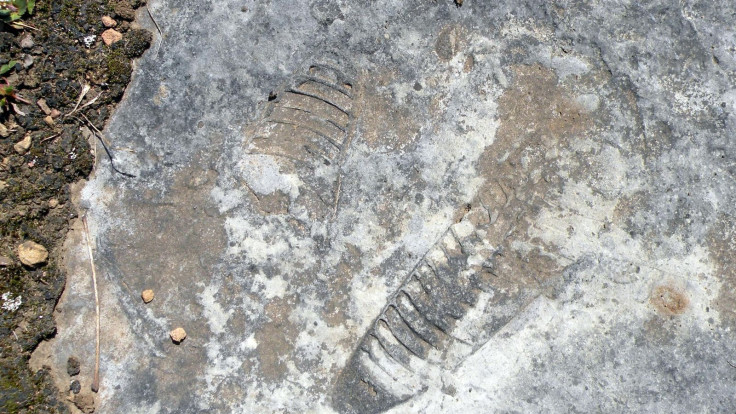
Scientists searching for evidence of prehistoric marine life may find some of their most promising opportunities in relatively young geological deposits, rather than exclusively in ancient rock formations. A new global analysis of the fossil record has identified geographical gaps where previously undocumented marine fossils could still be discovered.
The study, published in Science Advances, was conducted by Thomas A. Neubauer of the Bavarian State Collections of Natural History in Germany and Mathias Harzhauser of the Natural History Museum in Vienna.
The two researchers analysed the geographical distribution of recorded fossil collections containing animals from shallow-marine environments over approximately 540 million years, identifying regions where the available fossil record remains incomplete.
Mapping 540 Million Years of Marine Data
To build their global map, Neubauer and Harzhauser examined fossil records from animals that inhabited shallow-water marine environments over the past 540 million years.
The researchers used the Paleobiology Database (PBDB), a freely accessible repository containing published and digitally recorded fossil information, to establish where marine animal fossils have previously been documented.
They also tracked how fossil sampling developed over decades and centuries, measuring how frequently investigations in specific regions produced new scientific information.
By cross-referencing these historical records with geological data from the Macrostrat database, the pair identified accessible surface rock formations capable of preserving marine life.
This approach enabled the scientists to identify geographical areas where potentially fossil-bearing geological formations remain accessible today but have received comparatively little investigation, leaving gaps in the documented fossil record.
Why Younger Cenozoic Rocks Hold Untapped Potential
The findings suggest that the oldest geological eras do not necessarily provide the best chances for uncovering unknown prehistoric life.
Although the Palaeozoic and Mesozoic eras span hundreds of millions of years and have produced major fossil discoveries, Neubauer and Harzhauser found that many of their shallow-marine deposits have already been studied extensively.
In contrast, the Cenozoic Era, which began roughly 66 million years ago, offers stronger opportunities to expand the fossil record. Specific intervals, such as the Middle Miocene around 15 million years ago, show comparatively low densities of documented finds despite having accessible rock formations.
Because fossilisation is rare and surface rocks remain underexplored in many regions, younger shallow-marine deposits may contain substantial amounts of previously undocumented fossil information.
A Guide for Future Expeditions
While the map does not guarantee that scientists will uncover new species, it offers a targeted approach to fieldwork. Neubauer stated that because expanding the fossil record is challenging and progresses slowly, the work can help researchers worldwide to focus their efforts specifically on still largely unexplored areas.
'We provide a valuable guide for planning future projects and excavation campaigns,' he said. Neubauer also said in a statement released by the Bavarian State Collections of Natural History, 'The same applies to the examination of existing museum collections awaiting scientific analysis. Through sensible prioritisation, we can fill gaps in the fossil record strategically.'
The researchers hope their findings will help palaeontologists spend less time searching in well-studied locations and focus instead on places with the greatest potential to reveal new information.
© Copyright IBTimes 2026. All rights reserved.