

Harvard Professor Avi Loeb Explains How a New Passive Radar System Will Gather High-Resolution UAP Data
From unexplained sightings to scientific evidence, Avi Loeb hopes a new observatory can bring elusive objects into clearer focus
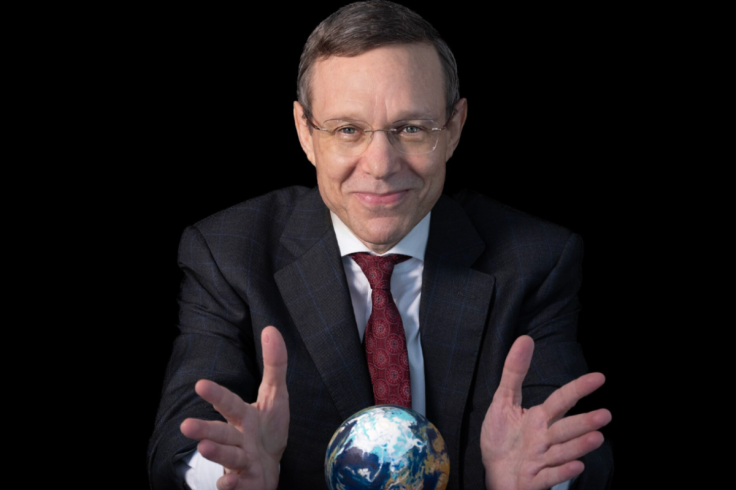
Harvard astrophysicist Avi Loeb affirmed a proposed passive radar system at a planned Galileo Project observatory in Ithaca, New York, could guide a metre-class telescope towards unidentified objects.
The telescope is intended to capture high-resolution images and analyse their light, as renewed attention falls on reports from military pilots that President Donald Trump discussed.
The observatory concept predates Trump's remarks. Loeb outlined the design in September and described the Ithaca site as the Galileo Project's fourth observatory, planned for astronomer Carl Sagan's former residence.
In an October interview, he said the observatory was funded, but did not identify its backers or disclose a budget.
Avi Loeb Says Pilot Reports Need Scientific Scrutiny
During an 8 November interview with Ross Douthat on CBS's 60 Minutes, Trump recalled meetings with US Air Force pilots during his first term and part of his second.
He said they had described unusual encounters, including an object that allegedly passed an F-22 at three times the aircraft's speed. Trump described it as round and said, 'I'm not too much of a believer'.
Trump provided no flight data, imagery or independently assessed measurements to substantiate the account during the interview. He did not identify the pilots or say when or where the reported encounter took place.
Speaking to NewsNation's Jesse Weber, Loeb said he had also spoken with pilots and considered their accounts credible but puzzling. He did not establish whether they were the same pilots Trump had met.
Loeb, who chairs the UAP Science Advisory Council, said members expected to examine evidence presented by aviators. He announced no findings from that anticipated review.
He also said pilots had reported seeing no visible signs of propulsion, an account that does not establish how the objects moved or what powered them.
How Avi Loeb's Passive Radar System Would Work
Loeb said the proposed system would scan the sky and direct a large telescope towards an object of interest. Passive radar does not transmit its own signal. Instead, it detects reflections of existing radio, television or satellite transmissions.
Once radar identifies a target, the telescope would turn towards its position and attempt to capture a high-resolution image. Loeb described the telescope as metre-sized and said it would also collect spectral data. Analysing the light could provide clues about an object's material composition, although results would depend on the quality of the observation.
Loeb said his team hoped to install the system within a year. That is a target, not a confirmed completion date. He has also discussed the possibility of deploying similar equipment elsewhere with Pentagon support, but did not announce an approved deployment beyond Ithaca.

Avi Loeb's Ithaca Observatory Would Join Three Others
The Galileo Project already has three observatories, in Massachusetts, Pennsylvania and Nevada, according to Loeb's September account. He has described the Ithaca design as distinct, with a telescope intended to resolve UAP at high resolution and record their spectra.
The proposal is part of a broader effort to replace uncertain visual accounts with measurements that can be independently examined. The Pentagon's All-domain Anomaly Resolution Office says most UAP reports are eventually attributed to ordinary objects such as balloons, satellites and birds. It also says it has found no evidence of extraterrestrial beings or technology.
Whether the Ithaca system can deliver the images and measurements Loeb hopes for will only become clear once it is installed, tested and producing data.
© Copyright IBTimes 2026. All rights reserved.