ICE's Secret Subpoenas Bypass Judges and Could Expose Journalists' Sources, Press Freedom Group Warns
The records were obtained through a 1930 customs-law summons after federal prosecutors withdrew warrant requests seeking information about Georgia Fort and Don Lemon

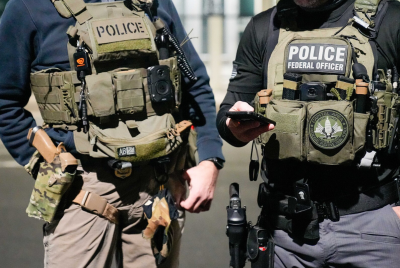
Investigators from Homeland Security Investigations (HSI), a component of US Immigration and Customs Enforcement (ICE), obtained six months of phone records belonging to Minnesota journalist Georgia Fort without securing a judge-approved search warrant.
T-Mobile produced the records without notifying Fort or giving her an opportunity to challenge the demand, according to the Freedom of the Press Foundation.
Fort and former CNN anchor Don Lemon have disclosed that the government sought their YouTube account information and phone records. It also asked Google and their phone companies to keep the demands secret.
Both journalists face federal charges connected to their coverage of a January protest at a church in St Paul. The requests came from HSI using an administrative subpoena known as a Section 1509 summons.
A 1930 Customs Law Aimed at Import Duties
The authority comes from 19 U.S.C. § 1509, a provision of the Tariff Act of 1930 that allows customs officials to examine records and issue summonses for records and testimony in specified customs investigations. The law covers matters including determining the correctness of an entry and liability for duties, fees and taxes.
Unlike a search warrant, a Section 1509 summons does not require prior approval from a judge. The Freedom of the Press Foundation says administrative subpoenas also do not require probable cause before they are issued.
The summons is not self-enforcing. If a recipient refuses to comply, the government generally must seek judicial enforcement, and the court can order compliance after notice and a hearing. The Freedom of the Press Foundation also says that a request from DHS to keep a summons secret does not, by itself, legally prohibit disclosure.
The government shouldn’t be able to secretly obtain journalists’ phone records without court approval.
— Freedom of the Press Foundation (@FreedomofPress) September 28, 2026
But DHS is abusing its authority to do just that.
Read more about what Congress, journalists, and tech companies can do about it:https://t.co/YrqsF327Bm
Judge Rejected Warrants Before the Summons
The sequence of events has drawn attention from press-freedom advocates. A federal magistrate rejected the government's initial warrant application seeking information from Google, after which prosecutors renewed the application.
Magistrate Judge John Docherty rejected the initial application on 25 February. Prosecutors submitted a renewed application on 6 March, but Docherty rejected the revised applications under the Privacy Protection Act before the government withdrew its warrant requests by 26 March.
The government subsequently pursued the information through the Section 1509 summons process. On 3 April, an HSI agent issued Google with a Section 1509 summons, which Google rejected on 7 April, saying it did not produce the requested information.
T-Mobile took a different course. The carrier produced six months of Fort's call records without notifying her or giving her an opportunity to challenge the demand, according to the Freedom of the Press Foundation.
What Call Records Can Reveal About Sources
Investigators do not need to hear a conversation to learn about a journalist's communications. The foundation says call records can help identify confidential sources by showing who a journalist contacted and when.
The use of Section 1509 summonses against journalists is not new. The foundation cites a 2018 case involving immigration law journal editor Daniel Kowalski, when the government sought information about a source of a leaked DHS memo, as well as a similar demand sent to BuzzFeed over reporting on plans to expand fast-track deportations. Both demands were eventually dropped.
The Trump admin used secret subpoenas to snoop on journalists’ phone records.
— Freedom of the Press Foundation (@FreedomofPress) September 26, 2026
But a new bill could make sure this never happens again. It requires a judge’s approval for phone records and bars gov’t subpoenas to tech companies to spy on Americans.
Watch @trevortimm explain: pic.twitter.com/OltOLGO1SK
Bipartisan Bill Would Require Judicial Review
Lawmakers from both parties introduced companion versions of the Subpoena Abuse Prevention Act on 20 and 21 May. The Senate bill was introduced by Senators Ron Wyden and Cynthia Lummis, while the House version was introduced by Representatives Adriano Espaillat, Thomas Massie, Robin Kelly and Eric Burlison.
The bill would require the government to obtain judicial approval before acquiring phone records. It would also restrict subpoenas used to monitor speech or other constitutionally protected activity and require subpoena recipients to be told that they may consult lawyers and, unless prohibited by a court, notify customers.
Caitlin Vogus, senior adviser at the Freedom of the Press Foundation, said the legislation would provide 'much-needed guardrails' for Americans' phone records.
The Fort case raises a legal question over whether a customs summons authority created for trade enforcement can be used to obtain a journalist's phone records after prosecutors' separate applications for related YouTube information were rejected.
For now, the dispute also highlights the difference between a court-approved warrant and an administrative summons, and the role companies play when they receive such demands.
© Copyright IBTimes 2026. All rights reserved.
- Recommended For You