Trump Invites Xi Dinner Guests Behind a Curtain for a 'Special Treat' and Reveals an Unfinished Ballroom
The unusual invitation came as the unfinished project faces legal challenges, disputed cost estimates and debate over its public and private funding
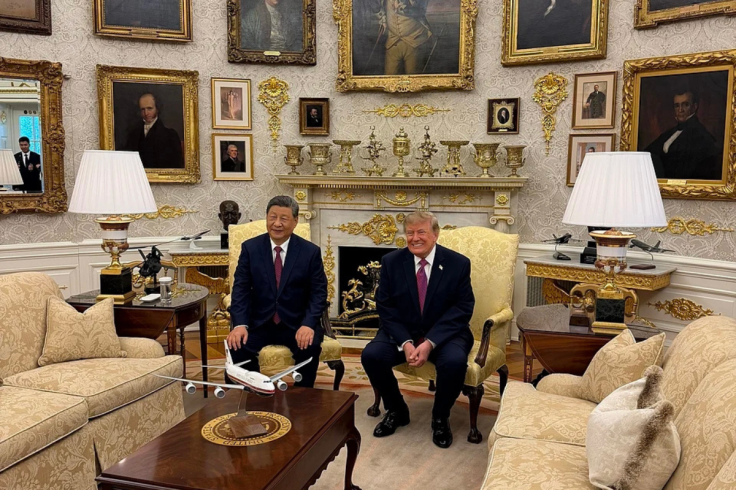
Five minutes into his toast to the Chinese President Xi Jinping, Donald Trump stopped himself, said he had to do it, and invited a room of Cabinet officials, Supreme Court justices and technology executives to come and look at his building site.
The offer came at the state dinner for Xi in the East Room of the White House on Thursday 24 September 2026, the second night of a three-day visit. The White House confirmed the dinner was held in the East Room and attended by official delegations, business leaders and government officials.
Behind a curtain at the back of the room lay the construction of the new White House ballroom, a project Trump has made a personal preoccupation and which the Supreme Court allowed to continue only last month, over the dissent of the chief justice.
He told his guests they would be the first people to set foot on the site.
The Detour in the Toast
Trump signalled the departure before he made it. 'And if I could go off script just for a second, I just wanna say, I had to do it. I had to do it,' he told the room, waiting for the translation to be read aloud before continuing.
The invitation followed. 'As a special treat in honour of President Xi and Madame Peng, I'd like to invite everyone in the room to visit through that beautiful curtain in the back,' he said, describing the door as lit up and beautiful. The ballroom was, by his estimate, a year from completion, and his guests would see something he thought they would really love.
🇺🇸🇨🇳 President Trump went "off script" to say the White House ballroom is being built “in honor of President Xi" pic.twitter.com/TfNkbFoYAX
— HOT SPOT (@HotSpotHotSpot) September 25, 2026
He then made the logistics plain. Guests would be the first to step foot on the site, he said, and they could do it after the entertainment finished. Anybody who wanted to walk into a construction site that was nice and clean and sparkling, he told them, would be doing him an honour.
The rest of the evening followed the usual choreography. Trump presented Xi with a bald eagle sculpture, which he said he and Melania Trump had collaborated on personally. He talks about the ballroom constantly, weighing in on design decisions and framing it as part of his legacy.
The Room He Was Speaking To
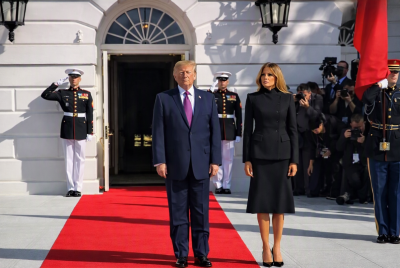
The guest list made the aside unusually well attended. First lady Melania Trump, who led preparations for the three-course menu, sat among a group that included Vice President JD Vance and Secretary of State Marco Rubio, alongside Elon Musk, Mark Zuckerberg, Sam Altman, and Jeff Bezos with his wife Lauren Sánchez Bezos.
Three Supreme Court justices were also there, and their presence carried an edge. Chief Justice John Roberts attended with his wife, having dissented from the court's decision of 31 August allowing construction to continue and wrote that the project was likely unlawful.
Justices Amy Coney Barrett and Brett Kavanaugh, who were in the five-vote majority, were at the dinner as Trump invited the guests to tour the site.
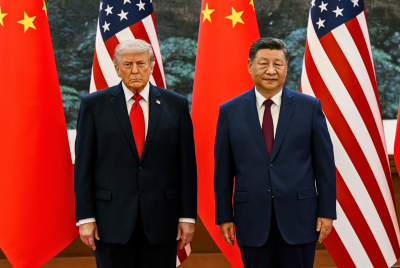
The leaders had spent the visit discussing trade practices, artificial intelligence and strategic stability, and Trump had earlier spoken of what he called a truly great friendship between the two countries.
The Project Behind the Curtain
The ballroom is not a modest addition. The project as announced runs to about 90,000 square feet with seating for roughly 650 people, although Trump has since cited higher capacity figures in public remarks.
The cost is contested. An internal contractor estimate reported by the Washington Post put the project at about £454 million ($600 million), higher than figures the White House had previously cited publicly. The £454 million ($600 million) figure is an approximate conversion based on the 24 September 2026 exchange rate.
Who pays is contested too. The White House has repeatedly said private donations will fund the ballroom and has argued the work is necessary for security, while the contractor documents reported by the Post projected roughly £221 million ($293 million) from private sources and £232 million ($307 million) from taxpayer-funded sources, including the Secret Service, the White House Military Office and the Executive Residence. The administration says public money covers security-related work rather than the ballroom itself.
The project has faced a series of legal challenges. On 31 August the Supreme Court allowed construction to continue while the case proceeded, in a 5-4 decision that turned on whether the challengers could establish standing. The majority said expressly that it was not deciding the project's ultimate legality. Roberts dissented alongside Justices Sotomayor, Kagan and Jackson.
The ballroom also featured prominently in Trump's remarks during a visit otherwise dominated by trade, technology and the state of relations between the two countries. Some social media users questioned the decision to invite a foreign delegation onto the construction site.
The invitation turned a state dinner toast into an impromptu tour, putting the unfinished ballroom directly in front of the foreign leader and the senior American officials gathered for the evening.
© Copyright IBTimes 2026. All rights reserved.
- Recommended For You