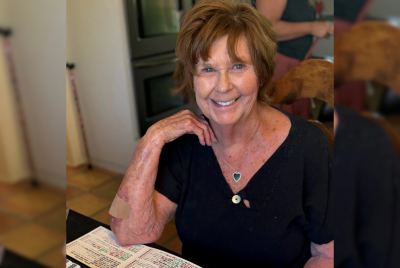
'God Has Done a Work in My Life': Grandmother Who Lost Two Grandsons in Bombing Shares Testimony
Kathy Sanders, who lost two grandsons in the 1995 Oklahoma City bombing, files a petition to unlock decades-old forensic evidence
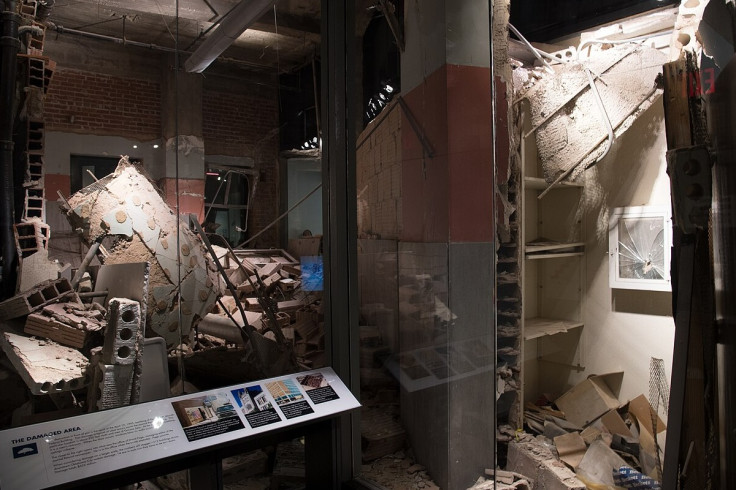
Kathy Sanders has taken her decades-long pursuit of truth to the courts, filing a legal petition to compel the Oklahoma State Medical Examiner's Office to release records and retained tissue linked to an unidentified lower left leg recovered from the 1995 city bombing site.
Appearing on Tucker Carlson's programme, Sanders detailed her ongoing efforts to identify the specimen known as P-71, a persistent forensic mystery from the Alfred P. Murrah Federal Building bombing that claimed 168 lives, including her two young grandsons.
Sanders spoke about her faith and decades-long search for answers on Carlson's programme on 4 September, saying that 'God has done a work in my life' as she pursues court action.
While federal investigators long maintained that Timothy McVeigh and Terry Nichols acted alone as co-conspirators, Sanders' legal action seeks to leverage modern advancements in DNA technology and forensic genetic genealogy.
Backed by correspondence from incarcerated co-conspirator Nichols, who claimed genetic testing would break the case wide open, the petition highlights lingering questions over official investigative conclusions.
As the Oklahoma County District Court reviews the request for medical records and preserved tissue samples, the high-profile case brings renewed public scrutiny to one of the darkest chapters in American domestic terrorism history.
A Grandmother's Faith and the OKC Bombing
On 19 April 1995, a truck bomb exploded outside the Federal Building in downtown Oklahoma City, killing 168 people. Among the dead were Sanders' grandsons, three-year-old Chase Dalton Smith and two-year-old Colton Wade Smith, who were at the America's Kids Child Development Center in the building.
Sanders has said she became so overwhelmed by grief that she contemplated suicide, while she said her husband, Glenn Wilburn, remained angry with God and with Timothy McVeigh, who was convicted in connection with the bombing and executed in 2001.
Sanders said she began to turn a corner after hearing television host John Walsh tell bombing survivors that they would grieve deeply but survive. 'I said, Lord, you're going to have to help me. I can't live like this,' she recalled.
She described forgiveness not as a single moment but as a process that started when she began praying for McVeigh and for Terry Nichols, McVeigh's convicted co-conspirator.
After Wilburn died at 47, before McVeigh's execution, Sanders said she attended one of Nichols' trials and met Nichols' mother in a courthouse corridor. The two comforted each other and later became friends, an unlikely bond that grew as Sanders began corresponding with Nichols by letter and phone.
Nichols told her his family had rarely attended church except for weddings, funerals or a free meal, but that after his arrest he read a Bible left in his cell, listened to a radio preacher and invited Jesus into his life.
'I know a lot about jailhouse religion,' Sanders said. 'I'm nobody's judge. I chose to believe him.' She acknowledged that Nichols did not deserve mercy, adding, 'If he deserved it, it wouldn't be mercy.'
That conviction was tested in a quietly seismic moment when Nichols' son, Josh, then 16, came to stay with Sanders for four days, she said. She said Josh had been nicknamed 'Bomber' at school, beaten after classes and eventually left school. On his last day, he asked her to take him to the memorial.
There, Sanders stood with her arm around him at chairs 60 and 61, the empty chairs that represent her grandsons. She said the moment represented the 'transformation' she believed her faith had produced, and that her decision to forgive 'changed the ending' to her story.
Unidentified Leg P‑71 and the OKC Bombing Investigation
For nearly three decades, Sanders has pursued her own inquiry into the bombing and the official investigation, focusing on a lower left leg designated P‑71 that was recovered from the rubble but has never been conclusively identified.
In 2015, the Oklahoma State Medical Examiner's Office confirmed that DNA testing had been conducted on the leg and that the resulting profile had not matched known victims. The testing had been performed by a private laboratory in 1997, according to reports. The testing came to light in December 2015, when KOKH aired reports on the DNA results.
At McVeigh's trial, his defence attorney, Stephen Jones, argued that the leg could be evidence of a third participant, while investigators have maintained that McVeigh and Nichols were the only people directly involved in carrying out the bombing.
After the medical examiner's office confirmed the existence of the profile, officials said the matter remained an 'open and active investigation' and the evidence was provided to the FBI. The FBI did not comment to media outlets on the matter.
Sanders is not the first survivor to seek access to the P‑71 DNA profile. In 2018, Jane Graham, who was on the ninth floor of the Murrah Building during the attack, requested access to the P‑71 DNA profile.
The Oklahoma Attorney General's Office denied the request, saying she had not shown that she was an immediate relative of the person represented by the remains and was not involved in legal proceedings concerning the profile, according to KOKH.
In correspondence with Sanders, Nichols wrote that DNA testing would 'break the case wide open,' referring to the unidentified leg. On Aug. 21, Sanders filed a petition in Oklahoma County District Court seeking an order compelling the medical examiner's office to release records concerning the specimen's recovery, testing and disposition.
The filing said previous requests under the Oklahoma Open Records Act had been denied under state statutes that, according to the filing, restrict the release of the records absent a court order.
In a June 25 letter included with the filing, the Oklahoma Attorney General's Office said P‑71 'has not been identified' and 'remains an open case and investigation.'
Dr Eric Pfeifer, the state's chief medical examiner, told reporters that the FBI had tested a sample years ago but that 'nothing came back conclusively.'
He added that the remaining tissue is preserved in formalin, is about the size of a nickel and could potentially be damaged or destroyed by further testing. 'Our position would be, wait until the technology gets better, and it's getting better every year,' he said.
Sanders, now 73, says many of the investigators she has worked with over the years have died, and she hopes to learn whose leg it was during her lifetime. Sanders believes advances in DNA technology, including forensic genetic genealogy, may offer another avenue for identifying the remains.
There is no public evidence indicating that P‑71 belonged to another perpetrator, and its identity remains unresolved. Some claims concerning the identity and provenance of P‑71 remain disputed or unconfirmed.
As the judiciary weighs the petition, the enduring mystery of specimen P-71 remains a poignant reminder of unanswered questions from 1995.
© Copyright IBTimes 2026. All rights reserved.
- Recommended For You