

'Very Strange Behaviour': Donald Trump's Mouth and Arm Movements Sparks Health Fears in New White House Video
A psychologist's unverified interpretation has renewed discussion of the president's gestures, while May medical records reported normal neurological findings
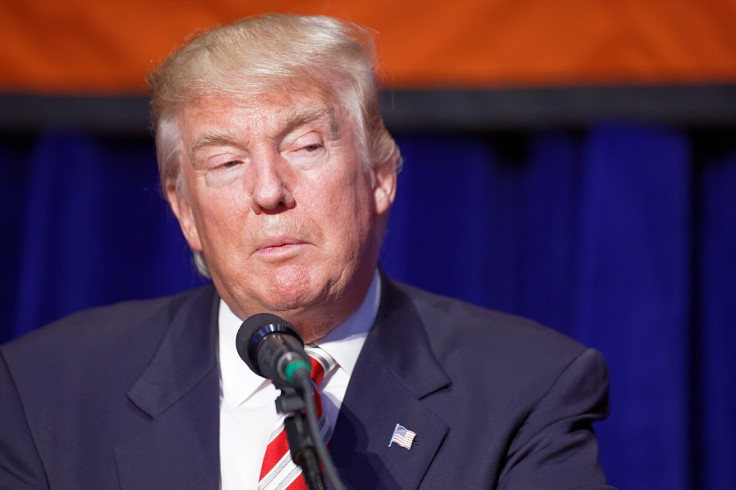
President Donald Trump's mouth and arm movements during a visit to the White House ballroom construction site in Washington on Wednesday, 4 November 2026, have prompted questions about his health.
A report attributed scrutiny of the footage to clinical and forensic psychologist John Paul Garrison, although his assessment has not been independently verified.
The appearance came a day after Democrats won control of both chambers of Congress in the US midterm elections.
Trump used the visit to praise construction workers and discuss his proposed ballroom, rather than immediately addressing his party's losses.
Donald Trump's Ballroom Footage Draws Attention to His Movements
According to the Irish Star, Garrison examined footage showing Trump handling a construction worker's hard hat. The report described movements involving the president's mouth and arms and said the psychologist reviewed part of the sequence in slow motion.
Nevertheless, because the reported remarks could not be independently verified against the original YouTube footage, treating Garrison's interpretation of the appearance as an established finding remains premature
However, Associated Press photographs independently show Trump signing a worker's hard hat during the visit. He also signed the final steel beam before construction workers raised it into place. Those images document the ceremony but cannot determine whether any movement was involuntary.
🚨 WOW! Trump signs a construction worker's hard hat at the White House!
— Stand Up For Truth 🇺🇸 (@StandUpForFact) November 4, 2026
The worker appeared thrilled as Trump signed his helmet during a visit to the construction site.
Crews are working on the new White House addition, designed to complement its historic architecture.
Do you… pic.twitter.com/KwcTq5OGuL
Garrison has previously analysed video of Trump's public appearances, including an October White House event. In those earlier comments, he raised questions about movements he considered unusual while acknowledging that he had not examined the president.
The psychologist's previous speculation has included possible neurological explanations. No publicly presented clinical evidence establishes that the gestures he discussed were caused by a seizure, stroke or neurodegenerative disease.
There is a significant distinction between identifying a movement in a recording and determining its medical cause. Footage alone cannot establish what Trump experienced or whether an apparently unusual gesture resulted from illness.
Trump's May Medical Findings Offer Different Context
The White House physician's memorandum, dated 29 May 2026, describes an examination carried out at Walter Reed National Military Medical Center on 26 May.
US Navy Captain Sean P. Barbabella reported that Trump remained in 'excellent health'. The document recorded normal neurological findings, including motor strength, sensation, reflexes, gait and balance.
Trump also scored 30 out of 30 on the Montreal Cognitive Assessment. That result reflects his performance on a cognitive screening tool; it does not, by itself, exclude every possible neurological condition.
The examination preceded the November visit by more than five months and did not address the specific movements discussed in the new report. Equally, a psychologist's commentary on video cannot invalidate the physician's findings.
Trump has repeatedly defended his cognitive abilities, claiming strong results on screening tests. His niece, clinical psychologist Mary Trump, expressed a different opinion in a June interview with Italy's Corriere della Sera, referring to their family history of Alzheimer's disease. Her comments were not a clinical diagnosis of her uncle.
No independently verified White House response to Garrison's reported November commentary was available. What the ballroom footage establishes is a presidential appearance, not the cause of any disputed movement.
© Copyright IBTimes 2026. All rights reserved.