

Michael Annett Death: Brad Keselowski Pays Tribute to Late NASCAR Driver, Claims He's 'No Longer Suffering'
Brad Keselowski pays tribute to former NASCAR star Michael Annett, 39, claiming he is 'no longer suffering'. Annett's cause of death remains unknown after his 2021 retirement.

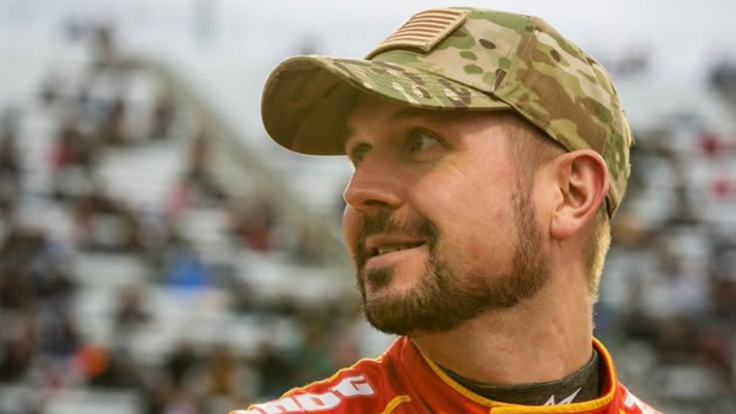
The sudden silence that fell over the NASCAR world this week was deafening. Michael Annett, a veteran of the sport's three major series and a beloved figure in the garage, has tragically died at the heartbreakingly young age of 39.
While the motorsport community has unified in grief, one detail stands out starkly against the flood of tributes: the public is being offered no official explanation for his passing.
Amidst the heartfelt social media messages, a particularly emotional tribute from former Cup Series champion Brad Keselowski has ignited widespread concern and sorrow. Keselowski, remembering his early days racing alongside Annett in the ARCA Series, wrote on X: 'I remember this day vividly. Michael was an up and comer at the same time I was and he was looking really good.'
I remember this day vividly. Michael was an up and comer at the same time I was and he was looking really good. In the end, Life took us different paths and all of us who knew him and the talent he had are sad to see him go, but glad he is no longer suffering. #RipMichael https://t.co/2imAJrMFM9
— Brad Keselowski (@keselowski) December 6, 2025
It was the final line of Keselowski's post, however, that offered a cryptic, painful glimpse behind the scenes of Annett's final years, while simultaneously intensifying the public's unanswered questions. Keselowski concluded: 'In the end, life took us different paths. All of us who knew him and the talent he had are sad to see him go, but glad he is no longer suffering.'
That single phrase—'no longer suffering'—has resonated deeply, suggesting a private, difficult battle that the former driver was enduring long after he hung up his helmet.
With no official cause of death having been publicly revealed, the tribute from one of his closest contemporaries implies that Annett's life, four years after his full-time retirement, was complicated by serious, unseen health struggles.
We are sad to have lost a family member. Michael Annett will always be in our hearts. Our thoughts are with the Annett family at this time.
— RSMG (@teamRSMG) December 6, 2025
Rest in peace MA. pic.twitter.com/nr91CeTwis
The news of Annett's death, which came on Friday, was first confirmed by his talent agency, Rising Star Management Group, which affectionately referred to him as 'a family member.'
Since then, the governing body of the sport, NASCAR, and his former team, JR Motorsports (JRM), have joined the chorus of sorrow, focusing on his resilience and his essential role within the racing community.
NASCAR statement released last night on former NASCAR driver Michael Annett, who died yesterday: pic.twitter.com/FJznRqbDOW
— Bob Pockrass (@bobpockrass) December 6, 2025
Michael Annett: The Unanswered Question of 'No Longer Suffering'
For five vital seasons, from 2017 until his retirement in 2021, Annett was a linchpin at Dale Earnhardt Jr.'s organisation, JRM.
The team's statement highlighted this significant impact: 'Michael was a key member of JRM from 2017 until he retired in 2021 and was an important part in turning us into the four-car organisation we remain today.' That institutional stability speaks volumes about the value Annett brought—not just as a driver, but as a dependable, professional presence.
NASCAR itself issued a powerful endorsement of his character, describing him as 'a respected competitor whose determination, professionalism, and positive spirit were felt by everyone in the garage. Throughout his career, he represented our sport with integrity and the passion of a true racer.'
But the widespread use of words like 'resilience' and the pointed mention of 'suffering' by Keselowski strongly connect back to Annett's well-documented health struggles on the track.
His retirement in 2021 was forced not by choice, but by complications stemming from a serious right-leg injury—specifically, a stress fracture in his right femur that required surgery and saw him miss several races in his final competitive season.
It's possible, of course, that Keselowski's comments referred generally to the chronic pain or physical limitations that often plague athletes long after their careers have ended. Yet, when an accomplished life is cut short so suddenly at 39, such ambiguity fuels a respectful, if intense, public demand for clarity.
From Daytona Triumph to Early Retirement: The Legacy of Michael Annett
Annett's racing career was marked by perseverance and quiet dedication, earning him deep admiration across the motorsport world. While he was a veteran across all three national NASCAR series, making 106 Cup Series startsbetween 2014 and 2016, his crowning achievement came in the Xfinity Series.
It was in the season opener at Daytona International Speedway in 2019 where he secured his only major career victory in the O'Reilly Auto Parts Series. That win—a breakthrough moment for both Annett and JRM—cemented his status as a driver who, through sheer grit, could seize the sport's biggest opportunities.
Annett transitioned into racing from an entirely different sporting background, having been an accomplished ice hockey player who earned the USHL's Most Improved Player award in 2004. That journey from the ice rink to the tarmac speaks to a rare type of discipline and adaptability.
As the racing world waits for answers about the cause of death, the tributes continue to flow, honouring a man who defined his career not through spectacle, but through commitment.
Michael Annett leaves behind a clear and respected legacy—a quiet, enduring competitor whose imprint on his teammates and the entire garage will be felt long after his racing days concluded. It is a sad, profound loss for NASCAR, and the hope now is that his family and friends find solace in knowing he is, finally, at peace.
© Copyright IBTimes 2026. All rights reserved.