

Microsoft AI CEO Mustafa Suleyman Issues 18-Month Warning for Office Workers
Microsoft AI CEO says lawyers, accountants and project managers face full automation of their daily tasks, as the company races to build what he calls 'professional-grade' systems.

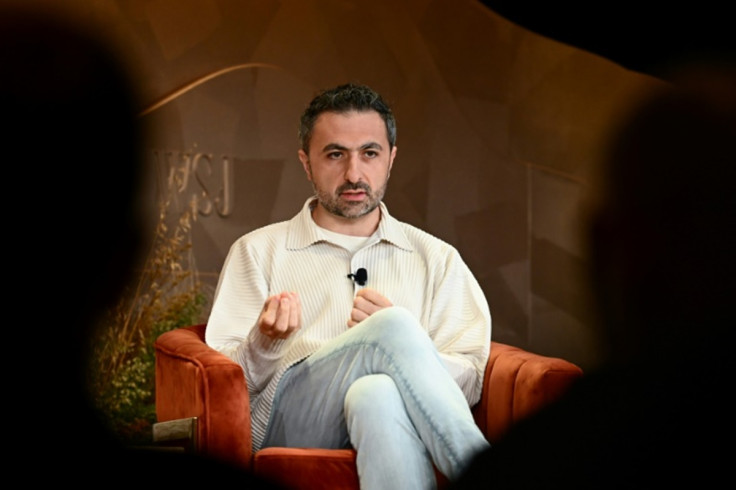
Eighteen months. That is the number Mustafa Suleyman dropped into an interview with the Financial Times last Wednesday, and it has been rattling around office blocks and LinkedIn feeds ever since.
Suleyman runs Microsoft's AI division. Not an advisory role, not a research post — he is the one building the products. And what he told the FT, in plain language with no caveats worth mentioning, is that most white-collar work will be fully automated within 12 to 18 months. Lawyers. Accountants. Project managers. Marketing teams. Anyone, as he put it, 'sitting down at a computer.'
Tech executives have been predicting the end of office work for years. Dario Amodei at Anthropic said last year that AI could wipe out half of all entry-level white-collar jobs. Ford's Jim Farley made similar noises about the US workforce. Elon Musk told Davos in January that artificial general intelligence could arrive this year, which even by his standards felt like a stretch.
But Suleyman is different, and the difference matters.
He Is Not Speculating
He is building the thing. Microsoft has poured billions into what Suleyman calls 'professional-grade' AI — systems designed to run business workflows end to end, not tidy up your emails. Last month he set up something called the Superintelligence Team, which is either the most ambitious R&D lab in corporate history or the most expensive branding exercise; time will sort that out.
He said that training compute has grown by a factor of one trillion in 15 years and will increase another 1,000-fold inside three. Current models, he claimed, 'can code better than the vast majority of human coders, maybe even all of them.' Software engineers are already using AI tools for most of their code production, a shift he said happened in the past six months alone.
'This, after all, is the most important technology of our time,' he insisted, and you got the sense he meant it the way a priest means it, not the way a salesman does.
He also painted a picture of AI becoming almost absurdly accessible. 'Creating a new model is like creating a podcast or writing a blog,' he said. 'It is going to be possible to design an AI that suits your requirements for every institution, organisation, and person on the planet.'
Whether every small accountancy firm in Basingstoke is going to be spinning up bespoke AI models inside 18 months is, to put it gently, debatable.
What the Evidence Actually Says
Here is where the story gets uncomfortable for Suleyman, because the data does not quite back up the sermon.
A 2025 Thomson Reuters report looked at how lawyers and accountants are using AI right now. Document review, mainly. Routine analysis. The productivity gains were described as modest — not the profession-ending transformation Suleyman was pitching.
A separate study by the nonprofit Model Evaluation and Threat Research found something more awkward still: AI tools made certain software development tasks take 20 per cent longer. Not shorter. Longer. That sits oddly next to the claim that AI already outperforms most human coders, though Suleyman would probably argue the tools in that study weren't the frontier models Microsoft is building.
Around 55,000 job cuts in 2025 were linked to AI, according to Challenger, Gray & Christmas. Not nothing, but not the millions that were forecast either.
And research from Apollo Global Management's chief economist, Torsten Slok, found that the profit gains everyone keeps attributing to AI are concentrated almost entirely in Big Tech. The broader Bloomberg 500 barely budged. So either the revolution is confined to a handful of companies in San Francisco, or it hasn't started yet. Take your pick.
Microsoft itself let go of 15,000 workers last year. Satya Nadella, in a memo to the people who remained, wrote that the company must 'reimagine our mission for a new era.' He did not say what that era looks like for the ones who were shown the door.
The Bit Nobody Wants to Say Out Loud
The SaaS selloff that hit markets the same week as Suleyman's interview — analysts called it the 'SaaSpocalypse,' which gives you a flavour of the mood — was triggered by Anthropic and OpenAI announcing AI agents built for enterprise clients. The message from investors was blunt: if AI agents can do what SaaS platforms do, the platforms are finished.
Mind you, investors have been wrong before. Quite often, in fact.
But the pattern is hard to ignore. The people making the most aggressive predictions about AI wiping out white-collar work are the same people selling the tools to do it. That does not make them wrong. It does, however, make the 18-month figure feel less like a forecast and more like a product roadmap with a countdown timer strapped to it.
Suleyman's interview was published on 12 February. Most offices were still open this morning. Whether they will be in August 2027 is the £200bn question — and the man who gave us the deadline is the same one building the answer.
© Copyright IBTimes 2026. All rights reserved.