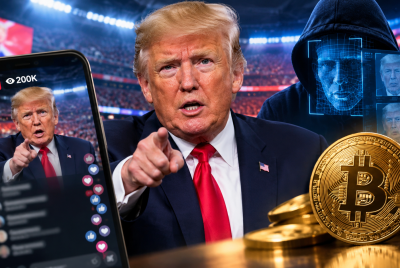
Crypto Casino Owner Reveals Humiliating Scam After Streaming Agency Sent Fake Andrew Tate To Deal Blackjack
High-stakes gambling meets low-rent deception as a streaming agency is accused of sending a lookalike to front a massive crypto casino promo

The carefully constructed illusion of high-stakes crypto gambling has been shattered by a humiliating blunder involving a lookalikes, loose contracts, and the world's most polarising influencer.
A crypto casino owner has gone viral after revealing they were allegedly duped by a streaming agency that provided a fake Andrew Tate to deal blackjack during a high-profile promotional event.
The incident, first brought to light by a korraflow on X, a viral post, has sent shockwaves through the digital gambling community.
What was intended to be a masterclass in aggressive influencer-driven marketing quickly devolved into a farce when viewers and staff realised the man behind the cards was not the 'Top G', but a cut-price impersonator. This fake Andrew Tate crypto casino scam has exposed the staggering lack of vetting in an industry where hype often outpaces due diligence.
What Actually Happened
According to the original post shared on X, the casino owner alleged that they had arranged a promotional collaboration involving Andrew Tate, a controversial internet personality known for his massive online following and polarising image.
Instead, what reportedly showed up was not Tate himself but someone acting in his place.
The claim quickly drew attention because the impersonator was allegedly presented as legitimate during a live or recorded blackjack session, raising immediate questions about how such a substitution could happen in a high-stakes promotional environment.
No verified statement from Andrew Tate has been linked to the incident, and the claims remain based on publicly shared accounts from the involved parties. Still, the situation has fueled debate across crypto and streaming communities.
🚨 BREAKING: CRYPTO CASINO SCAMMED BY FAKE ANDREW TATE IMPERSONATOR
— Korra (@korraflow) April 24, 2026
They thought they were hiring the real Andrew Tate to deal blackjack for a special event, but the streaming agency they hired sent an impersonator. The owner of the casino announced the scam over Discord. pic.twitter.com/M5XxZSjSxN
The Andrew Tate Impersonator Scandal Raises Bigger Questions
The Andrew Tate impersonator scandal highlights a deeper issue within influencer-driven marketing. In traditional brand deals, contracts, identity verification, and direct communication are standard. But in crypto, where deals often move quickly and across borders, safeguards can be weaker.
Streaming agencies often act as intermediaries, connecting brands with influencers. If the casino owner's claim is accurate, it suggests a breakdown at that level, either through negligence or intentional deception.
That possibility feeds into a growing concern about a broader crypto casino influencer scam ecosystem, where visibility and hype can overshadow verification.
Imagine losing your entire life savings gambling and your dealer starts acting like this pic.twitter.com/o6LrTyNdWH
— 𝐀𝐍𝐓𝐔𝐍𝐄𝐒 (@Antunes1) April 23, 2026
This incident also points to a potential streaming agency scam controversy. Agencies are supposed to vet talent and ensure authenticity, yet this case suggests that not all partnerships are what they seem.
Without transparent contracts or direct verification from public figures, brands may rely too heavily on third parties. In a decentralised industry like crypto gambling, there are opportunities for manipulation.
Crypto Gambling And The Trust Problem
The idea of fake celebrity endorsement crypto gambling campaigns is not new, but it rarely plays out so publicly. Crypto casinos often rely on influencers to build credibility and attract users, especially in competitive markets.
When those endorsements turn out to be questionable, it damages not just a single brand but the entire ecosystem. This is where online casino marketing deception becomes a serious issue. Viewers assume that a known personality's presence signals legitimacy. If that trust is misplaced, the consequences extend beyond reputation and into financial risk for users.
Andrew Tate will be dealing live on Duel Blackjack in 2 hours.
— ilovecats (@ilovecats) April 23, 2026
Don’t miss it. pic.twitter.com/EFBOOFkC0P
Influencer Impersonation In The Crypto Industry
Influencer impersonation in crypto industry spaces is becoming harder to detect, especially with the rise of deepfakes, edited livestreams, and remote appearances.
While there is no confirmed evidence of advanced manipulation in this case, the incident shows how easily audiences, and even businesses, can be misled when identity checks are not rigorous.
For many observers, this moment feels like a turning point, a sign that crypto gambling fraud-exposed narratives are moving from theory into reality.
The viral nature of the claim shared by korraflow has pushed the discussion beyond a single embarrassing incident. It has become a case study in how fast-moving digital industries can outpace basic safeguards.
If a crypto casino can unknowingly feature an impersonator in a high-profile promotion, it raises uncomfortable questions about how many similar situations might go unnoticed.
What Comes Next
There are no publicly confirmed legal actions or formal investigations tied to this specific case. The lack of official statements from Andrew Tate or the named agency leaves key details unresolved.
When celebrity culture collides with crypto money and viral exposure, scrutiny is inevitable, and often relentless. What started as a humiliating mix-up now cuts deeper, forcing the industry to confront an uncomfortable possibility that the line between real and staged may be thinner than anyone wants to admit. Whether this turns out to be a one-off blunder or a glimpse into a much larger pattern, one thing is already clear: people are no longer just watching, they are questioning everything.
For the crypto gambling sector, this embarrassment serves as a final warning. Without rigorous, face-to-face verification and iron-clad contracts, the next 'big get' for a casino could easily be another expensive imposter.
© Copyright IBTimes 2026. All rights reserved.
- Recommended For You