

Larry Ellison Says AI Now Does Oracle's Coding Amid Mass Layoffs—3 Strategic Moves for Tech Workers
Oracle's recent layoffs highlight a shift towards AI-driven coding, reshaping the tech workforce and redefining the role of engineers

Oracle's latest wave of layoffs has ignited a broader conversation about the future of work in tech, after co-founder Larry Ellison declared that artificial intelligence is now doing much of the company's coding. The remark, delivered during a recent earnings discussion, has quickly become a flashpoint for debate as thousands of employees face job losses.
At the heart of the controversy is a stark shift in how software is built, and what that means for the engineers behind it.
'Our AI Models Are Writing The Code'
Ellison's statement was unequivocal: 'The code that Oracle is writing, Oracle isn't writing. Our AI models are writing.'
He explained that instead of developers manually producing code line by line, engineers now describe the desired outcome, and AI systems generate the underlying logic and implementation. This shift, he argued, allows Oracle to deliver complex products faster and with significantly smaller teams.
For Oracle, the benefits are clear: faster production cycles, lower costs, and a competitive edge in an increasingly AI-driven market.
Layoffs Driven By An AI Pivot
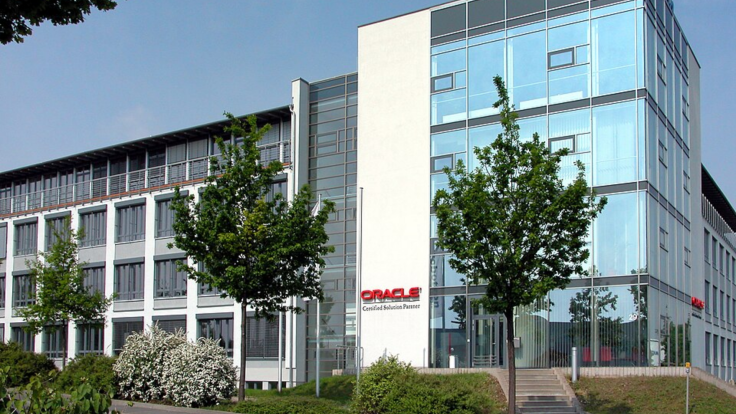
The timing of Ellison's comments has amplified concern. Oracle has begun laying off thousands of employees globally, with estimates suggesting cuts could reach 20,000 to 30,000 roles as part of a broader restructuring.
Employees across regions reported receiving abrupt notifications, often via early-morning emails, signalling immediate termination.
The layoffs are closely tied to Oracle's aggressive investment in artificial intelligence infrastructure, particularly in building data centres and expanding cloud capabilities.
Recent reporting highlights that the company is reallocating resources to support this shift, even as it incurs substantial costs linked to AI expansion.
In effect, Oracle is not merely cutting jobs but reshaping its workforce around a new technological reality.
A Changing Role For Engineers
For software engineers, the implications are profound. Traditional coding skills are no longer sufficient on their own. Instead, the role is evolving towards higher-level tasks such as system design, intent definition, and output validation.
This transition reflects a broader industry trend, where AI is augmenting, and in some cases replacing, routine technical work. Across the sector, companies are reducing headcount while investing heavily in automation and machine learning.
While some engineers view AI as a productivity tool, others fear it signals a long-term reduction in demand for traditional development roles.
Three Strategic Moves For Tech Workers
As artificial intelligence begins to take on a greater share of coding responsibilities, the shift for tech workers is becoming increasingly clear: value is moving away from execution and towards judgement, adaptability, and broader thinking.
For many professionals, the challenge is not simply keeping up with new tools but understanding how their role is evolving and where they can remain indispensable.
1. Shift Focus From Writing Code to Solving Problems
While coding remains a core skill, it is no longer the defining one. AI systems are increasingly capable of generating functional code, but they still rely heavily on human input to define objectives, constraints, and desired outcomes.
In practical terms, this places greater emphasis on problem-solving and system design. Engineers who can break down complex business challenges, identify the right technical approach, and make informed trade-offs will remain in demand.
This shift also requires stronger communication skills. Being able to explain technical decisions clearly to non-technical stakeholders is becoming just as important as implementing them. Those who move beyond task execution and contribute to decision-making processes are likely to find themselves in more secure positions.
2. Embrace AI as a Tool, Not a Threat
Rather than viewing AI as competition, many industry observers suggest it should be treated as a productivity tool that can enhance, rather than replace, human capability.
Developers are increasingly expected to work alongside AI systems, using them to generate code, troubleshoot issues, and accelerate workflows. However, this also introduces a new responsibility: verification and oversight. AI-generated outputs are not infallible, and human judgment remains critical in ensuring quality, security, and performance.
Practically, this means becoming comfortable with AI-assisted development environments and understanding how to guide these systems effectively. Those who can use AI to increase efficiency while maintaining high standards will be better positioned as the technology becomes more embedded in everyday workflows.
3. Build Broader, Cross-Functional Expertise
Perhaps the most significant shift is the growing importance of context beyond code. As companies streamline technical roles, they are placing greater value on individuals who understand how their work contributes to wider business objectives.
This includes knowledge of product strategy, user experience, and commercial impact. Engineers who can engage with these areas, whether by contributing to product discussions or aligning their work with business goals, are more likely to remain relevant in a changing environment.
Developing this broader perspective does not require a complete career pivot. Even incremental steps, such as participating in cross-functional meetings or gaining a basic understanding of product metrics, can make a meaningful difference.
A Defining Moment For The Industry
Oracle's pivot underscores a wider transformation sweeping through the tech sector. As companies race to capitalise on AI, traditional roles are being redefined at speed, often with high human cost.
Ellison framed the shift as a necessary evolution, one that enables companies to innovate more efficiently. Yet for workers, the transition is far less abstract. It represents a fundamental change in how careers are built and sustained in the digital economy.
© Copyright IBTimes 2026. All rights reserved.
- Recommended For You


