'You WILL Lose Your Job to AI If...' — Jensen Huang's Shocking Warning
Nvidia chief urges workers to rethink roles as AI reshapes tasks, tools, and the future of work itself

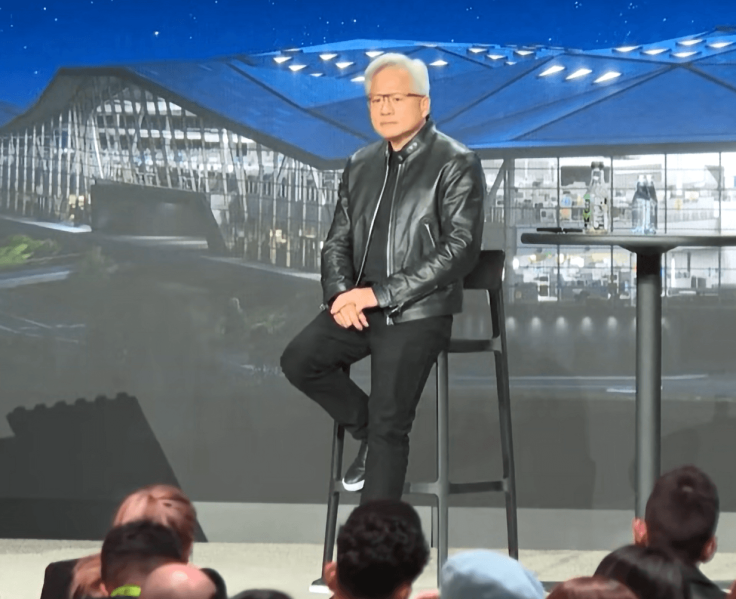
By any measure, the rise of artificial intelligence has moved from theory to reality. Now, one of the industry's most influential voices has issued a clear warning. Jensen Huang, the chief executive of Nvidia, believes many jobs are at risk. But not in the way most people think.
Speaking on the widely followed Lex Fridman podcast, Huang delivered a message that was both cautionary and practical. The danger, he argued, lies not in entire professions disappearing overnight, but in the nature of tasks within those roles.
The Core Warning: Tasks Are the Weak Link
Huang's message was simple. If your job is defined purely by repetitive tasks, you are vulnerable. Machines are becoming faster and more precise at handling such work.
He explained that people often confuse their job with the tasks they perform daily. That confusion can be costly. When automation improves, those specific tasks are the first to be replaced. The implication is direct. Workers who rely only on routine processes may find themselves edged out. Those who adapt, however, may not only survive but thrive.
Adaptation Over Fear
Despite the stark tone, Huang's outlook was not entirely pessimistic. He stressed that AI should be seen as a tool, not just a threat.
He gave practical examples. A farmer can use AI to improve yield predictions. A pharmacist can rely on it for better data analysis. In both cases, the professional remains central, but their efficiency improves. His advice was clear. Learn how to use AI. Make it part of your workflow. Those who do so can elevate their roles rather than lose them.
Jobs Will Evolve, Not Vanish
Huang drew on his own experience to make a broader point. He has served as a chief executive for more than three decades. During that time, the tools he used changed constantly. Yet his role remained intact.
This, he argued, is the pattern of technological progress. Roles evolve. They do not always disappear. He pointed to radiology as a strong example. Many once believed AI would replace radiologists entirely. That has not happened. The role involves judgement, context, and human decision-making. AI can assist, but it cannot fully replace it.
A Message to the Next Generation
Huang also directed his warning towards students and graduates. His advice was blunt. Every college student should leave university with a solid understanding of AI.
In a world where technology is reshaping industries, ignorance is no longer an option. Knowledge of AI is becoming as essential as basic digital literacy once was. For young professionals, this represents both a challenge and an opportunity. Those who invest time in learning these tools may gain a decisive edge in the job market.
The Bigger Picture
The anxiety around AI and job losses is not new. Each wave of technological change has sparked similar fears. Yet history shows a more nuanced outcome.
AI is likely to reshape how work is done rather than eliminate work entirely. The key difference lies in adaptability. Workers who redefine their roles will remain valuable. Those who resist change may struggle. Huang's warning, therefore, is less about doom and more about direction. The future of work is being rewritten. The question is not whether AI will have an impact. It is whether individuals are prepared to evolve with it.
© Copyright IBTimes 2026. All rights reserved.
- MOST POPULAR IN Business