

Natalie Harp's Constant Presence Signals Donald Trump's 'General Decline', Mary Trump Claims
A loyal aide, a restless niece and a president under scrutiny collide in a small but telling fight over who controls what he sees and hears
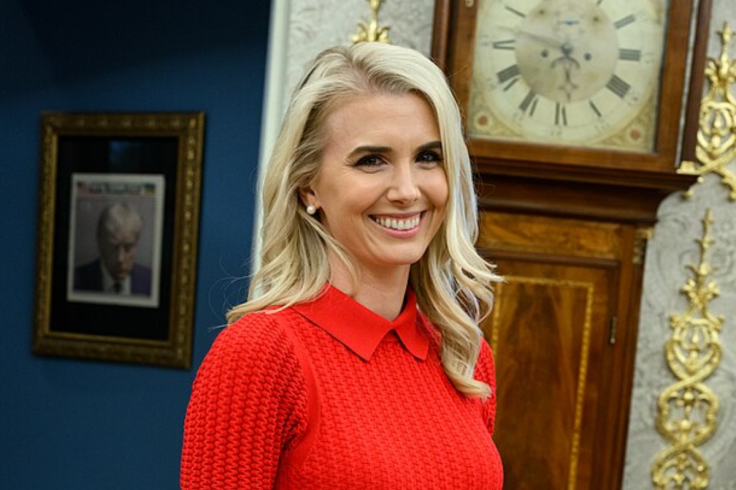
Natalie Harp, a longtime aide to President Donald Trump, is now at the centre of a fresh family-driven controversy in Washington, after Mary Trump claimed this week that Harp's constant presence around the president is a sign of his 'general decline.'
Speaking on Monday on Jim Acosta's YouTube channel, Mary argued that Harp's unusually close access reveals worrying dependence and shrinking judgment inside Trump's inner circle.
Harp has been a familiar, if mostly background, figure in Trump world for years, earning a reputation as a fiercely loyal aide who rarely strays far from the president's side. She has been dubbed the 'human printer' for her habit of trailing Trump with armfuls of printed articles, polling snippets and flattering coverage, often selected to mirror his preferred version of reality. That somewhat quirky job description has now turned into political ammunition.
Mary Trump Links Natalie Harp to Alleged 'General Decline'
After Mary, the daughter of Trump's late brother Fred, sharpened her long-running criticism of the president and those closest to him.
Mary has built a second career dissecting the Trump family from the outside, but this time she zeroed in on Harp by name, arguing the aide's power and visibility are symptoms of something deeper.
'I think the Natalie Harp situation is of a piece with Donald's general decline,' she told Acosta, in remarks attributed to her interview on his channel. In her view, Harp is not just a loyal staffer doing odd jobs, she is part of a protective bubble that keeps Trump swaddled in praise and insulated from uncomfortable truths.
Mary described Harp as having 'more access than anybody' to the president, calling that level of proximity 'deeply troubling.' She suggested Harp functions as a gatekeeper for what Trump sees and hears, especially when it comes to media coverage.
Critics of the White House have long complained about the echo chamber around the president, but Mary pushed that further, casting Harp as a key conduit through which information is filtered.
Harp's job is not officially defined in these reports, yet Mary insisted her role goes well beyond ferrying papers. According to Mary's characterisation, Harp helps curate the president's social media content and manages the flow of positive narratives that reach him. None of this has been formally confirmed by the White House, and there is no detailed public job description spelling it out.
Aide Turned Lightning Rod as Natalie Harp Steps Into View
Attention around Harp exploded beyond the Beltway recently when Democratic Senator Jon Ossoff threw her name into a campaign speech in Georgia. Ossoff mocked the president's priorities, accusing him of preferring luxury and flattery to governing, and singled out Harp as an emblem of that world.
'He doesn't want to do the job. He wants to build his ballroom and travel with Natalie on their apparently defenceless flying palace gifted by the Emir of Qatar,' Ossoff said, according to reporting cited in the original material.
It was a jarring line, mixing sarcasm with pointed imagery, and it yanked Harp from relative staff anonymity into the partisan spotlight.
Since then, social media critics have latched onto clips and photos showing Harp trailing Trump on domestic and international trips. Comment threads have filled up with speculation about why she is always there, who hired her, and how much influence she really has.
Supporters of the president, for their part, have painted the pile-on as bizarre, arguing that fixating on a staffer's presence says more about his opponents' obsession than about Trump himself.
The White House has not issued any detailed response to Mary's latest comments or to Ossoff's jab, at least not in the material reviewed for this article. Trump's team has generally framed loyalty from aides like Harp as proof of his leadership rather than a cause for concern. Without fresh on-the-record pushback, Mary's critique hangs in the air, unchallenged but also uncorroborated.
Mary Trump's Harsh Portrait of Dependency
Mary did not stop at suggesting strategic overreach. She went for the jugular on image and psychology, accusing her uncle of relying on Harp in ways that make him appear weak.
'It makes him look like such a pathetic, frail, needy old man that he has to have a woman young enough to be his granddaughter constantly with him, protecting him, making sure that he sees positive press clippings about him, positive articles, most of which are probably fictional,' she said.

This is not medical analysis, and Mary is not claiming to offer one. The reports make clear that her comments are political and personal assessments rather than any kind of clinical diagnosis. There is, so far, no medical evidence in the public record to support her suggestions about Trump's cognitive health, and they should be read as opinion, not fact.
Still, the choice of the language is part of the point. Mary wants people to picture a president so hungry for affirmation that a younger aide has to hover at all times, feeding him good news like sweets. It is a damning image, and a highly effective one in a brutal campaign season. Whether voters buy it is another question.
In the meantime, Harp remains where she has been for months, close to Trump, often within a few steps on camera and almost certainly within whispering distance off it. Her loyalty has made her valuable inside his world and a soft target outside it.
For Mary, the battle is not really about a single aide with a stack of papers in her hands. It is about what that constant, curated presence might say about the man at the centre of it all, and about how much of the presidency now depends on who is standing just over his shoulder.
© Copyright IBTimes 2026. All rights reserved.