'Pyjamas and Toothbrush Ready': Falmouth Residents Prepare To Evacuate as Bomb Squad Assesses Suspected WWII Missile
Royal Navy bomb disposal experts were called in after the suspected 250kg American munition was discovered, with homes evacuated and nearby waters restricted
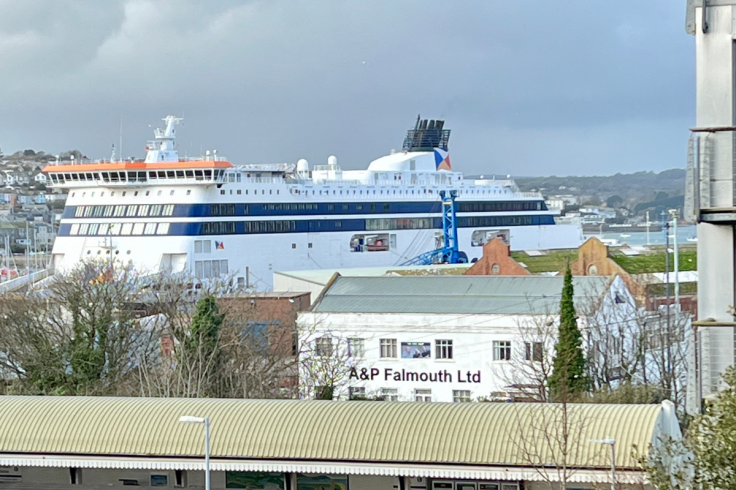
Emergency services and Royal Navy bomb disposal experts were called to Falmouth Docks after a suspected Second World War munition was found in the water, believed to be an unexploded 250kg American missile.
The device was located at about 09:15 BST, a safety cordon was put in place and specialist teams began assessing how it could be safely removed.
Bravo Squadron of the Royal Navy's Diving and Threat Exploitation Group, based at HMNB Devonport, was deployed to deal with the suspected ordnance. Devon and Cornwall Police, Cornwall Fire and Rescue Service and the Falmouth Coastguard Rescue Team also attended the scene.
Cordon Widened as Assessment Continues
Authorities initially established a 150-metre exclusion zone covering both land and sea around the area. Two homes were evacuated under the initial arrangement. The perimeter was later expanded to 300 metres at around 17:25 to 18:01 BST as work to assess the device continued. Three residential properties were then evacuated.
The wider cordon also affected university students living nearby, some of whom were unable to return to their accommodation. HM Coastguard and Falmouth Harbour issued navigational warnings telling mariners, boat users and members of the public to stay clear of the affected waters.
Specialist explosive ordnance disposal officers remained at the scene to assess the suspected munition. Falmouth Harbour said the device would be moved for disposal, although the timing and method had not yet been confirmed. The Coastguard is expected to announce when the operation is ready to proceed over VHF Channel 16.
Police said there was no information to suggest any wider risk beyond the established cordon.
Superintendent Vicky Howell and police spokespersons urged residents and visitors to follow safety instructions and respect all exclusion zones while the assessment continued. The restrictions apply across both the land and nearby waters covered by the cordon.
Residents Describe Disruption to Daily Life
The operation disrupted plans for residents and students living close to the docks. Local resident Bryony Mirfin said police had advised her to prepare for a possible evacuation, including getting her 'pyjamas and toothbrush ready'. She said the situation reminded her of an incident at the docks about 20 years ago involving exploding acetylene tanks.
Mirfin also suggested authorities could be trying to delay any wider evacuation for as long as possible because some elderly or vulnerable residents might struggle to leave. Students living within the cordon also described being turned away while trying to get home.
Tilly Ogilvie said police stopped her from accessing her road. She said she ended up sitting on a bench while trying to arrange somewhere else to stay for the night.
Gretta and Beatrice Venner said they were also stopped at the police cordon as bomb disposal specialists assessed the device. Beatrice Venner, who is from Devon, said she associated incidents involving suspected wartime ordnance with Plymouth.
Wartime Bombing Raids Blamed for Unexploded Ordnance
Falmouth Docks were targeted several times by German bombing raids during the Second World War. The area's wartime history means unexploded munitions can still be found decades after the conflict.
The response to the latest discovery involved several agencies, including Devon and Cornwall Police, the Royal Navy bomb disposal team, Cornwall Fire and Rescue Service and the Falmouth Coastguard Rescue Team.
The Port Authority and Harbour Master were also involved in managing the response and the restrictions on the surrounding waters. The Royal Navy team was deployed to assess the suspected munition and determine how it could be removed and disposed of.
A 250kg high-explosive air-delivered bomb typically has a metal casing around its explosive charge. A detonation could produce a blast and metal fragments, potentially damaging nearby structures and injuring people within range.
Historical unexploded ordnance can also deteriorate over time. Movement, vibration or impact can present additional hazards, depending on the condition of the device. That risk is why authorities have maintained exclusion zones and evacuated properties while specialists assess the munition.
Further details, including the timing of the disposal operation, are expected through official Coastguard communications once confirmed.
© Copyright IBTimes 2026. All rights reserved.
- Recommended For You