Jeffrey Epstein Investigation Update: Authorities Search For Abused Girls Buried At Zorro Ranch
Authorities revisit Epstein's Zorro Ranch amid allegations of buried bodies and renewed scrutiny.
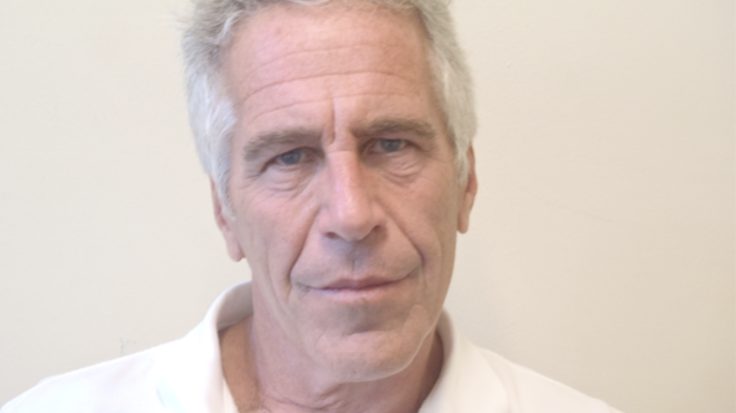
New Mexico authorities say they are preparing to revisit the Jeffrey Epstein investigation at his vast Zorro Ranch estate, where a long‑ignored tip alleged that the bodies of two abused girls were buried in the surrounding hills. The fresh Jeffrey Epstein investigation focus on the remote New Mexico property comes years after federal agents first searched the ranch in 2019, following the financier's death in a New York jail.
Zorro Ranch has always sat in the shadow of his infamous Epstein Island, better‑known as Little Saint James, which became shorthand for his abuse network. Yet Epstein bought the New Mexico spread in 1993 from then‑governor Bruce King, reportedly attracted by the state's looser rules on sex‑offender registries and the isolation the land offered.
According to the New York Times, the ranch was searched after Epstein's 2019 suicide, but it has never been clear whether agents fully followed up on the most disturbing allegation of all: that two girls he had abused were buried somewhere on the grounds.
That allegation was set out in a tip sent to the Federal Bureau of Investigation (FBI) in 2019, described by RadarOnline as coming from someone who claimed to have worked at the property. The tipster alleged that the remains of two girls had been hidden in the hills just beyond the main house. There has been no public confirmation that the claim was ever substantiated, and officials have not released any supporting evidence. Nothing about the supposed burials is confirmed yet.
Jeffrey Epstein Investigation Turns Back To Zorro Ranch
One man who has been pushing that point for years is Eddy Aragon, an Albuquerque radio host who made Zorro Ranch a personal obsession. 'Not only has it been overshadowed, it's been completely ignored,' he said, noting how investigators and journalists fixated on Little Saint James in the Caribbean, Paris, New York and Miami, while 'they didn't pay attention to Zorro Ranch'.
In 2019, Aragon received a tip from someone claiming to have worked on the property, alleging that Epstein had concealed the deaths of two abused girls by ordering them buried in the hills outside the house. Aragon says he passed the information to local authorities and never heard back.

Nothing in that anonymous claim has been confirmed, and the FBI has declined to say whether it ever acted on the information or even searched the ranch at all. Correspondence between Epstein's lawyers and prosecutors, unsealed years later, suggested that as of December 2019 the property had still not been searched.
The year of Epstein's death was also the year the initial New Mexico inquiry stalled. As federal prosecutors in New York built their case against him, the state attorney general's office was quietly interviewing witnesses about his conduct at Zorro Ranch. Then, according to former attorney general Hector Balderas and recently released emails, the US Attorney's Office for the Southern District of New York asked New Mexico to step aside and hand over its work, arguing the federal case would be stronger if they led.
Balderas agreed, only to decide a year later that federal authorities were not pursuing the New Mexico strand with enough urgency. In 2020 his office sent a letter urging the US Justice Department to seize Epstein's ranch and treat it as a crime scene.
'We believe that this ranch was used by Epstein and others to facilitate the commission and prolonged concealment of his trafficking of children,' the letter read.
He never received a reply. Requests for comment from the Southern District were bounced to the Justice Department, which has itself stayed silent. Balderas now says bluntly that 'there should have been more convictions that were tied to conduct in New Mexico'.
Last month, jolted by a fresh dump of Justice Department documents on the wider case, New Mexico legislators finally moved. They voted unanimously to create a four‑member bipartisan 'truth commission' with subpoena powers to pick apart Epstein's history in the state. At the same time, the current attorney general said he would reopen the investigation his office had closed just before Epstein died in 2019.
Andrea Romero, a Democratic state representative in New Mexico, told the New York Times that leaders now want to 'reopen' scrutiny of Zorro Ranch and understand, in her words, how Epstein was 'able to operate without any accountability'. She stressed that it is essential to work out 'what allowed this to happen'.
Ranch Renamed: From Little Saint James To San Rafael
Zorro Ranch was put up for auction four years after Epstein's death, with officials saying proceeds would go to his victims. It was eventually bought by Texas Republican senator Don Huffines, who has since tried to recast the site as a place of Christian renewal.
In a statement on social media on 16 February, he said his family had renamed the land San Rafael, after the saint associated with healing, and were drawing up plans to turn it into a Christian retreat. 'What the enemy once meant for evil, God can redeem for good,' he wrote, adding that even the new entrance would carry a biblical message: 'BLESSED ARE THOSE WHO COME IN THE NAME OF THE LORD.'
Huffines has also been keen to frame questions about the ranch's past as politically driven. He said his ownership became widely known in 2024 after being highlighted online, and he has claimed that 'desperate political opponents' are using 'last‑minute lies and tricks' around the property. At the same time, he insists he is ready to cooperate with any serious inquiry.
He says his family has 'always maintained an open line of communication with local authorities', though he acknowledges that no law‑enforcement agency has yet contacted him to request access. He has pledged that any such request would be met with 'immediate access and full cooperation'.
© Copyright IBTimes 2026. All rights reserved.
- MOST POPULAR IN Crime