

Epstein's Zorro Ranch Probe Collapsed After Trump DOJ Seized Control; Newly Unsealed Records Show
Federal records expose the DOJ's involvement in stalling a New Mexico sex trafficking investigation into Jeffrey Epstein's estate.
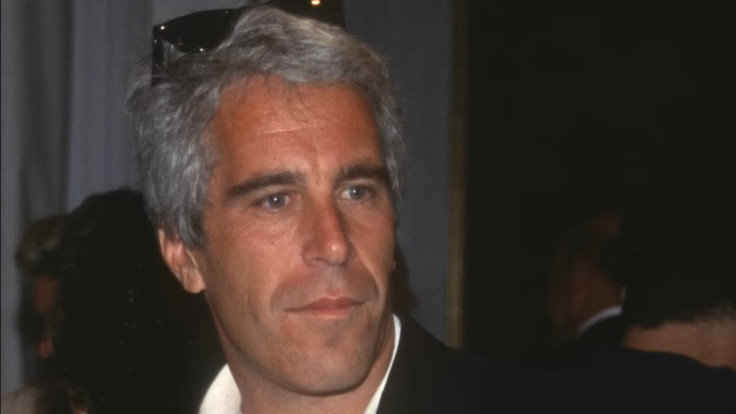
Newly unsealed federal records reveal how a New Mexico sex trafficking investigation into Jeffrey Epstein's desert estate was dismantled from the inside, and how the Department of Justice that was supposed to pick up the case may have buried it instead.
Documents released under the Epstein Files Transparency Act, signed into law in November 2025, show that New Mexico state investigators handed police reports, recorded witness interviews and other evidence to federal prosecutors in 2019 on the promise of a coordinated, multistate prosecution that never arrived.
Now, with New Mexico reopening its criminal inquiry and a newly formed legislative truth commission armed with subpoena power, a reckoning is finally taking shape, one that raises direct questions about what the Trump-era Department of Justice did with what it was given.
A 'One-Way Relationship' That Gutted New Mexico's Case
In the summer of 2019, federal prosecutors from the U.S. Attorney's Office for the Southern District of New York asked New Mexico to stand down. The instruction, according to former New Mexico Attorney General Hector Balderas, was framed as a practical necessity, running parallel investigations risked producing inconsistent witness statements that defence attorneys could exploit at trial. New Mexico agreed to cease its investigation into sex trafficking at Epstein's 7,500-acre Zorro Ranch, located roughly 50 kilometres south of Santa Fe, and to hand everything over to the federal team.
By 17 September 2019, barely six weeks after Epstein's death in a federal detention facility on 10 August, then-Chief Deputy Attorney General Clara Moran had already sent a package to federal prosecutors containing police reports, recorded witness interviews, inter-agency correspondence, and documents related to Epstein's leasing of state public lands.
New Mexico had also cancelled a lease by an Epstein-owned company on 1,243 acres of state trust land adjacent to the ranch, land investigators believed Epstein had obtained specifically to enhance the property's privacy.
Federal prosecutors, however, gave nothing back. Balderas, who now serves as president of Northern New Mexico College in Española, told the Albuquerque Journal that the arrangement had been 'a one-way relationship.' He said prosecutors had 'made the representation that they were going to prosecute with a multijurisdictional, multistate focus,' but that he remains unaware of any information provided to New Mexico that could have supported criminal charges in the state. The US Attorney's Office for the Southern District of New York did not respond to requests for comment.

The email record that best captures the scope of the agreement came from Maureen Comey, then an assistant US Attorney heading the Epstein criminal case. In an email dated 8 September 2019, the recipient's name redacted, Comey wrote that New Mexico had 'agreed to cease any investigation into sex trafficking and share whatever they had gathered to date regarding sex trafficking activity with our office.'
She added that federal prosecutors had told the state it was free to pursue unrelated Epstein matters and that, at the conclusion of the federal case, they would pass along 'any information we may have gathered about state crimes that were committed in their jurisdiction.' That transfer, Balderas says, never happened.
The Ranch Was Never Seized — Despite Formal Requests
The story did not end with New Mexico's 2019 capitulation. In July 2020, Balderas's office sent a letter to federal prosecutors, signed by Moran and now part of the unsealed records, urging them to seize Zorro Ranch through civil forfeiture to preserve criminal evidence, including files and video recordings.
The letter argued that the ranch 'was used by Epstein and others to facilitate the commission and prolonged concealment of his trafficking of children' and that seizure should proceed alongside the then-ongoing criminal prosecution of Epstein's associates and co-conspirators.

Federal prosecutors never acted on the request, or at least never told New Mexico they did. 'We were never informed whether they obtained search warrants or searched the property,' Balderas said. He also offered to provide local law enforcement assistance in serving those warrants and received no response.
The ranch was eventually sold in 2023 by Epstein's estate to Texas real estate developer Don Huffines, who has since pledged to cooperate with investigators. Epstein had originally purchased it from the family of former New Mexico Governor Bruce King in 1993 and subsequently built a 33,339-square-foot mansion on the grounds, along with a private landing strip.
Moran, now a judge of the 2nd Judicial District Court, confirmed last week that the Attorney General's Office had been asked to halt its investigation but declined to discuss specifics. Balderas was characteristically direct: 'I was calling for them to seize those assets in 2020 because I determined at that point that there was enough information that potential criminal acts have occurred there. The assets should have been seized, and I continue to take that position today.'
The DOJ's Epstein Files: What Was Released — and What Was Not
The federal investigation's ultimate output: a public database of more than 3 million pages of Epstein-related documents released between January and February 2026, has itself become a source of controversy.
According to an NPR investigation published 24 February 2026, the Justice Department withheld dozens of pages of FBI interviews related to sexual abuse allegations involving President Donald Trump, and removed some documents from the public database after initial publication on 30 January.
NPR's review of multiple sets of unique serial numbers stamped onto documents in the Epstein files database, FBI case records and Maxwell discovery logs found what appear to be 53 pages of interview documents and notes that are absent from the public records. Some files were briefly taken offline and restored; others remain inaccessible. The Justice Department told NPR that any unpublished documents are either privileged, duplicates, or relate to an ongoing federal investigation.
Attorney General Pam Bondi and Deputy Attorney General Todd Blanche addressed the controversy in a 14 February 2026 letter to members of Congress, insisting that no records had been withheld or redacted 'on the basis of embarrassment, reputational harm, or political sensitivity, including to any government official, public figure, or foreign dignitary.'
A White House spokeswoman told NPR that Trump 'has been totally exonerated on anything relating to Epstein' and pointed to the administration's record of document releases as evidence of good faith. Democrats on the House Oversight Committee subsequently announced a parallel investigation into the DOJ's handling of the missing files.
The handling of the New Mexico material fits a broader pattern described by victim advocates and former investigators: evidence gathered at significant cost, transferred in good faith to federal authorities, and then either lost in bureaucratic process or quietly withheld. Critically, none of the investigative records provided by New Mexico to federal prosecutors in 2019 appear anywhere in the more than 3 million pages released by the DOJ this year.
The same federal apparatus that once promised justice for Epstein's victims in New Mexico took that promise, took the evidence, and left the state with nothing — and the reckoning for that, years later, is only just beginning.
© Copyright IBTimes 2026. All rights reserved.