

Trump Says 'We've Got Their Money' and Calls Strikes 'Quite Unlikely' After Republicans Lose Midterm Majority
The US president says frozen Iranian assets and sanctions have reduced the need for negotiations, while Tehran sets conditions for renewed nuclear talks
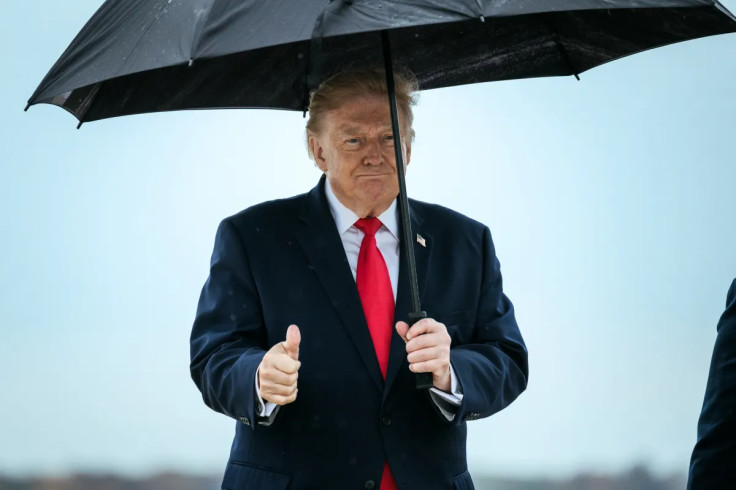
'We don't need a deal with Iran,' Donald Trump said, arguing that Washington already had leverage because billions of dollars in Iranian assets were frozen overseas. In a Truth Social post on Thursday, 12 November, the US president added: 'We've got their money.' He also said fresh strikes on Iran seemed 'quite unlikely', more than a week after Republicans lost control of both chambers of Congress.
The post came more than eight months into the US-Israeli war with Iran. Qatar is still mediating between Washington and Tehran. Trump met Qatar's Prime Minister, Sheikh Mohammed bin Abdulrahman Al-Thani, this week and said Gulf Arab allies preferred the 'status quo' of economic pressure. He added that the US remained 'locked and loaded', but that new strikes on Iran seemed 'quite unlikely'.
That marks a shift from the swift strikes Trump threatened before the US midterm elections. In the 3 November vote, Republicans lost control of both the House and the Senate. Vice-President JD Vance blamed the losses on the war and on US relations with Israel.
Netanyahu Faces a Coalition Challenge
Israeli Prime Minister Benjamin Netanyahu also faces a coalition challenge. In Israel's 27 October election, Netanyahu's bloc won 53 seats, the opposition bloc led by Gadi Eisenkot won 48, and Arab-led parties won 19. Neither bloc reached the 61 seats needed for a majority. President Isaac Herzog has since given Eisenkot the first chance to form a government, after 67 lawmakers backed him.
Anwar Gargash, diplomatic adviser to the UAE president, warned on 9 November that the region faces a long period of uncertainty. He said neither a decisive resolution nor a stable regional order could be taken for granted.
Economic Pressure Has Not Ended the Standoff
Iran has demanded that vessels get its permission to pass through the Strait of Hormuz. US escorts have helped oil tankers use a route near Oman, but pre-war exports of liquefied natural gas, fertiliser and aluminium have not recovered.
The International Monetary Fund's October projections show three Gulf economies shrinking this year. Kuwait's economy is forecast to contract by 16.7 per cent, Qatar's by 15.6 per cent and Bahrain's by 11.3 per cent.
On 13 November, Iran's Revolutionary Guard claimed it had destroyed a US early-warning radar in Bahrain. It called this retaliation for an attack on a telecommunications tower in southern Iran. The US military said it intercepted two Iranian drones heading towards Bahrain, reporting no injuries or damage. Iran's claim that it destroyed the radar has not been independently verified.
Secretary of State Marco Rubio said military action was not needed at present because sanctions were working. US Central Command says the naval blockade has cut Iran off from at least $25 billion (£18.89 billion) in revenue.
Iran has set seven conditions before direct nuclear talks. They include lifting sanctions, ending the blockade, releasing frozen assets and a ceasefire on all fronts, including Lebanon and Gaza. 'These seven items are on the table. Take it or leave it,' Tehran municipality spokesperson Hamidreza Gholamzade told NPR. Rubio called the conditions 'absurd.'
Iran has also rejected proposals to move its enriched uranium abroad. 'We will not remove even a shred of enriched nuclear material from Iran,' Mohsen Rezaei, secretary of Iran's Supreme National Security Council, said on state television on 11 November.
For now, Washington appears set to keep up economic pressure while holding military options in reserve.
© Copyright IBTimes 2026. All rights reserved.