

Biographer Jean Guerrero Labels Stephen Miller a 'Class Supremacist' Who Wants a 'Servant Class'
In an interview with Wired, Guerrero linked immigration policy to workers' ability to demand better conditions and questioned the administration's foreign policy decisions
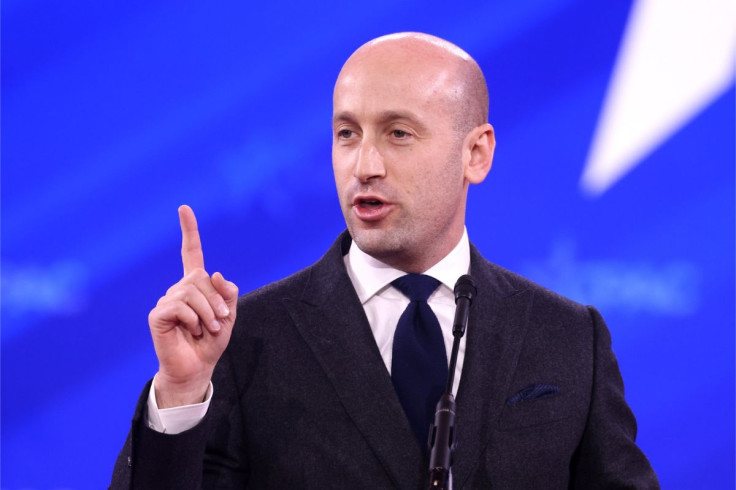
Stephen Miller's biographer Jean Guerrero has criticised the administration's approach to immigration, arguing in comments to Wired that criminalising migrants weakens workers' ability to organise together and demand better conditions.
Guerrero examined the White House official in Hatemonger, published in 2020. In that book, she described Miller as a 'key player' in delivering Donald Trump's America First agenda. Her interview returned to his political outlook and explained how her interpretation had developed since Trump's first administration.
Guerrero Questions Stephen Miller's Immigration Approach
Guerrero's criticism centred on the relationship between immigration policy and workers' collective position. She argued that attention to the administration's treatment of immigrants could obscure the consequences for their ability to join other workers.
'By focusing all the attention on the war on immigrants, it distracts us from understanding that when you have one sector of the population that is being criminalized and forced to stay in the shadows, then they cannot link arms with other workers to demand to live with dignity,' Guerrero stated.
Her argument concerned the effects she believed those circumstances had on organising. She connected the position of immigrants with the wider working population through their shared ability to demand dignity.
That emphasis on class formed part of her reassessment of Miller. Guerrero explained that she had returned to her earlier work while considering the administration's approach to immigration and foreign policy.
How Foreign Policy Shaped Her Stephen Miller Assessment
Guerrero referred to Venezuela and the elections in Honduras when outlining questions that had contributed to her thinking. She questioned the relationship between the administration's actions abroad and its position on migration.
'I came to this conclusion because when I first saw what the administration was doing on the foreign policy front, I was confused,' she stated.
'Why would they be interfering in Venezuela or the elections in Honduras, when we know those are the exact types of actions that cause instability and migration?'
Her question linked her criticism of foreign intervention to the consequences she believed it had for migration and immigration policy.
She also cited an exchange with Jake Tapper in which, according to Guerrero, Miller described international affairs in terms of strength, force and power.
Guerrero quoted Miller as telling Tapper, 'You can talk all you want about international niceties and everything else. But we live in a world, in the real world, Jake, that is governed by strength, that is governed by force, that is governed by power,' and explained that his remarks prompted her to reread sections of her book.
White House Highlights Stephen Miller's Policy Work
The White House defended Miller by emphasising his contribution to Trump's agenda. Its statement credited him with work across policing, deregulation, energy, drug cartels and border security.
Those descriptions represented the White House's assessment of his record. The response focused on the administration's policy priorities and Miller's role in advancing them.
'Stephen Miller has been a key player in delivering on President Trump's America First agenda, including spearheading the administration's crime crackdown, including in DC and Memphis, record-setting deregulation, unleashing American energy, dismantling drug cartels, and securing our border'
© Copyright IBTimes 2026. All rights reserved.