

California Loses ICE ID Battle as Appeals Court Blocks State Rule for Federal Immigration Agents
The Ninth Circuit ruled that the No Vigilantes Act violates the Supremacy Clause, limiting California's efforts to restrain ICE raids and strengthen transparency
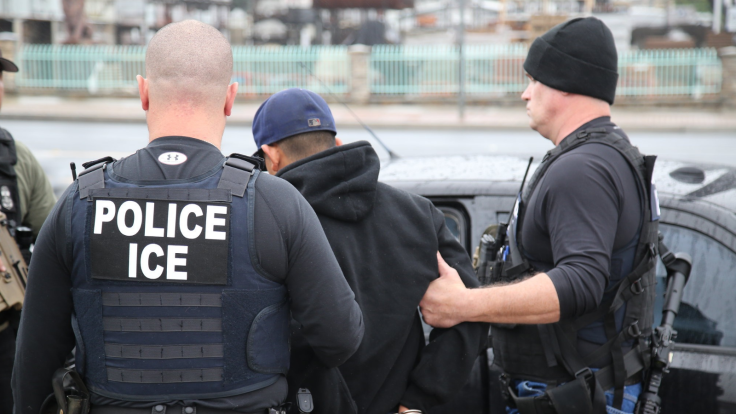
California lost a legal battle with President Donald Trump's administration on Wednesday, 14 October, over identification requirements for federal immigration officers. The US Court of Appeals for the Ninth Circuit directed a lower court to block enforcement of the state's No Vigilantes Act against federal agents.
The law required non-uniformed officers to display identification while performing enforcement duties, subject to exceptions.
Judges found that California had improperly attempted to regulate federal operations without congressional authorisation. The decision limits the state's authority over federal officers but does not determine whether immigration raids themselves are lawful.
The ruling followed a lawsuit filed by the Justice Department in November 2025 against California, Governor Gavin Newsom and Attorney General Rob Bonta. Federal officials argued that the identification requirement violated the US Constitution's Supremacy Clause, which restricts states from directly regulating federal government operations.
California ICE Identification Law Blocked by Federal Appeals Court
The No Vigilantes Act, enacted in September 2025, required non-uniformed law enforcement officers to display identification showing their agency and either a name or badge number.
The requirement applied to federal officers operating in California, including Immigration and Customs Enforcement personnel. Officers who wilfully and knowingly violated the measure could face criminal penalties under state law.
The legislation included narrow exceptions and allowed agencies to comply through publicly posted identification policies meeting specified requirements.
In its 14 October opinion, the Ninth Circuit concluded that Section 10 of the law directly regulated federal law enforcement activities without congressional permission.
'Section 10 explicitly overrides the federal government's power to determine whether, how, and when to publicly identify its officers,' the court wrote.
California argued that the requirement did not substantially interfere with federal operations. The three-judge panel rejected that position, finding that the extent of interference was irrelevant when a state directly regulated federal government functions.
The judges said the Trump administration was 'certain to succeed' on its constitutional claim. They reversed the district court's refusal to grant preliminary relief and ordered it to issue an injunction preventing California from enforcing the requirement against federal officers.
The decision strengthens the administration's legal position but concerns a preliminary injunction rather than a final judgment resolving every issue in the lawsuit.
California ICE ID Ruling Draws Opposition From State Officials
California officials criticised the ruling, arguing that visible identification was necessary for public safety and accountability during immigration enforcement operations.
Bonta's office said it was disappointed and reviewing the court's opinion. In a statement, it argued that officers refusing to identify themselves could undermine public confidence in law enforcement.
The attorney general had previously defended the legislation as a safeguard against unidentified agents operating in California communities. His office maintained that transparency and accountability were essential to effective policing.
Newsom's office also criticised the Trump administration's immigration enforcement tactics, accusing federal authorities of harming families and communities.
Federal officials welcomed the appeals court decision.
Assistant Attorney General Brett Shumate praised the ruling, while Associate Attorney General Stanley Woodward described it as a victory for federal law enforcement. Their responses reflected the administration's position that California could not dictate how federal officers carried out duties authorised by Congress.
The disagreement extends beyond identification badges. California officials maintain that greater oversight is necessary to protect residents, while federal authorities argue that states cannot impose operational requirements on federal agencies.
California ICE Identification Dispute Follows Months of Litigation
The Ninth Circuit's latest decision followed earlier orders that had already prevented California from enforcing the identification requirement against federal officers.
A district judge initially declined to block that provision. However, the appeals court issued a temporary administrative injunction on 19 February 2026, preventing enforcement while the case proceeded.
On 22 April, the court granted an injunction pending appeal. Its October ruling reversed the lower court's denial of preliminary relief and directed it to enter a preliminary injunction.
The procedural distinction matters because the identification requirement was already suspended before Wednesday's decision. The latest opinion established the appellate panel's legal reasoning for maintaining that protection.
The lawsuit also challenged California's separate No Secret Police Act, which restricted the use of masks and other face coverings by law enforcement officers.
A district judge had previously blocked enforcement of that restriction against federal officers. The mask provisions were not part of the October appeal, which concerned only the No Vigilantes Act's identification requirement.
The ruling does not decide the validity of identification requirements applying to state or local law enforcement personnel. Nor does it remove any separate obligations federal officers may have under federal law.
California introduced its legislation amid public concern about immigration raids and the presence of masked or unidentified federal agents. The state argued that identification requirements would help residents distinguish legitimate officers from impersonators and improve accountability during enforcement operations.
For the Trump administration, the decision preserves federal control over how its officers identify themselves while carrying out their duties. For California, it prevents enforcement of a measure intended to increase transparency during immigration operations.
The broader dispute remains unresolved. Although the appeals court has directed preliminary relief against the state identification requirement, its decision does not authorise every federal enforcement practice or settle the continuing disagreement over immigration policing and accountability.
© Copyright IBTimes 2026. All rights reserved.