Tom Homan States ICE Will Flood Sanctuary Cities With Resources and Declares They Are Not Going Anywhere
The acting ICE director gave no timetable or staffing figures as the agency faces scrutiny over deaths in detention
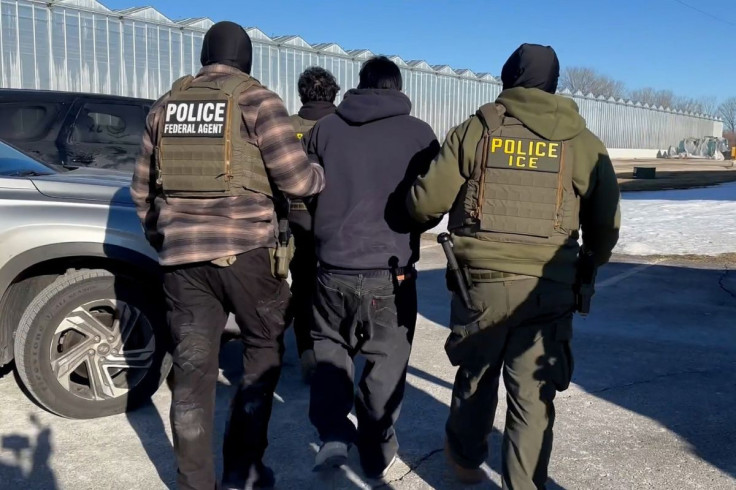
Tom Homan has vowed to intensify Immigration and Customs Enforcement operations in sanctuary cities, saying the agency will 'surge resources and flood the zone' as ICE faces scrutiny over deaths in detention.
Trump's Border Czar Tom Homan, following the 58th death in ICE custody:
— Headquarters (@HQNewsNow) September 24, 2026
We're not gonna apologize. You can hate us all you want, we're not going anywhere. ICE will continue pic.twitter.com/cecG6xbeoi
Speaking at the Justice Department's first Attorney General's Summit on Victims of Violent Crime in Washington, DC, on Thursday, 24 September, Homan said ICE was 'not going anywhere'.
'We're gonna keep pushing. We're not gonna apologise,' Homan told the audience. 'The media back there, you can hate us all you want, we're not going anywhere.' He later said ICE would continue operating across the country, 'especially in sanctuary cities, where we'll surge resources and flood the zone'.
Homan Puts Sanctuary Cities On Notice
Homan did not provide a figure for the promised surge, identify a timetable or say how many additional officers would be assigned. His remarks indicate an intended increase in enforcement resources, but do not amount to a publicly released nationwide deployment plan.
The term 'sanctuary city' covers a range of policies. Some jurisdictions restrict when local authorities may hold people for immigration authorities or share information with ICE, while still allowing co-operation on criminal investigations and public-safety matters.
DOJ Links Summit To Federal Enforcement
Homan spoke at the summit alongside Attorney General Todd Blanche and FBI Director Kash Patel. The Justice Department used the event to announce a $25 million (£18.8 million) grant programme called Assisting Neighborhoods and Governments with Enforcement of Laws, or ANGEL.
The programme is intended to support state, local and tribal law-enforcement activities including locating and apprehending people who are unlawfully present and have also committed crimes, investigating gangs and trafficking, supporting court operations, temporary detention and transport.
The Justice Department said the programme was created to honour Americans killed by 'illegal aliens, violent offenders, and illicit drugs'. Homan also used the event to argue that sanctuary policies undermine federal enforcement.
At the summit, he said: 'Sanctuary cities are sanctuaries for criminals. They need to be outlawed. Congress needs to get off their a** and pass laws to make sanctuary cities illegal.'
ICE Faces Scrutiny Over Detention Deaths
The remarks came as ICE faces scrutiny over deaths in detention. Human Rights Watch reported in June that 52 people died in ICE custody during the first 500 days of Donald Trump's second administration, from 20 January 2025 through 4 June 2026. It said the mortality rate was at its highest level in more than a decade and had more than doubled since Trump's second term began.
The death count has since risen. The Associated Press reported that Carlos Josue Marchena Marchena, a 36-year-old Costa Rican detainee who died on 18 September at Winn Correctional Center in Louisiana, was at least the 58th ICE detainee to die since Trump returned to office.
Marchena's family and another detainee told AP that he had complained about missed insulin, meals and water. ICE said he received proper medical care, while his official cause of death remained pending.
The different totals reflect different reporting periods and methodologies. Human Rights Watch's analysis ends on 4 June, while AP's count includes later deaths.
No Timetable Has Been Given For The Surge
A larger ICE presence would require more than additional agents. Expanded enforcement can also require detention space, transport, immigration-court capacity and medical services, although Homan has not outlined how those requirements would be addressed.
The administration argues that sanctuary policies can impede the removal of people who have committed crimes. Critics of expanded federal operations argue that local police should remain focused on community safety rather than immigration enforcement.
Those positions concern different aspects of the same federal-local conflict. Sanctuary policies vary by jurisdiction, and the label alone does not establish that a local government refuses all co-operation with federal authorities.
For now, Homan has publicly promised more ICE resources in sanctuary cities and said the agency will continue its nationwide enforcement campaign. He has not released a timetable, staffing figure or detailed nationwide deployment plan for the promised surge.
© Copyright IBTimes 2026. All rights reserved.
- Recommended For You