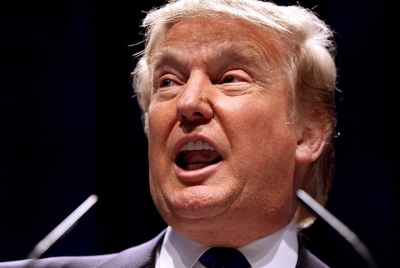
'Side of His Mouth Was Starting to Droop': Forensic Psychologist Flags 'Concerning' Trump Oval Office Footage
When the commander-in-chief keeps blinking out mid-briefing, the silence from his doctors becomes part of the story
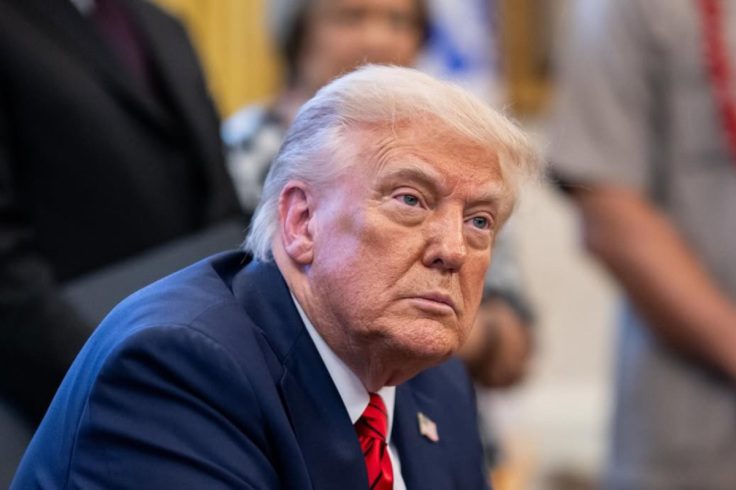
President Donald Trump appeared drowsy and at times seemed to close his eyes for extended moments during a White House meeting on Monday, prompting a forensic psychologist who analysed footage of the event to raise concerns about the president's health.
Video from the Oval Office shows Trump closing his eyes and allowing his head to dip at various points as senior officials, including Robert F. Kennedy Jr, discussed his administration's health care policies.
The scrutiny of Trump's behaviour comes amid months of public questions about the president's physical and cognitive condition. He has previously faced speculation about his health, and his recent public appearances have fuelled further debate over whether the episodes could have causes other than ordinary tiredness.
Donald Trump Meeting Clips Alarm Forensic Psychologist
The footage was recorded during what the White House billed as an announcement on health care affordability and drug pricing, centred on nine new agreements with drug companies.
Cameras captured Trump seated at the Resolute Desk as aides spoke around him, with his eyes repeatedly closing and his head at times dipping forward while others delivered prepared remarks.
On Friday, forensic psychologist John Paul Garrison published a detailed breakdown of the video, examining Trump's conduct throughout the event. He said one exchange involving RFK Jr particularly caught his attention.
Garrison noted that as Kennedy lavished praise on Trump, calling him 'the greatest ever' and saying 'nobody could have done this but you,' the president showed almost no visible reaction. Garrison said Trump's limited response to that moment stood out to him.
'Typically, he's gonna smile, he's gonna nod, he's gonna let people know, I love people talking about me,' Garrison said, arguing that the muted expression differed from Trump's usual on-camera persona. 'This really does show how out of it he is right now,' he claimed.
After Kennedy finished speaking, Trump appeared to nod off again. It was in this sequence that Garrison focused on what he regarded as a potentially concerning detail.
Psychologist Highlights Facial Droop and Daytime Drowsiness in Donald Trump
According to Garrison, as Trump's head dipped and his eyes closed once more, one side of his mouth seemed to lower slightly. 'As he's getting tired again, you're noticing this side of his mouth was starting to droop down,' he said, describing it as a subtle but visible change in Trump's expression. In the same clip, Trump appears to struggle to keep his eyes open 'a few more times,' Garrison added.
Garrison interpreted the apparent change in Trump's facial expression as potentially significant, although he acknowledged that video alone cannot establish the cause of such a change. He said the combination of how drowsy Trump appeared on camera and the president's age raised questions that, in his view, warranted closer scrutiny.
He also pressed the basic question that many viewers were asking themselves. 'So the big question is why does he seem to be falling asleep? Is it related to distinct health issues, neurological issues, is it related to medication?' he said.
Garrison went on to outline a range of theoretical explanations, stressing that he was not diagnosing Trump. He went on to outline a range of theoretical explanations, stressing that he was not diagnosing Trump.
Speaking in general terms, he said seizure disorders and certain medications can be associated with fatigue or drowsiness, and that some neurological conditions can sometimes be linked with excessive daytime sleepiness. He made clear he had no direct information about Trump's medical record.
Garrison did not attribute the behaviour to a particular diagnosis, but he repeatedly described what he saw in the Oval Office as 'so, so concerning.' He noted that he had highlighted prior videos in which Trump appeared drowsy, and said the pattern now seemed to be surfacing even in a formal Oval Office meeting.
Questions Mount Over Donald Trump's Health
To recall, Monday's Oval Office episode is only the latest instance in which Trump's health has been dissected in public. Commentators and online analysts have shared clips they say appear to show him nodding off during previous cabinet and policy meetings, and some have argued that such episodes are becoming more frequent.
Separately, photographs and video of Trump have sparked online discussion about the appearance of his hands, ankles and neck.
The renewed focus on Trump's condition has even surfaced in coverage of foreign policy.
Journalist Jeremy Scahill has reported that, according to an Iranian official he interviewed, Tehran's negotiating team had enlisted senior psychologists to help assess Trump's behaviour and shape messages delivered to him through intermediaries.
Scahill said the official claimed those psychologists believed Trump was 'legitimately mentally ill' and 'operating in an impaired mental state.'
As of publication, the White House had not issued a detailed medical update addressing Garrison's analysis or the specific behaviour seen in the Oval Office footage.

Trump administration officials have previously dismissed questions about his health and alertness, often framing them as partisan attacks rather than genuine concern. That stance may play well with supporters who are tired of the constant drama, but it leaves a vacuum that clips like Monday's are only too happy to fill.
The Oval Office footage has already provoked sharply different readings online, with some viewers brushing it off as a tired 80-year-old blinking too long in a stuffy room, and others insisting the pattern looks like something more medically serious. Without transparent medical information, the argument just loops.
Yet when the person closing his eyes in the middle of a key policy announcement is President Trump, and the questions are being raised not only by his critics but by a forensic psychologist willing to put his name to them, the issue does not feel like it is going away any time soon.
© Copyright IBTimes 2026. All rights reserved.
- Recommended For You