

'Is Nothing Sacred Any More?': St Paul's Cathedral Criticised Over Four-Year Partnership With Nightclub Fabric
St Paul's Cathedral faces backlash over a four-year fabric partnership, with critics asking 'Is nothing sacred any more?'
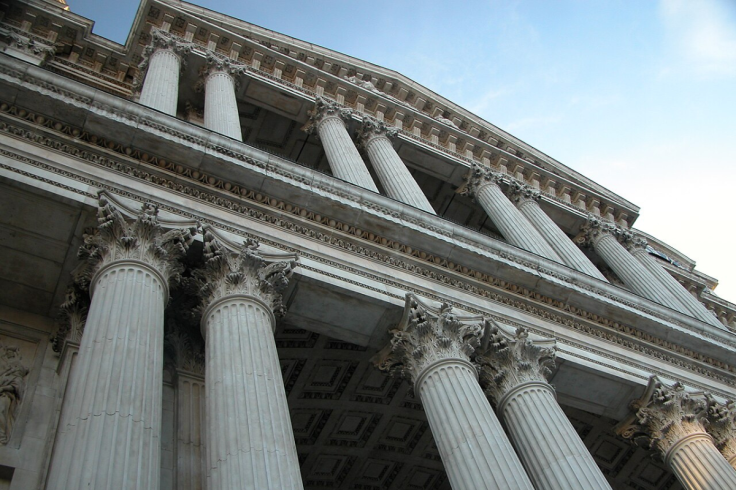
St Paul's Cathedral faces criticism over a four-year partnership with London nightclub fabric to stage contemporary music events inside the historic building, with the first performances planned for 2026.
The arrangement, under which fabric will partner with the cathedral on contemporary music events, has sparked a fierce debate over whether the more than 300-year-old cathedral should host such performances, with critics asking, 'Is nothing sacred any more?'
The Church of England has faced similar backlash in recent years over events at other cathedrals that critics dubbed 'rave in the nave,' a description the cathedrals rejected.
The first event of the new partnership is scheduled for 29 October 2026, although the artist and further details have not yet been announced.
Sacred Space or Concert Hall?
The controversy centres on whether hosting events in partnership with a nightclub brand in a cathedral blurs the line between reverence and entertainment.
Peregrine Hood, president of the Nelson Society and a descendant of Lord Horatio Nelson's elder brother said, 'Is nothing sacred any more? What a sad reflection on where spiritual integrity and Christianity are today. St Paul's Cathedral positioning itself in this way is deeply depressing.'
Hood said the issue extended beyond Nelson, whose tomb lies in the crypt beneath the cathedral. 'Nelson came from a family steeped in the Church, and perhaps it is this misuse of a holy site that would have caused him even greater unease than the prospect of dancing on his grave,' he said.
Andy Smith, press officer for the Nelson Society, described St. Paul's as 'the premier cathedral of the land' and said the prospect of holding raves or concerts there was 'deeply offensive to Christians.' Smith described the arrangement as 'a profound insult' to Nelson's memory and to other national figures buried or memorialised at St. Paul's.
St Paul’s Cathedral has signed a four-year partnership with London nightclub Fabric to stage contemporary music events inside the cathedral until 2030.
— The English Remnant (@Englishremnant) September 3, 2026
The first event will take place on 29th October. Artists have not yet been announced.
Fabric lost its licence in 2016 after… pic.twitter.com/fLY57kX5JS
Cathedral officials have defended the partnership, describing the programme as a carefully curated series of concerts intended to introduce new visitors to the building.
Officials have said the events will be seated, with attendees expected to remain seated throughout, and that performances will take place in the main body of the cathedral beneath the dome, not in the crypt where Nelson is buried.
Sandra Lynes Timbrell, director of visitor engagement at the cathedral, said the goal was to help people 'discover and engage with this historic building in new and exciting ways,' adding that a 'carefully curated programme of exceptional concerts' should draw first-time visitors.
Cameron Leslie, co-founder of fabric, called the partnership 'an extraordinary and unexpected coming together of two very different parts of London.' He said the club had long aimed to unite audiences through music, and that this booking felt fitting for such an unusual venue.
A History of Controversy
This is not the first time fabric has found itself at the centre of controversy. The nightclub, which opened in 1999, had its licence revoked by Islington Council in 2016 following the deaths of two 18-year-old patrons who had taken ecstasy after nights out at the venue.
It reopened in January 2017 under stricter licensing conditions, including a minimum age of 19 for main events and enhanced security measures.
Jacob Phillips, a professor of systematic theology at St Mary's University in Twickenham and a former participant in the late-1980s and 1990s rave scene, warned that cathedrals risk becoming 'playgrounds for middle-aged ravers' if the distinction between worship and entertainment is lost.
Writing in The Telegraph, Phillips argued that Christian teaching places greater emphasis on everyday responsibilities and that communities built around commitment and self-sacrifice can offer a more durable sense of belonging than the temporary togetherness associated with a dance floor.
Planned 2024 events at Canterbury Cathedral also drew a petition opposing the use of the cathedral for silent discos. Organiser Cajetan Skowronski said such events 'would not bring young people closer to Christ' and instead risked suggesting 'that entertainment deserves our attention more than God.'
St. Paul's Cathedral, designed by Sir Christopher Wren and completed in 1710 after the Great Fire of London in 1666, has previously hosted contemporary music performances, including RY X in 2023 and Patti Smith in 2024. The new four-year partnership marks a longer-term programme of contemporary music events at the cathedral.
© Copyright IBTimes 2026. All rights reserved.