

Susie Wiles Breaks Ranks in Jaw-Dropping Interview and Takes a Swing at Her Own White House
Trump Chief Of Staff's Revelations Offer Rare Glimpse Inside White House Dynamics
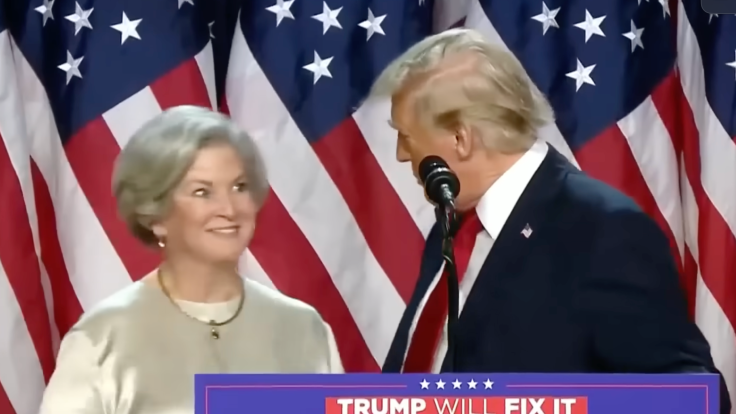
White House Chief of Staff Susie Wiles has offered an unprecedentedly candid critique of the Trump administration. In a series of interviews published in Vanity Fair, she revealed deep internal fractures in the White House.
The remarks, which include sharp assessments of President Donald Trump, Vice President JD Vance, and Attorney General Pam Bondi, have ignited a fierce response from the administration, raising questions about party cohesion ahead of the 2026 mid-term elections.
Wiles on Trump, Vance, and Bondi
Susie Wiles, who managed Trump's 2024 presidential campaign before becoming White House Chief of Staff, made a series of startling statements about senior officials. In the interviews with author Chris Whipple, she characterised President Trump's leadership style as driven by boundless confidence. She also likened his disposition to that of an alcoholic despite his long-standing teetotalism.
Wiles connected her perspective to her own experience, citing her father's struggle with alcoholism, and suggested that Trump exhibits a similar compulsion to push boundaries.
Wiles also criticised Vice President JD Vance, describing him as having been a 'conspiracy theorist for a decade' and implying his political conversion was driven more by strategy than conviction.
Perhaps most pointedly, Wiles criticised Attorney General Pam Bondi's handling of the Jeffrey Epstein files, telling Whipple that Bondi had 'completely whiffed' in addressing the issue for the administration's conservative base. She criticised the distribution of binders of Epstein material that contained no substantive new information and disputed claims that a list of alleged clients existed on Bondi's desk.
These comments represent an extraordinary departure from the traditional discretion expected of a White House Chief of Staff.
BREAKING: Vanity Fair author Chris Whipple just revealed stunning details from his conversations with Susie Wiles, Trump’s chief of staff.
— Brian Krassenstein (@krassenstein) December 16, 2025
Here’s what she told him:
- Wiles said she has read the Epstein documents and acknowledged that Trump’s name is in them.
- Wiles said… pic.twitter.com/MyFFdv1vRH
Policy Disputes and Internal Strategy
Alongside personal appraisals, Wiles's interviews delved into policy disputes. On foreign policy, she suggested that the administration's striking of vessels in the Caribbean, officially presented as anti-drug efforts, may also have broader geopolitical aims related to regime change in Venezuela.
On the subject of internal prosecutions, Wiles acknowledged that actions under the administration might 'look like retribution' in some cases, though she maintained that they targeted individuals who had acted against the administration. Her comments included an assessment of New York Attorney General Letitia James's civil court verdict against Trump, noting the administration's perspective that the financial penalty was excessive, though its fraud finding was upheld on appeal.
These frank assessments highlight a broader narrative in which senior figures in the West Wing openly debate the goals and optics of the administration's actions, even as they attempt to present a united front to the public.
The article published early this morning is a disingenuously framed hit piece on me and the finest President, White House staff, and Cabinet in history.
— Susie Wiles (@SusieWiles) December 16, 2025
Significant context was disregarded and much of what I, and others, said about the team and the President was left out of the…
Administration's Response And Political Fallout
The release of Wiles's remarks has not gone uncontested inside the corridors of power. Within hours of the Vanity Fair profile becoming public, Wiles took to the social media platform X to push back against the portrayal of her words, calling the article a 'disingenuously framed hit piece' designed to misrepresent both her and the administration. She defended the accomplishments of the Trump White House and reaffirmed her loyalty to the president.
White House Press Secretary Karoline Leavitt echoed this sentiment, praising Wiles's leadership and portraying her as indispensable to the administration's success. Leavitt lauded the administration's 'most successful first 11 months of any presidency' and emphasised Wiles's role in that achievement.
Members of Trump's family have also weighed in, with Donald Trump Jr defending Wiles's media profile and casting doubt on the accuracy of the Vanity Fair portrayal. His commentary suggested that Wiles's reserved media presence had been misconstrued.
Despite these efforts at damage control, the interview has sparked vigorous debate among political analysts. Some view Wiles's remarks as an unprecedented breach of internal discretion, while others see it as a necessary airing of intra-administration views.
Hilarious. The WH had all the Cabinet members simultaneously put out statements supporting Susie Wiles after the Vanity Fair article came out. pic.twitter.com/sg7AyYNEcZ
— Ron Filipkowski (@RonFilipkowski) December 16, 2025
Implications For The 2026 Mid-Term Elections
As the United States approaches the 2026 mid-term elections, the revelations contained in Wiles's interviews could have significant implications for Republican strategy and electoral prospects. The depth of insider commentary and the willingness to challenge narratives from within the administration have provided voters with a rare window into the dynamics shaping policy and messaging from the White House.
Political strategists are likely to scrutinise the impact of Wiles's statements on campaign messaging and party unity. Her critiques of senior figures and blunt assessments of internal disagreements may colour public opinion and influence how Republican candidates position themselves on key issues in the coming months.
With the political landscape increasingly fraught and divisions within the Republican Party drawing national attention, Susie Wiles's candid interview stands as a pivotal moment in the ongoing narrative of American governance and partisan contestation.
© Copyright IBTimes 2026. All rights reserved.