3I/ATLAS Shock: Harvard's Avi Loeb Is Accused Of Sustaining 'Alien Technology' Conspiracy Theory
Is comet 3I/ATLAS an alien probe? A new study links Harvard's Avi Loeb to the viral conspiracy

The question sounds ripped straight from a sci-fi blockbuster like Arrival or 2001: A Space Odyssey, yet it became a very real source of furious, months-long online debate. The cosmic object at the centre of this drama is the interstellar comet known prosaically to astronomers as 3I/ATLAS.
While official science now confidently classifies it as a natural celestial interloper — only the third known object of its kind to enter our system from deep space — a significant portion of the internet has already crowned it the latest piece of irrefutable proof that aliens are here.
But new research is less interested in the comet itself and far more interested in us, the humans, and why we're so desperately willing to believe the impossible.
Mert Bayar, a postdoctoral scholar at the University of Washington's Centre for an Informed Public, zeroed in on the 3I/ATLAS phenomenon, not as an astronomer, but as a digital analyst. His goal was to meticulously track how social-media influencers exploit genuine information gaps — the moments where natural explanations feel incomplete or overly complicated — to fuel over-the-top, alien-centric speculation.
Bayar's academic focus is clear: 'I've written previously on how expert opinions can fuel conspiracy theorizing through elite-driven rumoring and amplification', he told GeekWire in an email. This, combined with 'a personal interest in space-related conspiracy theories', spurred him to look 'more closely at 3I/ATLAS'.
His comprehensive analysis, which has just been published, is provocatively titled, Alien of the Gaps: How 3I/ATLAS Was Turned into a Spaceship Online. The title is an explicit nod to the theological concept of the 'God of the Gaps,' which describes how thinkers throughout history have appealed to a higher power — be it the gods of Mount Olympus or a single divine being — to explain phenomena they could not fully comprehend.
Bayar argues that today's speculation follows a remarkably similar, if secularised, process: 'Where natural explanations feel incomplete, we substitute a different higher agency, not Zeus this time, but extraterrestrials', he writes.

The Harvard Scientist Fuelling the 3I/ATLAS Spaceship Theory
The moment 3I/ATLAS was first spotted in July, its non-solar, interstellar trajectory immediately marked it as a source of intrigue. Even after astronomers gathered enough evidence to confidently classify it as a comet, the object's somewhat 'anomalous' behaviour ensured the alien speculation remained stubbornly in orbit. So, how exactly did a relatively obscure comet become a viral sensation and a beacon for UFO enthusiasts?
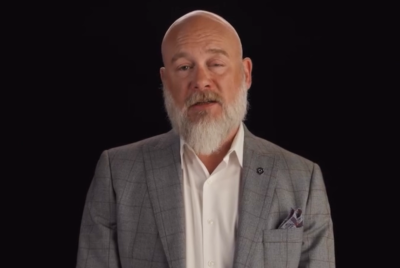
The answer, according to Bayar's research, lies squarely at the feet of one of the world's most respected, and controversial, academics: Harvard astronomer Avi Loeb. Loeb is, of course, no stranger to this narrative. Years before the comet was identified, he gained notoriety for raising the possibility that an earlier interstellar object, 'Oumuamua, 'may be a fully operational probe sent intentionally to Earth vicinity by an alien civilization'. Loeb has doubled down on this alien-technology theme repeatedly in follow-up research papers and in his 2023 book. Crucially, the discovery of 3I/ATLAS this year provided fresh, fertile ground for his speculative musings.
To quantify this influence, Bayar harnessed a media analytics platform called Brandwatch to scrutinise the public conversation. He analysed roughly 700,000 posts about the comet published on the X social-media channel (formerly Twitter) between July 1 and Nov. 21.
The results are startling. Bayar found that 'almost 280,000 of the 700,000 posts invoke aliens or ET technology — about 40% of the 3I/ATLAS conversation on X'. Furthermore, the gravity of Loeb's profile is undeniable: roughly 130,000 posts reference him by name or by his status as a Harvard scientist, and more than 82,000 posts explicitly pair his name with the alien-technology hypothesis.
Bayar is quick to add a note of journalistic fairness, conceding that, 'To be fair, at times, Avi Loeb states that 3I/ATLAS is most likely a natural interstellar comet'. However, Bayar argues that this necessary caveat is lost in the sheer volume of his other commentary. He suggests that Loeb then 'spends far more time walking through its supposed 'anomalies' and entertaining the alien-technology hypothesis.
For most audiences, the volume and emphasis of that speculation effectively buries the initial caveat and recenters the story around the alien frame rather than the natural-comet explanation'. The complex, natural explanation is simply not as clickable as the extraterrestrial one.
The 'Mystery Economy' and the Viral Spread of 3I/ATLAS Rumours
This dynamic feeds directly into a broader online ecosystem that Bayar has dubbed the 'mystery economy'. 'Our information systems reward the production of mystery and speculation,' Bayar asserts. He points out that this reward structure is deliberately amplified by a ready-made ecosystem of websites, content creators across platforms who produce, spread and amplify speculative takes.
These content creators, whether they are small-time YouTubers or large conspiracy websites, require 'a steady supply of 'new' material', which, Bayar concludes, is constantly fed by 'Loeb's ever-growing list of anomalies, even when indirectly refuted by organizations like NASA, [which] feeds that need for sustained mystery and endlessly recyclable content'.
For those curious about the specifics of the comet's 'anomalies', Penn State astronomer Jason Wright, who focuses on studies of extrasolar planets and the search for extraterrestrial intelligence, has compiled a comprehensive blog post offering scientific explanations for Loeb's list that do not involve alien intervention.
The implication is that the spread of the 3I/ATLAS spaceship rumour is not a random occurrence, but an economically-driven cycle where the speculation is more profitable than the truth. Interestingly, Bayar's analysis reveals that this viral narrative is not contained to a single platform.
Despite the statistical analysis being limited to X due to 'data-access constraints', he identified a clear link to another major content driver. 'One of the most frequently appearing terms in the 3I/ATLAS conversation on X is '@YouTube', suggesting that many X accounts are reacting to or sharing YouTube videos', he confirmed. This cross-platform flow indicates a networked spread, though Bayar cautions that the conversation remains niche, observing that the 'Total volume is still under a million posts, which suggests it hasn't broken out into a truly mass-viral story beyond the UFO/UAP crowd'.

Yet, the social significance of this research extends far beyond the possibility of alien spacecraft. Bayar believes the insights gleaned from studying the 'Alien of the Gaps' apply to other areas of conspiratorial thinking that plague the modern world, citing examples that range from vaccine denialism to the search for the Jan. 6 pipe-bomb suspect. These theories thrive on the same mechanisms: an unanswered question, a respected voice speculating, and an online system that financially rewards the amplification of the resulting mystery.
The story of 3I/ATLAS is not just about a comet; it's a terrifyingly accurate blueprint for how modern conspiracies are built, monetised, and sustained. With the interstellar object due to make its closest approach to Earth on Dec. 19, which will undoubtedly lead to further astronomical imagery, expect the speculative buzz to reach a new, frantic peak.
The story of 3I/ATLAS is not a tale of little green men, but a chillingly effective blueprint for how modern conspiracies are built, monetised, and sustained online. With the object due to make its closest approach to Earth on Dec.19, the astronomical imagery is guaranteed to fuel a new, frantic peak in speculative buzz.
© Copyright IBTimes 2026. All rights reserved.
- MOST POPULAR IN Trending