3I/ATLAS Update: ESA Scientists 'Surprised' By Interstellar Comet's Activity
Interstellar Comet 3I/ATLAS is rich in CO₂. Why scientists are surprised by its activity.
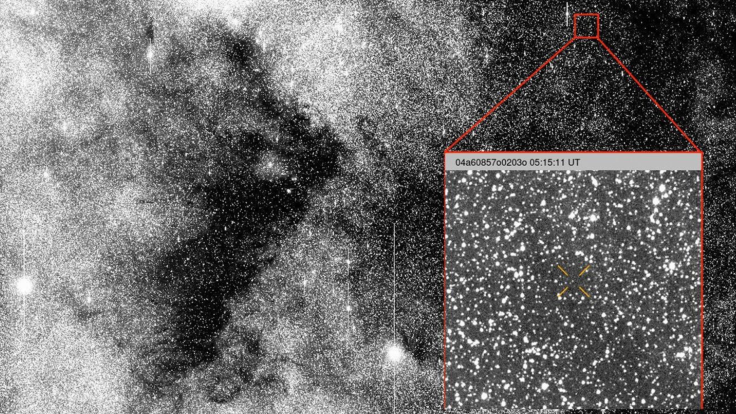
The cosmos has delivered a truly exceptional surprise, a visitor from another star system—a cosmic anomaly screaming through the periphery of our own neighbourhood. Astronomers across the globe are currently involved in a frantic, high-stakes observational race to capture as much data as possible on this interstellar object, officially designated 3I/ATLAS.
Widely believed to be a comet, this incredibly rare traveller is not merely passing by; it is providing a fleeting, once-in-a-lifetime window into the deep black of space far beyond our Sun's influence. The object's trajectory will see it make its closest approach to Earth sometime in December, before swinging out towards the giant of our solar system for its closest encounter with Jupiter next March.
Despite the flurry of direct observations being logged by both ground and space-based telescopes, the most fundamental mysteries surrounding 3I/ATLAS remain tantalisingly unsolved: what is its fundamental composition, what is its true size, and how did it manage to make its journey here?

The Unprecedented Journey of Interstellar Visitor 3I/ATLAS
The urgency to understand the mechanics of 3I/ATLAS is palpable because it is only the third object from a different star system ever spotted cutting through our solar system. Discovered on July 1, 2025, by the NASA-funded ATLAS (Asteroid Terrestrial-impact Last Alert System) survey telescope in Chile, it follows its famous predecessors, 1I/'Oumuamua (detected in 2017) and 2I/Borisov (detected in 2019).
An opportunity this significant demands the very best resources, which is why the European Space Agency (ESA) leveraged its advanced Jupiter Icy Moons Explorer (JUICE) spacecraft for a crucial inspection. Its extreme speed, measured at around 58 km/s (or 12.24 astronomical units per year) relative to the Sun, and its hyperbolic trajectory with an eccentricity of 6.139, are what mathematically confirm its interstellar origin—it is simply moving too fast to be bound by our star's gravity.
Last month, the ESA pointed five of JUICE's sophisticated science instruments towards the interloper, hoping to gain a better sense of its composition and behaviour. The probe is currently engaged in a decade-long journey to Jupiter's icy moons, having completed a speed-boosting flyby of Venus in August.
The preliminary visual data from the spacecraft's navigational camera, the NavCam, has already yielded startling results. Just two days before the probe's closest approach to the object, when it came within a distance of just 41 million miles, and three days after 3I/ATLAS reached its perihelion—its closest point to the Sun—the NavCam snapped a picture on November 2.
ESA scientists were 'surprised' by the image, finding the visitor to be 'surrounded by signs of activity' as it was being heated up by the Sun, according to an official statement. Observations have also estimated the diameter of the comet's nucleus to be between 440 metres and 5.6 kilometres.

Decoding the Dust and Plasma: The Delayed Insight into 3I/ATLAS
While the NavCam is not designed for high-resolution cosmic photography—its primary job is to help JUICE navigate the treacherous environment around Jupiter's icy moons in 2031—even its basic imagery proved invaluable. Scientists were only able to download a quarter of a single image's data, yet it was enough to clearly observe 3I/ATLAS' coma, the glowing halo of gas and dust surrounding its nucleus.
More intriguingly, the image also showed a 'hint of two tails', as described by the ESA. This includes the more visible plasma tail, which is made up of electrically charged gas, and the harder-to-spot dust tail. In solar system comets, the dust tail is composed of tiny specks similar in size to smoke particles. The plasma tail characteristically points away from the Sun, while the dust tail curves slightly into the comet's orbital path.
As 3I/ATLAS approached its perihelion in October, astronomers noted the more visible plasma tail growing considerably. This is generally expected for a natural comet, where exposure to increased solar radiation causes ices to sublimate, leaving a noticeable trail in its wake.
Spectroscopic analysis, including data from the James Webb Space Telescope (JWST), has revealed that 3I/ATLAS is unusually rich in carbon dioxide (CO₂) relative to water ice (H₂O), suggesting it formed in a very cold, distant region of its parent star system. This hyperactivity in an object from outside our star system only deepens the mystery and underscores the importance of the data collected.
Fortunately, the suite of five instruments attached to JUICE will provide an unprecedented look when the full data arrives. This includes high-resolution multispectral and hyperspectral images, ultraviolet and submillimeter wave readings, and particle spectrometer analysis. However, there is a significant wait.
The data is not expected to arrive on Earth until late February 2026. This lengthy delay is a consequence of JUICE being forced to use its main high-gain antenna as a heat shield to protect it from the Sun, leaving its smaller, medium-gain antenna to send the invaluable information back to Earth at a much lower, more painstaking rate.
This patience is a necessity of deep space exploration. When the results finally do reach us, they will provide the richest, most detailed picture yet of a true interstellar vagabond, offering profound insight into the material that forms other stellar nurseries across the galaxy. The unique composition of 3I/ATLAS, especially its high CO₂ ratio, gives us direct chemical clues about conditions far different from those that shaped our own comets, providing a tangible sample of matter from beyond the solar system.
The fleeting pass of 3I/ATLAS is more than an astronomical curiosity; it is a profound lesson in cosmic chemistry. The finding that this visitor from another star system is unusually rich in carbon dioxide, a composition distinct from the comets of our own solar system, provides a tangible sample of matter born under alien conditions.
While we must wait until early 2026 for the bulk of the high-resolution data from the JUICE probe, the early revelations have already reshaped our understanding of planetary formation across the galaxy. This is a scientific gift that will resonate for decades.
© Copyright IBTimes 2026. All rights reserved.
- MOST POPULAR IN Trending