

Trump Approval Slump Reaches MAGA Stores as Retailers Report Sales Drop Up to 90%
Retailers cite rising costs and declining voter enthusiasm as reasons for weaker Trump-themed merchandise sales
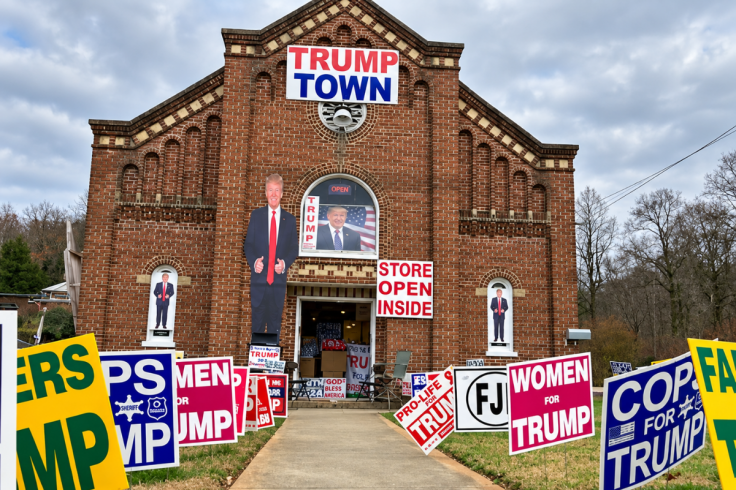
Shops that flourished selling Donald Trump-themed hats, flags, T-shirts and memorabilia during the 2024 presidential campaign are reporting sharp declines in business, with some retailers saying daily sales have fallen by as much as 90% since Trump returned to the White House.
While retailers interviewed by The Wall Street Journal largely blamed rising living costs and weaker consumer spending, the slowdown also coincides with recent polling showing Trump's approval and voter enthusiasm have weakened ahead of November's midterm elections. Surveys by Reuters/Ipsos and NBC News show declining approval ratings and lower enthusiasm even among Republican and MAGA voters, potentially reducing demand for merchandise that traditionally thrives on political excitement.
Retailers Report Dramatic Drop in Sales
Donald 'Whitey' Taylor, owner of Trump Town USA in Boones Mill, Virginia, told The Wall Street Journal his store generated as much as $15,000 (£11,200) a day during the 2024 election campaign. More than a year into Trump's second term, he said daily revenue has dropped to roughly $1,500 (£1,120), representing about a 90% decline.
Taylor attributed the slowdown primarily to higher fuel prices, persistent inflation, and customers having less disposable income. He also said many supporters felt they had already accomplished their political goal by helping Trump win another term, reducing the urgency to buy campaign merchandise.
Other vendors described similar trends. Independent sales representative Lisa Hall said customers remain supportive of Trump but are buying fewer products than they did during the election campaign, while Washington-based wholesaler NT Souvenir Wholesale has reduced inventory because retailer demand has weakened.
Weakening Enthusiasm May Also Be Hurting Sales
Beyond tighter household budgets, recent polling suggests Trump's political brand may no longer be generating the same excitement that fuelled record merchandise sales during the campaign. A Reuters/Ipsos poll released last week found Trump's approval rating remained stuck at 33%, the lowest level of his political career.
The survey also found Democrats were more enthusiastic about November's midterm elections than Republicans, with 46% of Democrats describing themselves as 'very enthusiastic' about voting compared with 31% of Republicans. Additionally, 71% of Americans, including four in 10 Republicans, disapproved of Trump's handling of the cost of living.
An NBC News Decision Desk poll released Sunday also pointed to cracks within Trump's core base. For the first time in the poll's history, fewer than half of Republicans said they 'strongly' approved of Trump's job performance. Strong approval among Republicans fell from 52% in the spring to 41%, while strong approval among self-identified MAGA supporters declined from 71% to 62%.
Overall approval among Republicans remains high, but the intensity of support has weakened. Political analysts have long observed that campaign merchandise tends to sell best during periods of heightened election enthusiasm, when supporters are attending rallies and publicly displaying their political affiliation.
Some Stores Close While Others Remain Optimistic
Not every Trump retailer has experienced the same downturn. The Trump Store Manchester in Tennessee recently closed after its owners cited weak sales and rising operating costs. Reports said clearance discounts failed to attract enough customers to keep the business open.
Meanwhile, Seth Hansen, owner of Trump Store Branson in Missouri, told The Wall Street Journal his business remains profitable despite slower sales than during the election cycle. Hansen argued that long-term success depends on sound retail management as much as political popularity.
Midterms Could Test Whether Demand Returns
Political memorabilia sales have historically surged before elections before cooling once campaigns conclude. This year's slowdown, however, coincides with deteriorating economic sentiment and evidence that Trump's political standing has weakened compared with earlier in his second term.
With Republicans preparing for the November midterm elections, retailers will soon find out whether renewed campaigning can reignite demand for MAGA merchandise or whether cautious consumer spending and softer enthusiasm continue to weigh on sales. Recent polling suggests Trump's political standing has weakened since the start of his second term, raising questions about whether election-season enthusiasm alone will be enough to revive merchandise sales.
© Copyright IBTimes 2026. All rights reserved.