'Sickest Patient I've Ever Encountered': Johns Hopkins Expert Warns Donald Trump Has 'Accelerating' Dementia
As one Johns Hopkins clinician publicly questions Donald Trump's grip on his own mind, the real battle is over who gets to decide when a leader is no longer fit to lead.
Johns Hopkins psychiatrist and clinical psychologist Dr John Gartner has warned that US president Donald Trump is the 'sickest patient' he has seen in four decades of practice, telling a podcast audience that Trump shows signs of 'accelerating' frontotemporal dementia based on years of public observation.
Gartner, a former assistant professor of psychiatry at the Johns Hopkins University School of Medicine, set out his assessment on The Daily Beast podcast. He stressed that he has never examined Trump in person and is instead drawing on a long record of broadcasts, speeches, social media posts and public appearances, comparing Trump today with the man Americans first watched enter politics in 2015. In his view, what he calls a pattern of cognitive and behavioural decline has sharpened markedly in the past few years.
Gartner's headline claim is blunt. 'In 40 years of clinical practice and almost 30 years of teaching psychiatric residents, I've never encountered a patient as sick as Donald Trump,' he said. On the same programme he argued that Trump has displayed symptoms consistent with frontotemporal dementia, or FTD, since around 2019, insisting the 'rate of deterioration is accelerating' and even suggesting Trump is 'not the same man he was four weeks ago.' That kind of precision has caught the attention of both supporters and critics, because it goes far beyond the usual armchair psychology that trails every modern president.
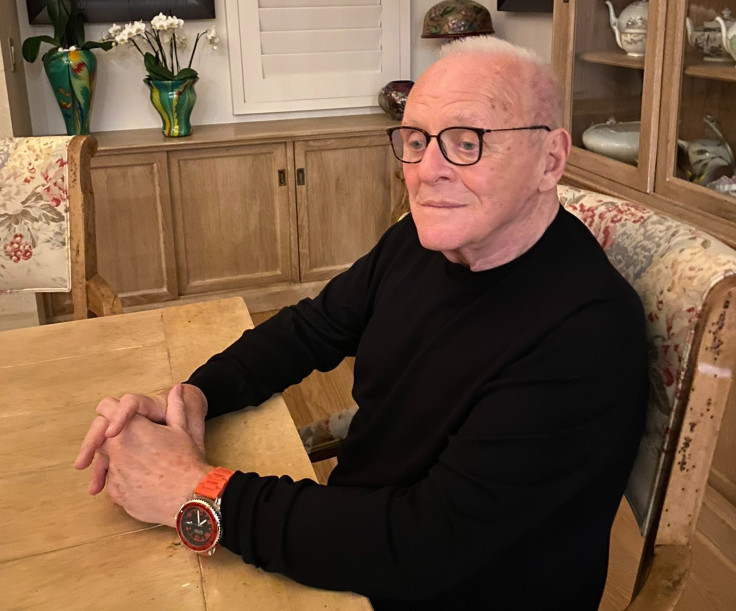
Johns Hopkins Expert Warns Of Dementia Risk
Frontotemporal dementia is not the stereotype of dementia many people carry in their heads. According to Johns Hopkins Medicine and the US National Institute on Aging, FTD primarily attacks the frontal and temporal lobes of the brain, which are responsible for judgement, impulse control, language and personality.
Patients often retain basic memory in the early stages, but may become disinhibited, erratic and socially inappropriate. Over time, the condition strips away the ability to think, speak, walk and interact, and clinicians stress that it does not plateau. It gets progressively worse.
Gartner has repeatedly framed FTD as 'a behavioural problem rather than a memory problem,' while also claiming that Trump is showing 'memory deficits.' That distinction matters in practice. A person with early FTD might pass a simple quiz about dates and facts yet struggle to stay on topic, regulate their emotions or inhibit sudden urges.
Gartner told the podcast that what worries him most is that 'people with frontotemporal dementia lose all judgment, all inhibition, all ability to inhibit their behavior, and they become disinhibited and aggressive.'
He has been specific about the behaviours that trouble him. Tangential speech, for example, is one red flag he cites. This is the clinical term for starting to answer a question and sliding off into loosely related anecdotes without circling back.
Gartner points to Trump's habit of drifting from policy queries to lengthy riffs about real-estate projects bearing his name, or to set-piece moments such as a 44‑minute press event in the White House ballroom, where Trump personally walked reporters through an underground building project featuring a military hospital and classified meeting rooms.
On another occasion, during a discussion on clean coal in the Oval Office, Trump held up photographs comparing the length of the Lincoln Memorial Reflecting Pool to skyscrapers around the world. To Gartner, these meandering set pieces look less like political showmanship and more like a man increasingly unable to track the thread of a conversation.

Donald Trump, Gait Changes And Family History
The Johns Hopkins clinician also argues that Trump's body has started to tell its own story. He has described Trump's walk as a 'dead ringer telltale sign' for neurological trouble, highlighting what he says is a wide‑based gait, with one leg swinging outwards in a semicircle.
On a separate podcast appearance he referenced a dementia specialist who, he said, had privately called this pattern 'pathognomonic' for a particular condition, meaning so specific it strongly points in one diagnostic direction. None of this has been independently confirmed, and no formal neurological report has endorsed that description.
Gartner folds in other physical details. He points to Trump's 2024 diagnosis of chronic venous insufficiency, a common circulatory disorder in older adults, and to a widely discussed episode in which Trump appeared with a drooping face, as signs of what he terms 'psychomotor deterioration.' On their own, neither gait changes nor venous problems prove dementia. His argument is that, together with perceived linguistic and behavioural shifts, they form a pattern that should worry clinicians.
🚨 LMFAO! President Trump: "In one case, you simply exchange the “e” for “u,” so simple and precise (Many people don’t know, or assume, that DUMB ends in “b”)."
— Eric Daugherty (@EricLDaugh) June 20, 2026
"In the other case, you spell out DUMB, but it seems to lose some of the identity to Democrats when done this way.… pic.twitter.com/Qn8S9LY6d6
Family history also features in this picture. Trump's father, Fred Trump Sr, died in 1999 at 93 after pneumonia complicated by Alzheimer's disease, having previously been diagnosed with dementia. Dr Vin Gupta, a medical analyst for NBC News, has publicly flagged what he calls a 'trend line' in Trump's recent performances that 'seems like it's getting worse,' citing episodes where Trump confused Greenland with Iceland and appeared momentarily unsure of his own status while in Davos in January 2026. Again, none of this constitutes proof of a specific illness, but dementia specialists routinely log parental history as a risk factor.
Gartner goes further than most. He argues that what he sees is the collision of frontotemporal dementia with what he calls Trump's longstanding 'malignant narcissism,' a severe personality disorder he has previously accused Trump of exhibiting, marked by paranoia, antisocial traits and cruelty. 'When people develop dementia,' he told The Daily Beast, 'they become the worst versions of themselves.'
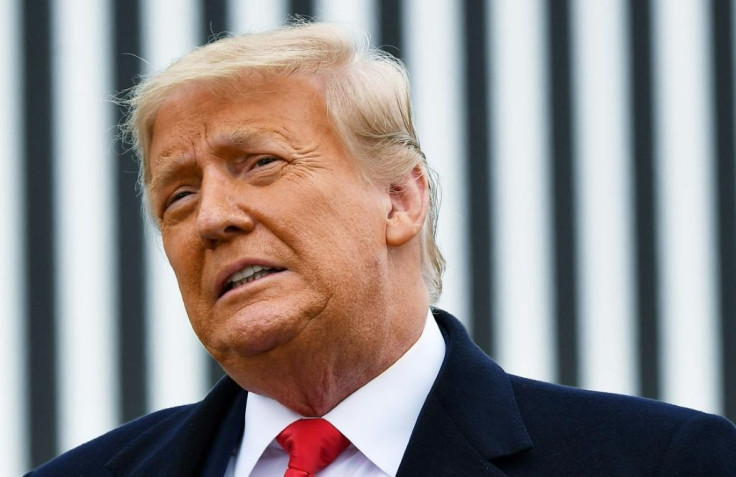
Not all doctors agree, and some are deeply uneasy. The American Psychiatric Association's Goldwater Rule, drafted in the 1970s after psychiatrists publicly diagnosed Republican candidate Barry Goldwater without examining him, warns mental health professionals against offering diagnostic opinions on public figures they have not personally assessed.
Gartner insists the rule was never intended to muzzle warnings about potential danger, but the ethical tension is obvious. Thirty‑six neurologists, psychiatrists and geriatricians went as far as signing a formal statement entered into the US Congressional Record in April 2026, declaring Trump 'mentally unfit' and urging consideration of the 25th Amendment, while carefully noting that they were not making a formal diagnosis.
The White House, for its part, has leaned on the official medical record. Trump spent more than three hours at Walter Reed National Military Medical Center on 26 May 2026 for what officials described as routine preventive checks. According to a memo released days later and reported by The Hill, the president's physician, US Navy Captain Sean Barbabella, concluded that 'President Donald Trump remains in excellent health, demonstrating strong cardiac, pulmonary, neurological, and overall physical function.'
Trump also took the Montreal Cognitive Assessment, a 10‑minute screening test designed to catch mild cognitive impairment. He scored 30 out of 30, as he has in previous years. In strict clinical terms, that score rules out moderate or severe dementia.
Critics such as Gartner respond that the MoCA was never meant to substitute for a full frontotemporal dementia work‑up, which would require detailed neuropsychological testing and brain imaging. The Walter Reed memo referred only to a 'normal neurological assessment' and did not publish any further test data.
Public opinion is moving faster than medicine. A Washington Post‑ABC News‑Ipsos poll of 2,560 US adults in late April 2026 found 59 per cent of respondents believed Trump does not have the mental sharpness to lead, and 55 per cent did not think he was in good enough physical health.
Those are perceptions, not diagnoses. Still, they suggest that Gartner and his fellow Johns Hopkins alumni are pushing at a door many voters already suspect is unlocked, even if the definitive clinical evidence has yet to be laid on the table and, for now, nothing is confirmed and everything should be taken with a grain of salt.
© Copyright IBTimes 2026. All rights reserved.
- Recommended For You