

History in the Making? UK Astronaut With Physical Disability Could Soon Blast Into Orbit
John McFall's potential mission marks a significant step towards inclusivity in space exploration.
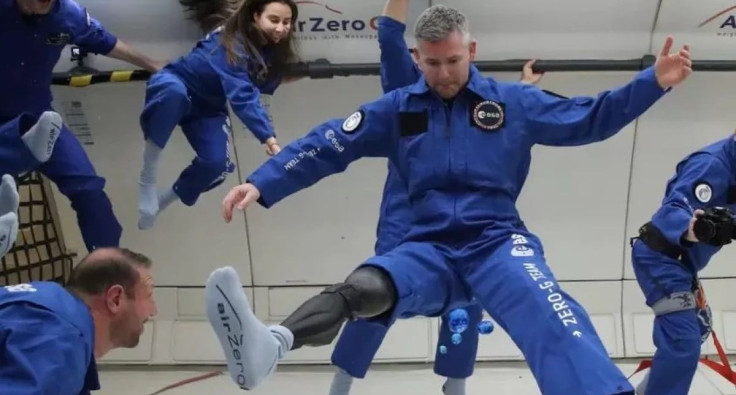
UK astronaut John McFall could be on the verge of making history as the first person with a physical disability to enter orbit, following a newly signed agreement between the UK government and a US commercial space company.
The development marks a major step forward in efforts to make human spaceflight more inclusive, and could see McFall travel to a future private orbital station as early as 2027.
A Historic Agreement Shaping Future Spaceflight
The UK Space Agency has signed a memorandum of understanding with US company Vast, which is developing the Haven-1 commercial space station. The deal allows the company, with UK support, to pursue sponsorship funding for McFall's potential mission to orbit.
According to the UK government, the agreement could enable McFall to become the first person with a physical disability to live and work in space, depending on mission readiness and funding outcomes.
The mission would be conducted aboard Haven-1, a privately developed orbital platform scheduled for launch later this decade.
Who Is John McFall?

McFall is no ordinary astronaut candidate. A former Paralympic sprinter turned orthopaedic surgeon, he lost his right leg at 19 following a motorcycle accident. He later went on to compete internationally, winning bronze at the 2008 Beijing Paralympics before retraining as a doctor.
He was selected by the European Space Agency (ESA) in 2022 as part of its 'Fly!' programme, which explores whether astronauts with physical disabilities can safely live and work in space.
ESA's initiative describes McFall as central to a feasibility study designed to test how disability intersects with space environments and long-duration missions.
Science at the Heart of the Mission
While the potential flight would be historic, officials are keen to stress that the mission is not symbolic.
If selected, McFall would carry out research on human physiology in microgravity, alongside studies into prosthetic performance and mobility in space. The findings are expected to feed directly into medical and engineering advances on Earth.
Max Haot, CEO of Vast—a company developing its 'Haven' programme of commercial space stations, said:
'We are honoured to collaborate with the UK government on advancing its leadership in space. The potential opportunity for John McFall to join a future Haven-1 mission is another example of how commercial space stations can expand access to space, support greater crew inclusivity, and enable meaningful medical research that benefits humanity.'
McFall himself has also been clear that scientific output must remain the priority, rather than representation alone. ESA has previously highlighted that his work is part of a wider effort to test whether current medical and engineering systems can support astronauts with prosthetic limbs in orbit.
Training, Clearance and Technical Hurdles
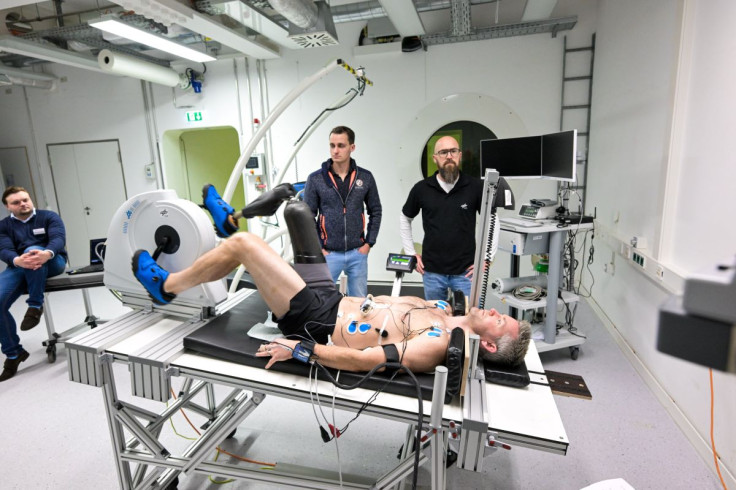
McFall has already undergone extensive assessment and training with ESA, including evaluations of how his prosthetic limb performs under astronaut conditions.
In 2025, he became the first person with a physical disability to be medically cleared for long-duration space missions, after a detailed review found no fundamental medical barriers to participation in spaceflight.
The ESA has stressed that preparations have involved examining dozens of technical challenges, from mobility in microgravity to emergency procedures and equipment adaptation.
Despite the clearance, a space mission remains dependent on funding, spacecraft readiness and crew selection for a suitable flight opportunity.
A Potential Milestone for the UK and ESA
If the mission proceeds, McFall would become the first Briton in space since Tim Peake's ISS expedition in 2015–2016, and the first astronaut with a physical disability to reach orbit.
Space agencies and partners view the project as part of a broader shift in human spaceflight, where commercial stations like Haven-1 are expected to replace the ageing International Space Station in the coming years.
ESA has described its 'Fly!' programme as an effort to expand astronaut selection beyond traditional physical norms, challenging long-held assumptions about who can live and work in space.
What Happens Next?
The agreement between the UK Space Agency and Vast does not guarantee a flight, but it opens a structured pathway towards securing sponsorship and mission planning.
If successful, McFall's journey could take place as early as 2027, depending on the timeline of Haven-1's deployment and crew scheduling.
For now, the project sits at the intersection of science, engineering and social change — a test not only of human endurance in space, but of how far space agencies are willing to redefine the boundaries of who can go there.
© Copyright IBTimes 2026. All rights reserved.
- Recommended For You


