Elon Musk's New Starship 3 Packs More Power Than Germany's Entire Grid as NASA Braces for Critical Test
NASA's Artemis programme hinges on SpaceX's Starship V3 as it prepares for a crucial test flight.
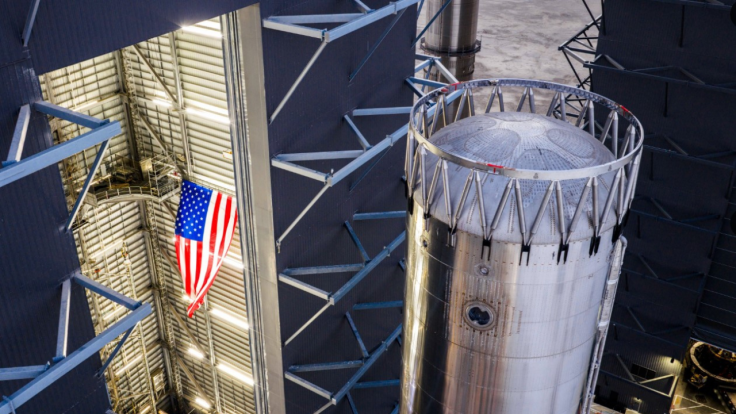
Elon Musk's SpaceX is preparing to fly Starship Version 3, the latest and most powerful iteration of its giant rocket, from Starbase in Texas, as NASA continues to rely on the system for its moon programme and a planned 2028 landing window. Starship remains central to NASA's Artemis architecture, and the agency's own materials show that its commercial lunar lander plans depend on SpaceX and Blue Origin to help carry crews back to the moon.
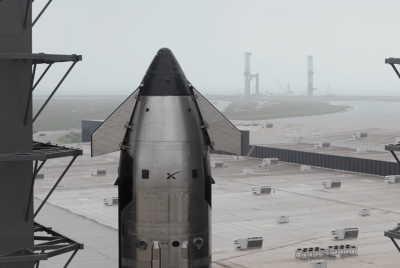
SpaceX is preparing to launch the largest and most powerful Starship rocket ever built next week, marking one of the company’s most important test flights yet.
— Flightdrama (@flightdrama) May 14, 2026
The new 407-foot-tall Starship Version 3 is scheduled to lift off from Starbase, Texas on May 19, seven months after… pic.twitter.com/p1qVqZ4uth
The news came after months of incremental redesigns at SpaceX, which has been working through a string of test flights and hardware changes since the previous major launch campaign. According to Daily Star, the Version 3 vehicle is expected to debut upgraded Raptor 3 engines, a redesigned launchpad and a refreshed upper and lower stage, with the flight pencilled in for 19 May.
Nothing is confirmed yet on the success of the launch itself, so the usual caveat applies. This is still a test, and with Starship, tests have a habit of reminding everyone that scale does not equal certainty.
At 124 metres tall, the latest stack is described as the tallest rocket now flying, and slightly taller than its predecessor. It is also far more ambitious in what it is trying to do.
The redesign includes a larger fuel tank, in orbit refuelling hardware and tougher heat shield tiles, all of which are intended to make repeated deep space flights more realistic rather than merely theatrical.
Musk's Rocket and NASA's Moon Clock
The Artemis programme depends on commercial landers, and the agency's own Artemis III page says the crewed mission is designed to test rendezvous and docking between Orion and one or both private landers from SpaceX and Blue Origin.
The agency lists the launch goal as 2027, while other reporting has suggested the programme could slip later, with SpaceX internally eyeing 2028 for a crewed lunar attempt if the development path stays on course. In other words, the clock is not just ticking; it is practically shouting.
Flight 12 Starship Booster is now the pad, for the final time before launch. pic.twitter.com/wzLLvlzmVW
— Yatharth Mann (@yatharthmann) May 19, 2026
That is why the upcoming test carries so much weight. Starship is not just a bigger rocket for the sake of being a bigger rocket. It is the vehicle NASA is trying to turn into a lunar workhorse, while Musk's own long-term ambitions stretch far beyond the moon.
The system is split into the Super Heavy booster and the Starship upper stage, a pairing that is designed to be reusable and refuellable, and eventually capable of carrying cargo and crew to destinations much farther away than low Earth orbit.
The numbers are eye-watering even by SpaceX standards. The full stack can generate 75,000 kilonewtons of thrust, nearly double NASA's Space Launch System, while Alistair John, a University of Sheffield academic, has been cited in social media and related coverage as calculating that peak power would exceed the output of Germany's entire electricity grid.
Starship Flight 12 is now NET May 21st. pic.twitter.com/YgKLdIfBjk
— Booster 10 (@booster_10) May 19, 2026
There is also a practical side to all this engineering theatre. SpaceX has been stripping weight, enlarging surfaces and refining guidance systems, including reducing the number of grid fins on the booster from four to three while making them larger.
The upper stage, meanwhile, is built around fuel transfer and survival through re-entry, the two things that will matter most if Musk's promise of lunar and eventually Martian operations is ever to move from keynote language into routine practice.
Ambition and Risk
It is easy to get lost in the spectacle, and SpaceX knows it. The company has made a career out of making the impossible look merely difficult, until the public starts to forget the difference. But NASA's reliance on this rocket also means the agency is tied to SpaceX's learning curve, which has not always been gentle.
Earlier programme has pointed to schedule pressure around Artemis III and the need for orbital refuelling demonstrations before any crewed lunar landing can happen.
NEWS: SpaceX's first Starship Super Heavy version 3 rocket booster has begun prelaunch testing. https://t.co/J6m9CraVTD pic.twitter.com/WiEG51ueux
— Sawyer Merritt (@SawyerMerritt) November 20, 2025
Musk, as ever, is selling scale, speed and destiny. NASA, more cautiously, is buying time. The next launch will show whether Starship V3 is finally ready to stop being the future and start behaving like hardware.
© Copyright IBTimes 2026. All rights reserved.
- Recommended For You