Artemis II Astronauts Could Become The First Humans To See A Comet Break Apart Near the Sun
NASA's Artemis II mission may offer astronauts a rare chance to witness a comet breaking apart near the Sun, alongside exploring the Moon's mysteries

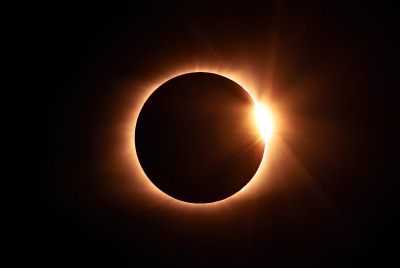
A mission built to return humans to the Moon could reveal something far rarer. NASA's Artemis II astronauts may become the first ones to witness a comet breaking apart near the Sun, a brief and unpredictable moment that even the most advanced instruments on Earth struggle to capture.
The possibility has sparked both excitement and unease among scientists. Space is often described as silent and still, yet events like this carry a sudden, almost violent energy that reminds us how fragile celestial bodies can be.
At the same time, the mission is expected to shed light on long-standing questions about the Moon. As the crew travels farther than any humans have in decades, they will see parts of space that remain largely unexplored.
A Front-Row Seat to a Cosmic Collapse
The Artemis II mission sends astronauts on a journey around the Moon, marking NASA's first crewed lunar flight since the Apollo era. Along the way, they may come across a rare and dramatic sight from their Orion spacecraft.
According to Scientific American, Comet C/2026 A1 (MAPS) is passing close to the Sun and could break apart under intense heat and gravitational forces just as the crew is in a position to observe it. Scientists say the timing is uncertain, but the possibility is very real.
Naval Research Laboratory space scientist and Sungrazer Project principal investigator Karl Battams said the comet is going to be 'experiencing the most hostile environment' in the solar system, claiming it 'will suffer accordingly'. The Sungrazer Project is a NASA-funded crowdsourced science initiative named for the comets it studies.
Comet C/2026 A1 (MAPS) was discovered by four amateur astronomers, Alain Maury, Georges Attard, Daniel Parrott and Florian Signoret on 13 January. The MAPS acronym comes from the first letters of each of their surnames. The discovery was made using a remotely operated telescope high in the Atacama Desert in Chile.
As Comet MAPS moves within 101,100 miles or 162,700 kilometres of the Sun, Boston University and University of Maryland planetary astronomer Quanzhi Ye said its survival is far from certain, since most sungrazers do not withstand such extreme conditions. Ye added that the comet could trigger a perihelion event, in which it breaks apart before reaching its closest point to the Sun.
Events like this are difficult to study from Earth. Telescopes often struggle against the Sun's glare, making close observation almost impossible. For astronauts in deep space, the view could be clearer and far more immediate.
There is something striking about the idea of watching a comet come apart in real time. It is not only a scientific opportunity. It is a reminder that objects travelling for millions of years can disappear in seconds.
The Moon's Hidden Stories
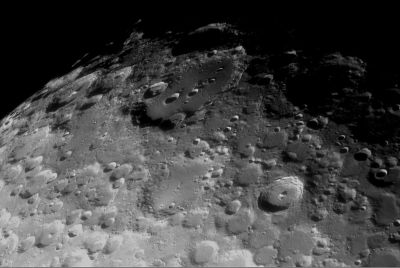
Beyond the comet, Artemis II is expected to mark a new phase in lunar exploration. The mission will give astronauts a direct view of the far side of the Moon, an experience few people have ever had.
As reported by Wired, the Artemis programme aims to answer key questions about the Moon's origins, its unusual structure and the possibility of water ice in permanently shadowed regions. These questions have shaped scientific discussion for decades.
The far side remains one of the least understood areas of the Moon. It looks noticeably different from the side we see from Earth, with fewer dark plains and more rugged terrain. Scientists believe it holds important clues about the Moon's early formation.
For the crew, that first view is likely to leave a lasting impression. It is a perspective few have witnessed directly, and it may shift how we understand Earth's closest neighbour.
A Mission Watched from Earth
The Artemis II flight is expected to draw global attention, not only for its scientific aims but for the human story behind it. Four astronauts will carry that sense of expectation as they travel into deep space.
The mission has been closely followed, with growing public interest in how it could shape the future of space exploration, BBC News reported. On the third day of the mission, NASA astronauts Reid Wiseman, Christina Koch, Victor Glover and Canadian Space Agency astronaut Jeremy shared a photo of the Moon's Orientale Basin. According to NASA, the image marked the 'first time the entire basin has been seen with human eyes'.
At the same time, Artemis II is widely viewed as a step towards returning humans to the lunar surface. There is also an awareness of the risks involved. Space travel remains dangerous, and every mission carries some uncertainty.
The chance of witnessing a comet breaking apart adds another layer of unpredictability. And that uncertainty is part of what makes the mission so compelling. It sits on the edge of what we know and what we have yet to understand.
Between Wonder and Uncertainty
Artemis II is more than a scientific and technical milestone. It reflects a deeper sense of curiosity about what lies beyond our reach.
The possibility of seeing a comet's final moments could become one of the most powerful images in modern space exploration. At the same time, the mission may help answer questions that have remained unresolved for generations.
For those watching from Earth, it is a reminder of how much is still unknown. For the astronauts, it is a journey into a place where history, science and chance come together.
If the timing falls into place, they may not only orbit the Moon. They could witness a rare cosmic ending that no human has ever seen before.
© Copyright IBTimes 2026. All rights reserved.
- Recommended For You