

Mark Zuckerberg's $400M Superyachts Arrive in Seattle as Meta Cuts Local Jobs: Fleet Costs $45M a Year to Run
The fleet's Seattle appearance coincided with Meta's announcement of thousands of job cuts, sparking public criticism
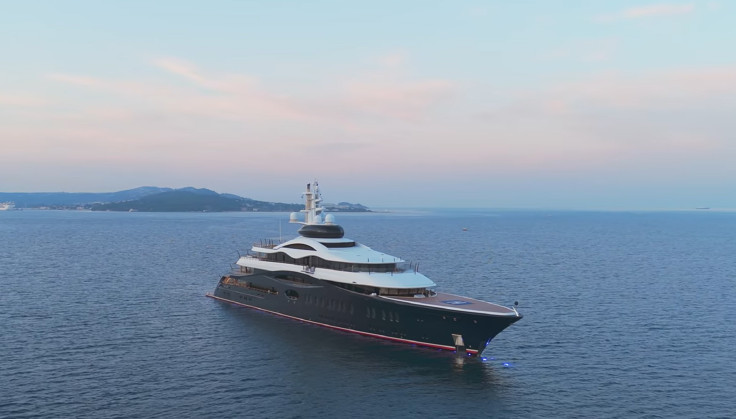
Mark Zuckerberg's $100 million (£80 million) support vessel Wingman docked at Seattle's Smith Cove Cruise Terminal on 27 May, pulling into a berth normally reserved for cruise ships and sitting just minutes from his $300 million (£240 million) superyacht Launchpad.
Together, the Meta chief executive's maritime holdings total an estimated $400 million (£320 million). But the purchase price is only the beginning of what it costs to keep a fleet of this scale on the water.
What 'Wingman' Costs Beyond Its $100M Price Tag
The 262-foot Wingman was formerly known as U-81 and was originally commissioned in the early 2010s as an offshore oil and gas platform before being converted into a yacht support vessel by Dutch shipbuilder Damen Yachting.
Its previous owner was Graeme Hart, New Zealand's wealthiest individual, who deployed it alongside his own superyacht fleet. Zuckerberg purchased the vessel for approximately $100 million (£80 million), Luxury Launches reported, and transferred the Wingman name from his older, smaller support yacht.
@waldmanmedia Do you think they use a boat to retrieve air balls? U81 is an 80.1-meter (262.6-foot) support yacht built by Damen Yachting and delivered in 2022. Originally constructed as an offshore supply vessel, she was later converted into a highly capable luxury support ship. With a beam of 16.2 meters and a gross tonnage of approximately 3,040, U81 offers exceptional volume and deck capacity. Her steel hull and aluminum superstructure ensure durability and performance in challenging environments. She is powered by a hybrid propulsion system featuring two Caterpillar 3512C diesel-electric engines and two Caterpillar C32 engines, providing a total output of 6,596 horsepower. This allows for a top speed of 16 knots, a cruising speed of 12.5 knots, and a range exceeding 5,000 nautical miles. U81 includes accommodations for up to 8 guests in 4 cabins, along with quarters for 26 crew. The vessel is outfitted with a certified helipad, a 12-ton crane, and extensive storage for tenders, submarines, and mission-specific gear. She also features a dive center with decompression chamber, a spa, gym, and lounge areas, making her an ideal platform for exploration, logistics, and extended remote operations. #supportyacht #megayacht #superyacht #yachts
♬ original sound - Waldman Media
That original Wingman, a 220-foot Damen vessel formerly called Dapple, was subsequently sold to Walmart heiress Nancy Walton Laurie and renamed Calm.
Annual operating costs for the new Wingman run to an estimated $15 million (£12 million), according to SuperYacht Fan. That figure covers crew salaries, fuel, insurance, port fees, and routine maintenance. It does not account for the helicopters, submersibles, and personal watercraft the vessel is designed to carry.
Launchpad, the primary yacht, adds roughly $30 million (£24 million) a year in running expenses, according to industry estimates cited by SuperYacht Fan. Combined, Zuckerberg's annual maritime outlay sits at approximately $45 million (£36 million) before any discretionary spending aboard either vessel.
Support vessels have become standard equipment for ultra-high-net-worth yacht owners. Their sole function is to carry the hardware, logistics, and extra crew that would otherwise crowd a primary yacht's profile. Wingman is fitted with an industrial crane, a helipad, a dive centre with decompression chamber, and deck space large enough to double as a basketball court.
Both Seattle vessels fly the Marshall Islands flag — a jurisdiction that yacht industry firm Yacht Law Partners has described as offering an 'attractive tax framework'.

A $400M Fleet Arrives Alongside 1,400 Seattle Job Cuts
The timing of the fleet's Seattle appearance drew sharp public scrutiny. Launchpad transited the city's Ballard Locks on 26 May — the same day Meta disclosed plans to eliminate 1,395 positions across its Washington state offices, roughly 20 per cent of the company's local workforce. Those cuts form part of a companywide reduction of 8,000 roles, a WARN filing reported by GeekWire confirmed. Bystanders booed from the shore as the yacht passed through, with one onlooker shouting at the crew to 'pay some taxes'.
Meta has framed the cuts as necessary to offset heavy investment in artificial intelligence. The company raised its 2026 capital expenditure guidance to between $125 billion (£100 billion) and $145 billion (£116 billion), with the vast majority earmarked for AI infrastructure and data centres. First-quarter 2026 revenue came in at $56.3 billion (£45 billion), up 33 per cent year on year, according to the company's SEC filing.
Crew members aboard Launchpad told GeekWire that Zuckerberg was not on the vessel. Flight tracking data and social media posts appeared to place the Meta founder elsewhere during the yacht's transit. A lock operator at the Ballard Locks told the outlet the yacht was the largest to pass through in 14 years.
The 387-foot Launchpad was built by Dutch shipbuilder Feadship and originally commissioned by Russian billionaire Vladimir Potanin. International sanctions prevented Feadship from delivering the vessel upon completion in 2022, and Zuckerberg acquired it for approximately $300 million (£240 million).
Zuckerberg is not the only tech billionaire with a substantial maritime portfolio. Amazon founder Jeff Bezos owns Koru, a $500 million (£400 million) sailing yacht that drew controversy in the Netherlands when its masts were reportedly too tall to pass beneath a historic Rotterdam bridge. Microsoft co-founder Bill Gates and Oracle co-founder Larry Ellison also maintain multi-vessel fleets.
Neither Zuckerberg nor Meta has commented publicly on the Seattle docking or its timing relative to the layoffs.
© Copyright IBTimes 2026. All rights reserved.