A New COVID Variant Is Spreading—How Worried Should You Be About BA.3.2?
The BA.3.2 variant raises questions about immunity and public health.
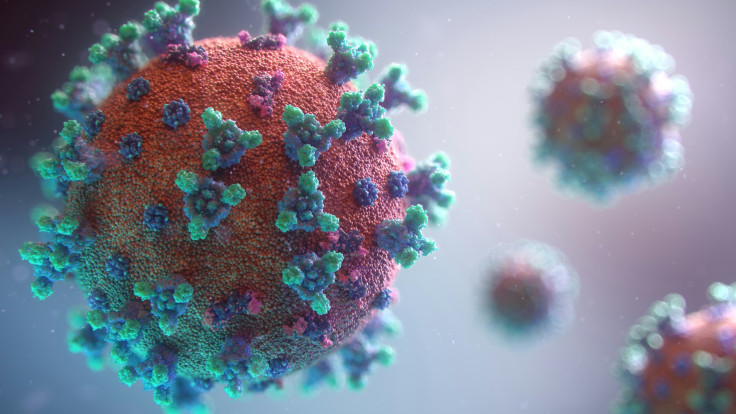
The emergence of yet another COVID-19 variant has once again raised questions about how much the virus continues to evolve and whether the public should be worried. The latest strain, known as BA.3.2, is an Omicron subvariant that has been detected across multiple countries and is now making its presence felt in the United States.
While the pandemic is no longer in its most acute phase, scientists and health authorities are closely monitoring this variant due to its unusually high number of mutations and its potential to evade immunity. Early data suggests that BA.3.2 behaves differently from earlier strains, particularly in how it interacts with vaccines and prior infections.
However, concern does not necessarily mean alarm. Understanding how widely it has spread and how dangerous it actually is will determine whether this is a serious new threat or simply another variant to keep an eye on.
What Is BA.3.2 And How Far Has It Spread?
BA.3.2 is a heavily mutated subvariant of the Omicron lineage of SARS-CoV-2, first identified in South Africa in late 2024. Since then, it has steadily spread across the globe, with confirmed detections in at least 23 countries, including the United States.
In the US, the variant was first detected in June 2025 through a traveller arriving from the Netherlands as part of a genomic surveillance programme. Since then, cases have been identified in clinical samples as well as through wastewater monitoring across multiple states.
This kind of surveillance is crucial, as wastewater detection often signals wider community transmission even before large numbers of clinical cases are confirmed.
What makes BA.3.2 particularly notable is the sheer scale of its mutations. Scientists have identified around 70 to 75 changes in its spike protein alone, which is the part of the virus targeted by most vaccines.
These mutations are believed to help the variant partially evade immune responses, allowing it to infect people who may already have some level of protection from previous infection or vaccination.
Despite its spread, the prevalence of BA.3.2 in the US remains relatively low compared to dominant variants. Estimates from surveillance data suggest it accounts for a small fraction of total cases, although detections have been gradually increasing.
Globally, it has shown signs of growth in certain regions, particularly in parts of Europe, but it has not yet overtaken other circulating strains.
How Dangerous Is BA 3.2, and Should People Be Concerned?
The main question surrounding BA.3.2 is not just how far it has spread, but how severe it is. Early laboratory studies indicate that the variant has a strong ability to evade antibodies, including those generated by current vaccines. This suggests that it may be more capable of causing breakthrough infections compared to earlier variants.
However, immune evasion does not automatically translate into more severe illness. Health experts emphasise that while vaccines may be less effective at preventing infection with BA.3.2, they are still expected to provide protection against severe disease, hospitalisation, and death.
This distinction is crucial, as the primary goal of vaccination programmes has shifted towards preventing serious outcomes rather than completely stopping transmission.
Any Assurance From This Outbreak?
Clinical data so far offer some reassurance. Early US cases included both older adults with underlying conditions and a younger patient, all of whom survived. There is currently no clear evidence that BA.3.2 leads to higher rates of hospitalisation or death compared to other Omicron subvariants.
Additionally, some laboratory findings suggest that the variant may not attack lung tissue as aggressively as earlier strains, which could mean milder disease in many cases. That said, these findings are still preliminary and require further study.
Public health agencies, including the World Health Organization, have classified BA.3.2 as a 'variant under monitoring' rather than a variant of concern. This means it is being closely tracked due to its mutations and spread, but it has not yet demonstrated a significant increase in severity or transmissibility that would warrant higher alert levels.
So, should people be concerned? The answer lies somewhere in the middle. BA.3.2 is not currently a cause for panic, but it is a reminder that the virus continues to evolve. Its ability to partially evade immunity means that periodic waves of infection remain possible, especially among vulnerable populations.
For most people, the existing precautions still apply. Staying up to date with vaccinations, especially booster doses, remains one of the most effective ways to reduce the risk of severe illness. Continued surveillance and research will determine whether BA.3.2 fades away or becomes a more prominent player in the ongoing evolution of COVID-19.
© Copyright IBTimes 2026. All rights reserved.
- MOST POPULAR IN Health