Crypto In 401(k)s? Why Trump's Proposal Could Be Risky For Your Retirement
A proposed federal rule could allow cryptocurrencies and private assets in 401(k) retirement plans, raising concerns


For decades, retirement saving in the United States has followed a stable structure. Workers contribute to 401(k) plans, with funds typically invested in stocks, bonds, and mutual funds designed for long-term growth.
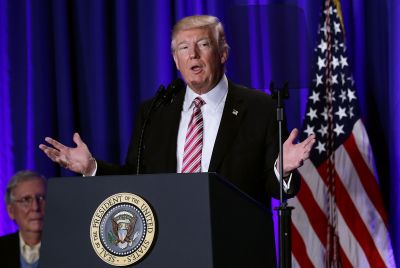
That model is now under review. Trump signed an executive order aiming to allow cryptocurrencies, private equity, and other alternative assets into 401(k) retirement plans. Supporters argue it would modernise retirement investing. However, critics warn it could increase risk for ordinary workers and expose employers to legal uncertainty.
Investment Giants Push for Wider Access
Asset managers, including Blackstone, Apollo Global Management, KKR, and Blue Owl Capital, have long argued that private markets should be more widely available to retail investors. They say pension funds and university endowments already use private equity and private credit to diversify portfolios.
Under the proposed rule from the US Department of Labour, retirement plan fiduciaries would have more flexibility to include such investments in 401(k) plans.
Legal Risk Remains a Key Concern
Under US law, employers managing retirement plans must comply with strict fiduciary duties under the Employee Retirement Income Security Act of 1974 (ERISA). Fred Reish, a retirement law specialist at Faegre Drinker, said employers could face legal scrutiny even if regulators permit alternative investments.
He said courts may later examine whether fiduciaries acted prudently when selecting complex or higher-risk assets for employees. This means even approved investment options could still lead to lawsuits if workers suffer losses and challenge the decision-making process.

Government Defends Greater Choice
Lori Chavez-DeRemer has defended the proposal, arguing that employers should have more flexibility in managing retirement plans. She said fiduciaries, not regulators, should decide what investment options are appropriate for workers.
The proposal includes guidelines for plan sponsors. These require them to assess performance history, fees, liquidity, valuation methods, benchmarking, and complexity before including new assets. Officials say these safeguards help employers demonstrate compliance with fiduciary responsibilities.
Political Opposition Over Risk Concerns
Elizabeth Warren has criticised the proposal, warning it could expose retirement savers to unnecessary financial risk. She pointed to weakness in private credit markets and declining returns in private equity, alongside ongoing volatility in cryptocurrency markets. Her argument is that retirement savings should prioritise stability rather than experimental asset classes.
Complexity and Transparency Issues
Retirement specialists are also raising investor protection concerns. Barbara Roper, former director of investor protection at the Consumer Federation of America and former adviser at the US Securities and Exchange Commission, said many retail investors lack the experience needed to properly evaluate private equity investments. Since private assets do not trade publicly, their valuations can be less transparent than those of traditional stocks and bonds.
Academic research from Ludovic Phalippou, professor of financial economics at the University of Oxford, has also found that private equity returns often reduce significantly once fees are included, bringing performance closer to public markets.
Crypto Volatility Raises Additional Questions
Cryptocurrency remains one of the most debated elements of the proposal. Bitcoin has delivered strong returns in some periods but also experienced sharp price swings.
Data from iShares shows Bitcoin is significantly more volatile than US equity markets, raising concerns about its suitability for retirement portfolios. Jerome Schlichter, a retirement litigation lawyer known for ERISA-related cases, warned that volatile assets may conflict with the core purpose of retirement savings, which is long-term financial stability.
Financial planner Melissa Caro said cryptocurrency lacks the long historical record that traditional retirement investments rely on to assess risk across market cycles. Without that long-term data, she said it is difficult to judge how crypto behaves during prolonged downturns.
A Debate Still Unresolved
Some advisers believe crypto could still play a limited role in retirement portfolios. Financial adviser Joshua Brooks said certain investors may see Bitcoin as a high-risk, high-reward option but suggested allocations should remain small.
The proposal is still under review, and regulators are expected to assess public feedback before any final decision. If approved, employers will need to balance expanded investment choice with increased legal and financial responsibility. The US retirement system now faces a critical decision between broader access to alternative assets and maintaining long-standing protections for workers.
© Copyright IBTimes 2026. All rights reserved.
- Recommended For You