Donald Trump's $5 Million 'Gold Card' Visa Is Flopping so Hard That Even Melania's Ex-Lawyer Is Calling It Unethical
The ambitious visa scheme struggles with low uptake and legal uncertainties.

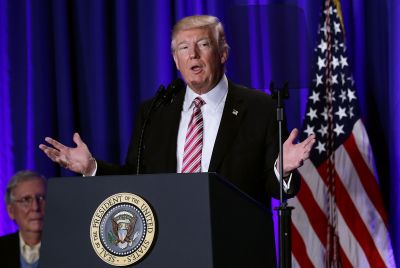
President Donald Trump's 'Gold Card' visa scheme, pitched as a $5 million route to US residency and eventual citizenship, is stumbling badly in the United States, with government figures showing only 338 requests and 165 paid applications while prominent immigration lawyers warn wealthy clients away.
For context, Trump first trailed the 'Gold Card' in June, telling reporters in the Oval Office that the high‑dollar visa would replace the existing EB‑5 immigrant investor programme and offer 'green card privileges' plus a path to citizenship. He later signed an executive order in September to launch what the administration described as a $5 million initiative, but Congress has not passed any law to create a permanent visa category, leaving the project exposed to reversal by future political decisions.
How the 2026 Gold Card Visa Was Sold
Trump's original pitch set the Gold Card against the EB‑5 route that has existed since 1990. Under EB‑5, foreigners who invest about $1 million in a company employing at least ten people can obtain US green cards, with an annual cap of 10,000 visas and 3,000 set aside for high‑unemployment areas. US Citizenship and Immigration Services describes that programme as a way to stimulate the economy through job creation and capital investment.
Trump and his team painted EB‑5 very differently. Commerce Secretary Howard Lutnick branded it 'full of nonsense, make‑believe and fraud' and called it 'a way to get a green card that was low‑price.' In his account, the president decided to end EB‑5 outright and replace it with the far more expensive Gold Card, targeted squarely at 'people with money.' Trump floated the idea that the government could sell up to 10 million of these visas to help reduce the national deficit, and Lutnick promised 'thorough vetting' to ensure only 'wonderful, world‑class global citizens' would qualify.
The pricing has never been entirely tidy. In his Oval Office remarks, Trump spoke of charging about $5 million per application, a level that London School of Economics academic Kristin Surak told Al Jazeera would make it 'the most expensive golden visa option in the world.' Immigration lawyers later described the product to the Washington Post as costing $1 million or $2 million, plus a $15,000 application fee. On top of that, the Department of Homeland Security has stated in a court filing that Gold Card applicants will not supersede EB‑1 or EB‑2 cases, which are reserved for 'extraordinary workers,' but there is no detailed public rulebook yet setting out how the new visa fits into the wider system.
Key design questions therefore remain unanswered on the public record, including whether EB‑5 has already been formally shut down, whether both schemes are running in parallel for now, and what exact benefits the Gold Card would provide beyond the 'green card privileges' and citizenship route the president has promised.
Why the Gold Card Visa Is Faltering
Against that background, take‑up has been modest. The Department of Homeland Security told a federal court last week that only 338 people had submitted Gold Card requests and just 165 had gone so far as to pay the $15,000 processing fee. No precise launch‑to‑date window is tied to those figures in the available filings, but they sit a long way below the public ambitions voiced by Lutnick.
The commerce secretary had previously touted projections that the federal government would make more than $100 billion in revenue by issuing 80,000 Gold Cards. He also claimed in March that 1,000 cards, at $5 million each, had already been handed out before the programme officially launched. The Commerce Department did not respond to questions about those assertions, and no other official document has been produced to support the 1,000‑card figure, so it stands for now as an unverified boast rather than a confirmed statistic.
The legal framework is equally unsettled. The visa has been created through an executive order and agency action rather than an Act of Congress that writes a new category into immigration law. That means a future administration could rescind it and lawmakers remain free to restrict or redefine it. At the same time, Congress is the body that originally authorised EB‑5, and Trump has publicly said he intends to end that statutory programme without, so far, presenting replacement legislation.
All of that uncertainty feeds into the cautious advice high‑end immigration counsel are giving to the very people the Gold Card is supposed to attract.
According to the Washington Post's reporting on the early months of the scheme, at least seven lawyers who specialise in representing ultra‑wealthy foreign clients have told them to stay away, citing unresolved court challenges, exposure to US tax obligations and the absence of a clear, congressionally established right to residency. The precise cases currently before the courts and their status are not spelled out in the government filings or public statements released so far, but the fact that experienced practitioners talk about 'ongoing litigation' at all is enough to make risk‑averse families hesitate.
Even Trump‑Friendly Lawyers Are Wary of the Gold Card Visa
Some of the sharpest reservations are coming from lawyers who have been trusted by the Trump family itself. Michael Wildes, an immigration attorney who has represented First Lady Melania Trump and her naturalised‑citizen parents, told the Washington Post that he will not take on clients seeking Gold Cards.
'It would be unethical of me to retain them,' Wildes said, as he openly questioned the legality of the programme. He has also worked for Miss Universe titleholders and members of the Kushner family. Wildes did not, in that interview, set out chapter and verse of the professional‑conduct rules he believes would be breached, and there has been no formal ethics opinion from bar authorities made public on the question of lawyers advising on Gold Cards.
Rosanna Berardi, an immigration lawyer based in New York state, gave a similar answer when prospective applicants came knocking. 'As immigration counsel, our obligation is always to protect our clients' interests,' she told the Post. 'And we do not believe it is appropriate to recommend a programme with such significant legal uncertainty and financial risk, even when clients express a desire to proceed.' Her remarks underline a basic tension in the project: it is being sold as a premium, 'fast and smooth' route, but at the same time the people most familiar with US immigration rules are telling buyers that their investment may not hold up.
Not every practitioner has turned their back completely. London‑born, New York‑based lawyer Mona Shah said she has two clients, from Nigeria and Pakistan, at different points in the Gold Card pipeline. She said she has warned both that the visa might amount to 'false advertising' and never materialise in the way they hope. Shah also said her clients are wealthy enough that they are willing to lose the sums involved if the cards come to nothing. No detailed timeline has been set out publicly for when pending applications will be adjudicated.
The question of whether any fully fledged Gold Card has been issued in practice has become tangled in its own mini‑controversy. Lutnick has told lawmakers that at least one person has received a card. Soon afterwards, rumours swirled around rapper Nicki Minaj, a vocal supporter of Trump, after she suggested online that she had obtained a Gold Card. The White House did not respond to initial questions, but an official later told the Washington Post that the card Minaj displayed was a 'memento' rather than a real visa. Immigration authorities have not identified any named, confirmed recipient in public.
The Gold Card is being launched into a world where 'golden visas' are both familiar and contested. Countries from Spain to Greece, Malta to St. Kitts and Nevis have sold residency or passports to wealthy investors, only to face pushback over money laundering risks, housing pressures and perceptions that citizenship is becoming a commodity. Trump's plan adds a specifically American twist, combining a high‑priced door for the rich with a wider crackdown on undocumented migrants whom he has promised to deport en masse.
With Congress yet to codify the Gold Card, key claims about demand and revenue untested, and no complete rulebook in the public domain, nothing about the future of Trump's $5 million visa is settled. For now, guesses about who actually signs up, how many Gold Cards ever get issued and whether the programme even lasts long enough to matter are all highly uncertain and should be treated as provisional at best.
© Copyright IBTimes 2026. All rights reserved.
- Recommended For You