

Innovation's Next Bottleneck Isn't Code — It's Infrastructure
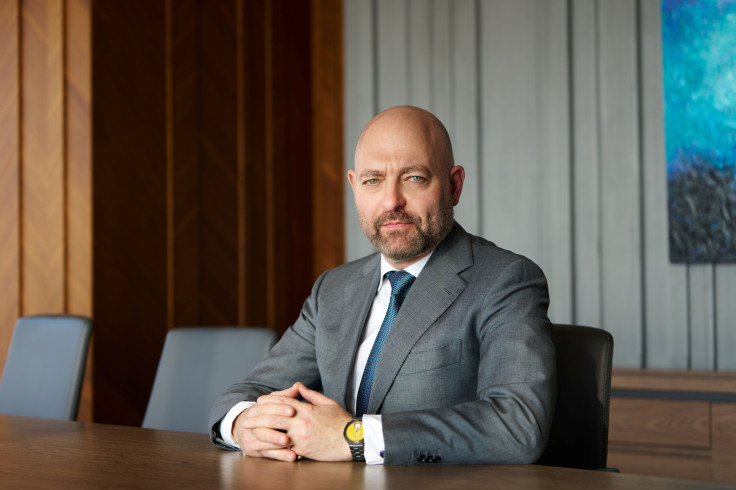
NEQSOL Holding CEO Kirill Rubinski argues that the next era of technology will be defined by the systems powerful enough to support it.
For more than a decade, innovation has been defined by speed.
Startups built quickly, scaled globally, and disrupted entire industries before incumbents had time to react. The assumption was simple: the faster you move, the more likely you are to win.
That model still exists. But it is no longer sufficient to explain where innovation is heading.
Across industries - from artificial intelligence to energy to telecommunications - a quieter constraint is emerging. The limiting factor is no longer what can be built in code. It is what can be supported in the real world.
Or, as Kirill Rubinski, CEO of NEQSOL Holding - a diversified conglomerate operating across energy, telecoms, and digital infrastructure in 11 countries - puts it: 'Innovation is no longer just about what you can build. It's about what the system can actually carry.'
The Hidden Weight of the Digital Economy
Much of today's technological conversation treats innovation as something largely abstract. Artificial intelligence, cloud computing, and digital platforms are often described in terms that suggest speed, flexibility, and scale without friction.
In practice, none of this exists in isolation.
Training large AI models requires massive computing infrastructure. That infrastructure depends on data centers. Data centers depend on reliable energy, cooling systems, and high-capacity networks. Each layer introduces physical and economic constraints that are difficult to accelerate.
Rubinski, who recently assumed the role of CEO at NEQSOL Holding after years leading large-scale telecommunications and infrastructure operations, sees this disconnect frequently. 'There's a tendency to talk about technology as if it floats above everything else', he says. 'But when you operate these systems, you realise very quickly that they are grounded in physical realities - energy, networks, capital.'
Even the language used to describe modern computing, he notes, can be misleading.
'The cloud sounds light', he says. 'In reality, it's one of the heaviest things we've ever built.'
Innovation Moves at Two Speeds
The result is a growing divergence between how quickly applications can evolve and how quickly the systems beneath them can adapt.
Software can be developed and deployed in weeks. Infrastructure is measured in years. Sometimes decades.
This gap is becoming more visible as demand for computing power, connectivity, and energy accelerates.
The current wave of AI development illustrates the point. While breakthroughs in models and applications continue at pace, they are increasingly accompanied by concerns about compute availability, energy consumption, and network capacity.
'Applications scale very quickly', Rubinski says. 'But the systems underneath them don't. And at some point, that becomes the defining constraint.'
When Energy Becomes a Technology Issue
One of the clearest manifestations of this shift is the growing convergence between energy and technology.
For years, energy was treated as a background input to digital innovation. That assumption is no longer holding.
Artificial intelligence, cloud computing, and advanced industrial processes are all energy-intensive at scale. As a result, the ability to expand and manage energy systems is becoming directly linked to the ability to scale technology.
'We're reaching a point where you can't separate the two', Rubinski says. 'If you want to build advanced technology, you need to think about energy from the beginning.'
This has implications far beyond individual companies. Countries that can provide stable, scalable energy infrastructure are positioning themselves to lead in AI, advanced manufacturing, and digital services.
In that sense, energy policy is increasingly indistinguishable from technology policy.
The Return of Systems Thinking
This environment is also reshaping what it means to innovate.
The dominant model of the past decade - fast, asset-light, software-driven - was built for a world where infrastructure was assumed to be sufficient and largely invisible. That assumption is breaking down.
'What's changing now is that you have to think in systems again', Rubinski says. 'You can't optimise one layer without understanding how it connects to everything else.'
This includes not only technology and energy, but also regulation, supply chains, and long-term capital investment.
The companies that succeed in this environment may not always be the fastest. But they are likely to be the ones that can operate across these interconnected layers.
'They're building for durability', he says, 'not just speed.'
Geography Matters Again
Infrastructure-driven innovation also brings geography back into focus.
In a purely digital model, location was often treated as secondary. Software could be developed anywhere and distributed globally.
Physical systems do not operate under the same conditions.
Energy availability, connectivity, regulatory environments, and geographic positioning all influence where large-scale infrastructure can be built and maintained effectively.
Regions that sit at the intersection of major economic corridors, particularly those linking Europe, Asia, and the Middle East, are becoming increasingly important as hubs for both energy and data flows. Azerbaijan is one example of a country actively repositioning itself around this logic, using its geography as strategic capital rather than background context.
It is a dynamic Rubinski knows directly. NEQSOL Holding is among the companies building the physical backbone of that ambition - including the Digital Silk Way, a high-capacity fibre network, and the Trans-Caspian Fibre-Optic Cable, which will provide a new direct data route between Europe and Asia. These are not software projects. They are decade-scale infrastructure bets on where connectivity flows will matter most.
'These regions are not just connecting markets', Rubinski says. 'They're becoming part of the infrastructure that supports them. And the countries that understand that early will have an advantage that is very difficult to replicate later.'
Beyond the Hype Cycle
Every wave of technological innovation produces a cycle of attention and expectation. The current focus on artificial intelligence is no exception.
But history suggests that the most lasting impact will not come from the most visible applications.
It will come from the systems that enable them.
Railways mattered more than locomotives. Electricity mattered more than lightbulbs. The internet mattered more than any single platform.
The same pattern is likely to hold.
'The real question is not just what these technologies can do', Rubinski says. 'It's whether we are building the infrastructure that allows them to operate at scale over time.'
A More Grounded Definition of Innovation
What emerges from this perspective is a more grounded definition of innovation.
Not one defined purely by speed or novelty, but by scale, resilience, and sustainability.
It is a model that requires patience, coordination, and long-term investment - qualities that tend to attract less attention but ultimately shape outcomes.
That shift may not dominate headlines.
But it is already redefining the boundaries of what innovation can achieve.
And increasingly, those boundaries are not set by software.
They are set by the systems that support it.
© Copyright IBTimes 2026. All rights reserved.