Aleksandar Vučić Resigns as Serbian President, but He Already Has His Next Job in Sight
Vučić to run in October polls as ordinary citizen, while presidential duties pass temporarily to Ana Brnabić
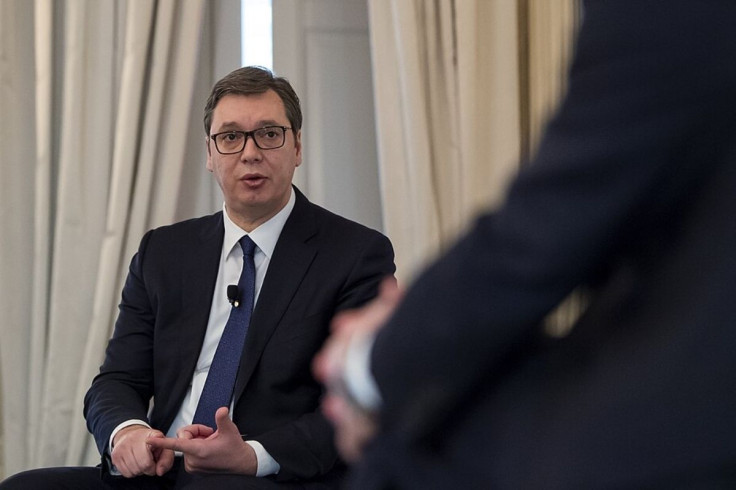
Aleksandar Vučić has resigned as Serbia's president seven months before his term was due to end, but the move does not mark his departure from frontline politics.
The 56-year-old stepped down on Sunday, 27 September, saying he wanted to enter Serbia's 25 October snap parliamentary election as an ordinary citizen. If his Serbian Progressive Party (SNS) and its allies secure enough parliamentary support to form the next government, Vučić could return to the premiership.
Vučić Leaves Presidency With Another Role in Sight
Vučić signed his resignation after addressing supporters outside the Presidency building in central Belgrade, where hundreds gathered before his departure. 'This is the last evening for me in this building,' he told the crowd, adding that he was proud of what had been achieved during his presidency.
Serbia's government said Vučić would hand presidential duties to National Assembly Speaker Ana Brnabić on Monday morning. Brnabić will serve as acting president until a successor is elected.
A presidential election must now be held by the end of December. Vučić had been serving his second and final five-year presidential term, which was not scheduled to expire for another seven months.
His political ambitions, however, remain focused on the parliamentary contest. Vučić previously served as Serbia's prime minister from 2014 until 2017, when he moved into the presidency.
Serbian voters will elect members of the National Assembly on 25 October rather than directly choosing a prime minister. The composition of parliament will determine which political forces can command enough support to form the next government.
October Election Follows Nearly Two Years of Protests
The snap parliamentary election comes after sustained anti-government demonstrations that began following the collapse of a concrete canopy at the railway station in Novi Sad on 1 November 2024.
Sixteen people ultimately died, triggering nationwide protests led largely by students. Demonstrators have demanded accountability over the disaster, greater transparency in public procurement and action against corruption.
The government has rejected allegations made by protesters about its conduct, while the political fallout from the disaster has continued into the 2026 election campaign. Among the registered challengers is 'Student List – Students Win', which was formally proclaimed by Serbia's Republic Electoral Commission on 15 September.
The commission has also registered the 'European Serbia – Marinika Tepić – Zdravko Ponoš' list, submitted by the European Serbia coalition.
From Prime Minister to President and Back Again?
Vučić has been one of Serbia's most prominent political figures for more than a decade. Before becoming president in 2017, he served as deputy prime minister and then prime minister.
His resignation creates an unusual political possibility: rather than ending his time at the top of Serbian politics, Vučić could attempt to return to the office he left nearly a decade ago. Whether that happens will depend on the 25 October parliamentary election and the subsequent formation of Serbia's next government.
For Serbian voters, Vučić's resignation changes the office he holds, but not his immediate political ambitions. The election will therefore test whether Vučić can translate his presidential influence into parliamentary power.
© Copyright IBTimes 2026. All rights reserved.
- Recommended For You