Trump Supreme Court Appeal: Legal Expert Warns of Executive Order Mail-In Voting Grab
Trump administration has asked the US Supreme Court to revive an executive order restricting mail-in voting, drawing a stark warning from legal analyst Harry Litman.

Donald Trump's Justice Department has asked the US Supreme Court to revive an executive order curbing mail-in voting ahead of the 3 November midterm elections, prompting a stark warning from a leading legal commentator that the move amounts to an attempted 'power grab' over how states run their own polls.
Though the Solicitor General filed an emergency application urging the justices to scrap a lower-court injunction that had blocked Trump's order. For those not steeped in the minutiae of US election law, that injunction is currently the only thing stopping a White House directive that judges have so far read as giving the executive branch an 'unprecedented' role in overseeing voting procedures traditionally controlled by individual states.
Trump Supreme Court Bid Raises Fears Over Mail-in Voting
The alarm was sounded by Harry Litman, a former US Attorney and legal analyst, during an appearance on the Talking Feds podcast. Litman said the bid marks the first time in this election cycle that Trump's team has asked the Supreme Court to weigh in directly on one of his efforts to reshape how Americans cast their ballots.
'It's their first effort to get the Supreme Court to weigh in on one of Trump's really pernicious ham-handed efforts to just wrest control of the voting process from states,' Litman argued, adding bluntly: 'It's about as nasty as it goes.'
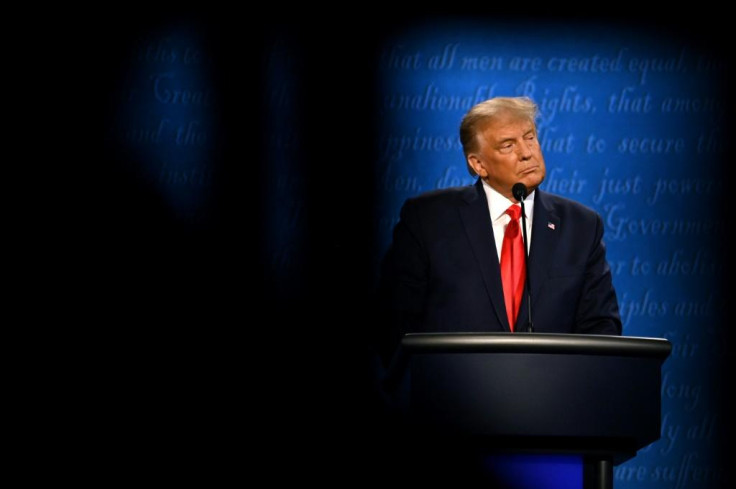
The executive order in question was issued several months ago but has not been allowed to take effect because of the lower-court injunction.
According to Litman's summary, the order would sharply restrict mail-in voting, a method of casting ballots that expanded during the pandemic and has since entrenched itself as a normal part of US elections.
Litman said that, in his reading and that of 'all courts so far,' the order hands the executive branch an authority over elections that is not only historically unusual but flatly unconstitutional.
The courts that have examined it, he suggested, have seen it as an intrusion into powers reserved for the states under the US system of federalism.
Legal Expert Warns of 'Cataclysmic' Impact if Trump Wins
The language Litman used was not the measured, academic caution lawyers often favour. He described the potential impact on November's vote as 'really cataclysmic,' arguing that the practical effect of Trump's executive order would be to make it significantly harder for millions of people to vote by post.
In his view, those voters are not randomly spread across the political spectrum. The restrictions, he said, would 'disenfranchise millions of people, and disproportionately by a large margin, Democrats.' That claim taps into a long-running, bitterly contested debate in the US: Republicans routinely frame tighter voting rules as necessary to prevent fraud, while Democrats insist such measures are aimed at depressing their vote.
What especially irked Litman was the route the Trump administration has chosen to take. Rather than following a full, ordinary appeal that would allow for extensive briefing, oral arguments and a written opinion, the Solicitor General has gone to the Supreme Court's so-called 'shadow docket' the mechanism for handling urgent, often late-breaking applications.
Until now, Litman noted, Trump's team had largely 'shied away' from appealing its defeats in voting rights cases. Shifting gears at this late stage, and doing so through the emergency channel, raised eyebrows. He characterised it as 'the first one, and surprise, surprise, it's by emergency docket... so now, really unfortunately, this goes boom into the court by the so-called shadow docket.'
Critics of the shadow docket across the political spectrum have argued that it allows major changes to law and policy with minimal transparency. Orders can appear late at night, sometimes with no explanation and no record of how each justice voted. For a case touching the heart of American democracy, that opacity makes some lawyers deeply nervous.
After Trump's application landed, the Supreme Court issued a briefing order giving states and other challengers until 3 August to respond, according to Litman. That schedule underlines the time pressure. With the midterms looming, any change in mail-in rules now would not be an abstract constitutional exercise, but a live intervention in an election infrastructure already under strain.
None of this has been adjudicated by the justices yet. Nothing is confirmed and, as ever with election litigation, every prediction should be taken with a grain of salt.
The court could refuse the application out of hand, could narrow the order's scope, or could side fully with Trump and allow his executive order to come into force.
What is clear is that a procedural move that might once have been buried on the legal wires has now become another pitched battle over who gets to vote, how, and on whose terms. In the bitter politics of American elections, even a dry briefing deadline can feel like a countdown.
© Copyright IBTimes 2026. All rights reserved.
- Recommended For You