Who Was Yayoi Kusama? The Artist Behind Polka Dots, Nude Protests and a Letter to Nixon
Yayoi Kusama used her art and public performances to protest the Vietnam Wa
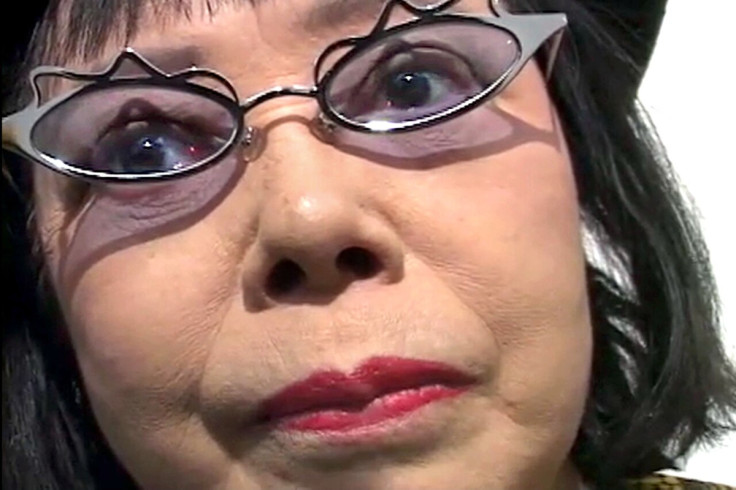
Yayoi Kusama, the Japanese avant-garde artist whose polka dots, pumpkins and Infinity Mirror Rooms made her one of the most recognisable artists of the modern era, has died aged 97.
Kusama died in a Tokyo hospital on 14 August 2026, according to the Yayoi Kusama Museum, which said she continued painting until her final days. No official cause of death was given.
Her career stretched from post-war Japan to New York's experimental art scene, where her work combined abstraction, performance, sexuality, anti-war activism and her own experiences of hallucinations.
Yayoi Kusama Turned Childhood Hallucinations Into Art
Born on 22 March 1929 in Matsumoto, Japan, Kusama grew up in a troubled family environment and began experiencing vivid hallucinations as a child. She described seeing flashing lights, flowers and fields of dots that appeared to multiply and cover her surroundings.
Rather than hiding those experiences, she turned them into the foundation of her art.
Yayoi Kusama RIP
— La femme merveilleuse invisible (@larwoolf) August 27, 2026
22 March 1929 – 14 August 2026
She has said that every dot she paints is an expression of love - for the viewer, for the world, for life itself.
"I want to send love to the entire world from my heart." pic.twitter.com/xZTzt2LyYa
'I still see hallucinations even now,' she said in 2017. 'Dots come flying everywhere.'
In a 2014 interview with Vogue Japan, Kusama said drawing and making art had helped prevent her from ending her life.
Her early training was in traditional Japanese painting, but she became increasingly dissatisfied with its conventions. After corresponding with American artist Georgia O'Keeffe, Kusama moved to the US in the late 1950s and eventually settled in New York.
How Yayoi Kusama Made Polka Dots Her Signature
In New York, Kusama began producing her Infinity Net paintings, filling huge canvases with thousands of repeated marks. The repetitive patterns became an important part of her artistic language.
Polka dots later became even more closely associated with her work. Kusama used them across paintings, sculptures, clothing and rooms, describing repetition and the covering of surfaces as a form of 'obliteration' of the self.
Her mirrored Infinity Mirror Rooms took the idea further, surrounding visitors with reflections and repeating points of light to create the impression of an endless universe.
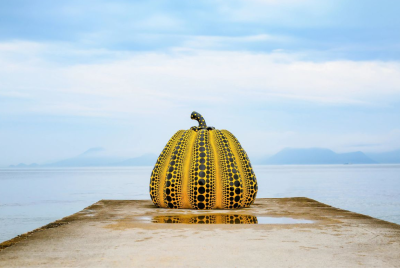
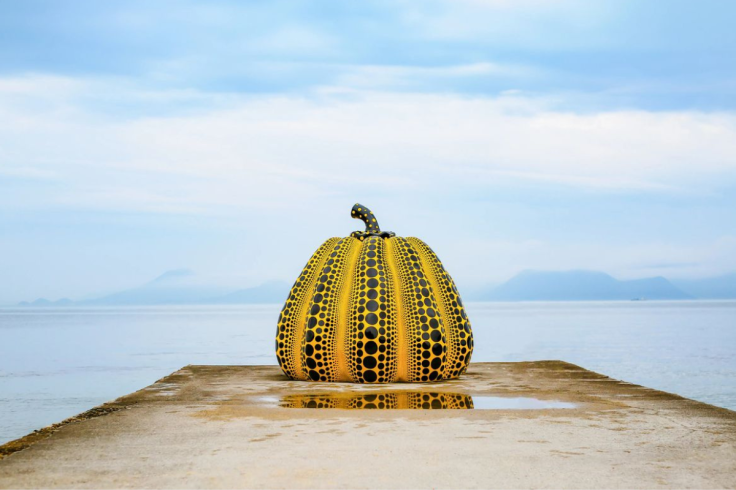
Her pumpkin sculptures also became some of her most recognisable works. As her international reputation grew, Kusama's paintings and installations attracted major museum audiences and increasingly high auction prices. Untitled (Nets), painted in 1959, sold for $10.5 million (£7.7 million) in 2022.
Yayoi Kusama's Nude Protests Challenged Vietnam War
Kusama was also a provocative performance artist and activist during her years in New York.
During the 1960s, she organised public 'Happenings' in which performers appeared nude or semi-nude with their bodies covered in colourful polka dots. Events took place at locations including parks and the Brooklyn Bridge.
The performances challenged conventional attitudes towards sexuality and the body while also protesting the Vietnam War. Her work incorporated anti-war messages, civil rights and gay rights activism, placing her among the experimental artists reshaping New York's art scene.
Her activities attracted considerable publicity, and she was sometimes compared with contemporaries, including Andy Warhol.
Why Did Yayoi Kusama Write to Richard Nixon?
In 1968, Kusama sent an extraordinary open letter to Richard Nixon, then a presidential candidate.
Using her characteristic language of sex, polka dots and cosmic unity, she urged Nixon to help end the Vietnam War. She proposed that they 'become one with the Absolute' and offered sexual intimacy as part of her provocative appeal for peace.
Kusama argued that the Earth was only 'one little polka dot among millions' and that violence could not eliminate violence.
Nixon did not respond.
Yayoi Kusama Returned to Japan and Kept Painting
Kusama returned to Japan in 1973 and voluntarily entered a psychiatric hospital in Tokyo in 1977. She continued working from a nearby studio and maintained a relentless artistic output.
International recognition arrived on a much larger scale later in her life, with major retrospectives and hugely popular installations turning her into a global cultural figure. Her red wig, polka-dot clothing and immersive installations became instantly recognisable, but her legacy extends beyond the imagery.
Kusama transformed personal psychological experiences into an influential artistic language of repetition, infinity and self-obliteration, leaving behind one of the most distinctive bodies of work in modern art.
© Copyright IBTimes 2026. All rights reserved.
- Recommended For You