

Why Did Rob Reiner's Son, Nick, Struggle with Homelessness Despite Actor's $200M Net Worth?

In the wake of the shocking deaths of filmmaker Rob Reiner and his wife Michele on 14 December, scrutiny has shifted to their son Nick Reiner, who is currently being questioned by police as part of an ongoing homicide investigation.
As authorities work to establish what happened inside the family's Brentwood home, renewed public attention has also fallen on Nick's deeply troubled past, one marked not by Hollywood privilege but by years of addiction, estrangement, and periods of homelessness that sharply contrast with his father's immense wealth and influence.
The question many have asked in recent days is a stark one: how does the son of a Hollywood figure worth an estimated $200 million end up living on the streets?
Addiction, Not Money, at the Root
Nick Reiner has spoken openly in the past about a long and severe battle with addiction that began in his mid-teens. According to interviews he gave before the current investigation, substance abuse took hold when he was around 15 years old, leading to a cycle of rehabilitation, relapse, and prolonged instability.
Despite his family's resources, Nick said he repeatedly refused long-term inpatient rehabilitation programmes, choosing instead to live without financial support when those options were tied to conditions he did not want to accept.
In an interview with People in 2016, Nick explained that his homelessness was not the result of being cut off financially, but a conscious decision rooted in his struggle for autonomy. 'If I wanted to do it my way and not go to the programmes they were suggesting, then I had to be homeless,' he said at the time. He has gone through over a dozen rehab programmes, many of which were out of Los Angeles to Maine, New Jersey, and Texas.

Life on the Streets and Repeated Rehab Attempts
Nick's addiction led him to live for extended periods without stable housing, sleeping on the streets and moving between states. He has said he entered more than a dozen rehabilitation programmes, including facilities in Maine, New Jersey and Texas, yet struggled to maintain long-term sobriety.
Those experiences later informed the semi-autobiographical film Being Charlie (2015), which Nick co-wrote. While not a direct retelling of his life, the film drew heavily on his encounters with addiction treatment centres and life on the margins.
'It's not my life,' Nick said of the film, 'but I went to a lot of these places, so I had a lot of these stories.' His father, Rob Reiner, has come forward to discuss his son's challenges.
In one of the open interviews, Reiner replied that he was never angry. 'I felt bad for him, and I didn't know what to do to help,' Rob said of his son. 'And a lot of times parents don't know what to do,' he added.
A Father's Public Helplessness
Rob Reiner has also spoken candidly about the pain of watching his son struggle. In past interviews, the director said his wealth and influence offered little protection against addiction.
'I was never angry,' Reiner said when asked about Nick's homelessness. 'I felt bad for him, and I didn't know what to do to help. A lot of times parents don't know what to do.'
Those comments underline a reality addiction specialists often stress: financial means do not guarantee recovery, particularly when treatment is resisted.
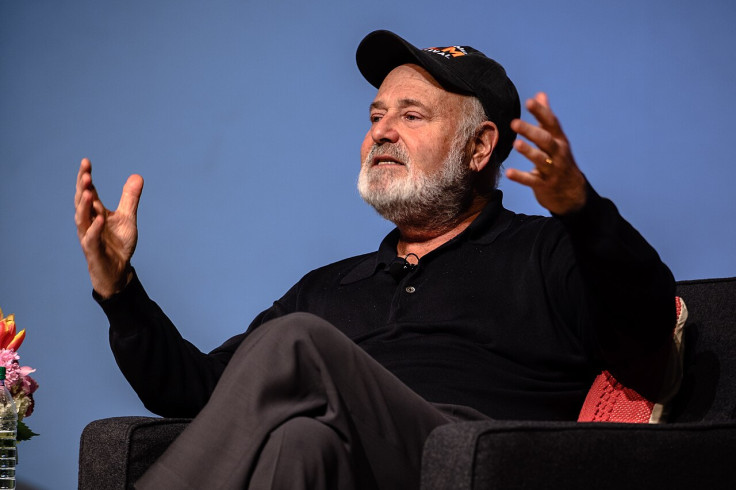
Was money ever an issue? Wealth and Hollywood legacy by Rob Reiner
Netizens can't help but wonder why someone of Nick's stature would end up living on the streets, going broke, and becoming homeless.
Was money an issue with the Reiners? Rob's net worth is estimated at approximately $200M as an actor, director, and producer over the decades.
His career took off when he starred as 'Meathead' on the sitcom 'All in the Family,' and bagged two Emmy Awards.
His movie career spanned cult classics like 'This Is Spinal Tap' (1984), 'Stand by Me' (1986), 'The Princess Bride' (1987), 'When Harry Met Sally' (1989), 'Misery' (1990), and 'A Few Good Men' (1992). These movies received critical success.
Co-ownership of the production company (Castle Rock Entertainment) for Seinfeld and The Shawshank Redemption further enhanced Reiner's financial success.
Real Estate Investments and Wealth Accumulation
Other than entertainment, Reiner spent a lot on real estate. His real estate in Los Angeles, particularly in Brentwood, Malibu, and Beverly Hills, has increased.
To illustrate, his Beverly Hills house in 1988 was valued at $777,500, and had sold at approximately $2M. His Brentwood home in the early 1990s was estimated at $4.75M and is now worth more than $10M. His Malibu oceanfront house, purchased in 1994, is now estimated to be worth between $15M and $20M and typically generates $100K to $150K in monthly rental income.
Reiner has built a career in Hollywood through influential films and television.
But tragedy has also crossed his life. Reiner was first married to Penny Marshall between 1971 and 1981, when she died of diabetic complications.
Wealth Could Not Shield the Family From Tragedy
Rob Reiner's career spans decades of success, from All in the Family to films such as The Princess Bride, When Harry Met Sally, Misery, and A Few Good Men, as well as lucrative investments in production and real estate. Yet his son's experiences stand as a reminder that addiction often exists beyond money, status, or opportunity.
As the investigation into the deaths of Rob and Michele Reiner continues, authorities have stressed that no charges have been filed and the case remains ongoing. For now, Nick Reiner's past is being revisited not as an explanation for present events, but as a stark illustration of how even extraordinary privilege can fail to protect against personal collapse.
© Copyright IBTimes 2026. All rights reserved.