

Interstellar Object 3I/ATLAS: NASA Data Reveals The Truth About Its Friday Fly-By
Discover what to expect from this rare interstellar fly-by as it makes its closest approach to Earth this Friday
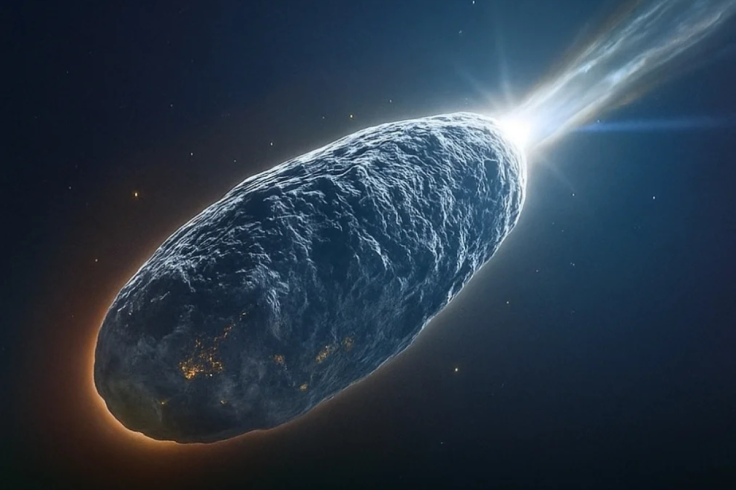
Named 3I/ATLAS, it is only the third such object ever confirmed to have entered our celestial neighbourhood, following in the footsteps of the cigar-shaped 1I 'Oumuamua in 2017 and the comet 2I Borisov in 2019.
Unlike the millions of comets that call our sun home, this frozen wanderer formed around a completely different star, potentially millions of light-years away, before being cast out into the void. The comet was discovered by the Chile-based telescope, which is one of several units in the NASA-funded network designed to provide early warnings for Earth-bound asteroids.
The Social Media Frenzy Surrounding 3I/ATLAS
The fact that this event is so rare has shocked both professional astronomers and the darker parts of the internet. As the comet took over social media in late 2025, some people who call themselves 'scientists' even said that the object is an alien spaceship.
A galactic scout sounds like a great headline, but the truth is more down-to-earth, though still amazing. 3I/ATLAS is not an alien vessel; it is a massive, dark chunk of dusty rock and 'filthy' ice, a relic of a distant planetary system passing through ours at incredible speeds.
Since the autumn, observers in the Northern Hemisphere have been tracking the comet as it moves through the constellation of Virgo. To the naked eye, it remains invisible, and even through modest amateur telescopes, it appears as little more than a fuzzy, out-of-focus star — resembling a tiny, misplaced galaxy drifting across the morning sky.
Powerful long-exposure photography has revealed a more dramatic side, showing a wispy, contorted tail being pushed back by the solar wind, but for most of the last few weeks, its steady, unchanging appearance has kept it largely out of the mainstream headlines. Astronomers have noted that its appearance has remained remarkably consistent, making it difficult for amateur equipment to capture anything more than a smudge of light.

Close Encounter: What to Expect From 3I/ATLAS on Dec. 19
That quiet period is about to end. On Friday, Dec. 19, 2025, EST, 3I/ATLAS will reach its closest approach to Earth, an event that is expected to trigger a fresh wave of public interest and perhaps a fair amount of confusion. Many on social media may expect the comet to 'whoosh' past us like a high-speed train, but the scale of space is deceptively large.
At its closest point, the comet will be approximately 1.8 astronomical units (AU) away from our planet. To put that into perspective, 1 AU is the average distance between the Earth and the sun. According to NASA data, this distance translates to roughly 270 million km or 170 million miles — putting the object well beyond the orbit of Mars . This means 3I/ATLAS will still be nearly twice as far away as the sun.
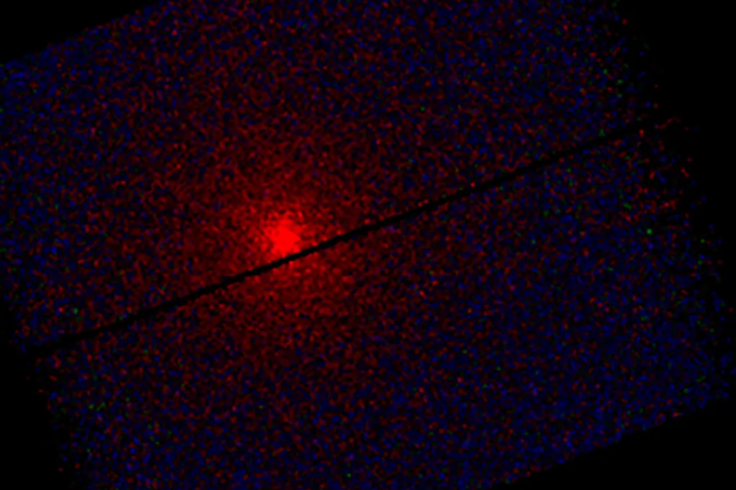
Despite the inevitable demands for high-resolution, 'face-to-face' photos of the rock, NASA and other space agencies simply do not have the technology to take crisp portraits of an asphalt-dark object only a few miles wide at such a distance. While the images captured this Friday will be scientifically invaluable, they will likely look similar to the grainy, smudged points of light we have already seen.
Nevertheless, this is a bittersweet moment for astronomers. As the comet makes its turn and heads back into the dark, interstellar vacuum, it will never return, leaving us with just a few more days to study this visitor from another world.
© Copyright IBTimes 2026. All rights reserved.