

3I/ATLAS Update: Harvard Astronomer Claims Comet's Anti-Tail Could Be Alien Spacecraft
The mysterious interstellar visitor with a sun-facing 'anti-tail' makes its closest approach to Earth
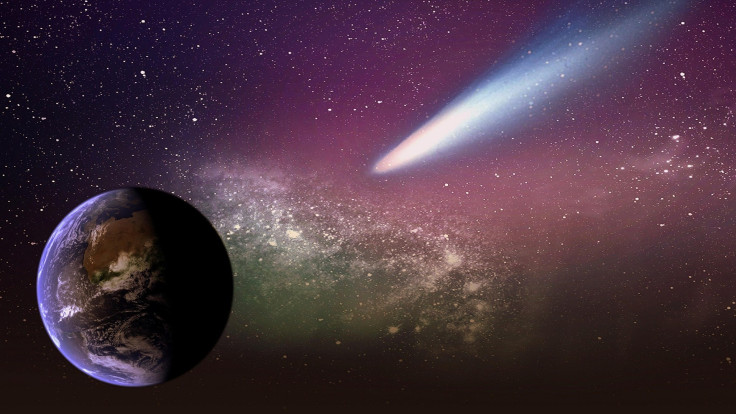
In the vast, silent theatre of the cosmos, a rare visitor is preparing for its final bow before departing our solar system forever. The interstellar object known as 3I/ATLAS — the third confirmed traveller from another star system — is currently hurtling towards its closest approach to Earth, scheduled for 06:02 UT on Friday, Dec. 19.
While the distance of 167 million miles (approximately 1.8 astronomical units) may sound vast, in the context of the sprawling universe, it is a remarkably intimate encounter. This flyby offers a fleeting, high-stakes window for astronomers to train their most sophisticated instruments on an object that has spent eons drifting through the light-years between the stars at a blistering speed of 130,000 miles per hour. Yet, as the visitor draws near, it is not merely the object's alien origin that has the scientific community talking, but a bizarre, sunward-facing protrusion that seems to defy the very laws of physics.
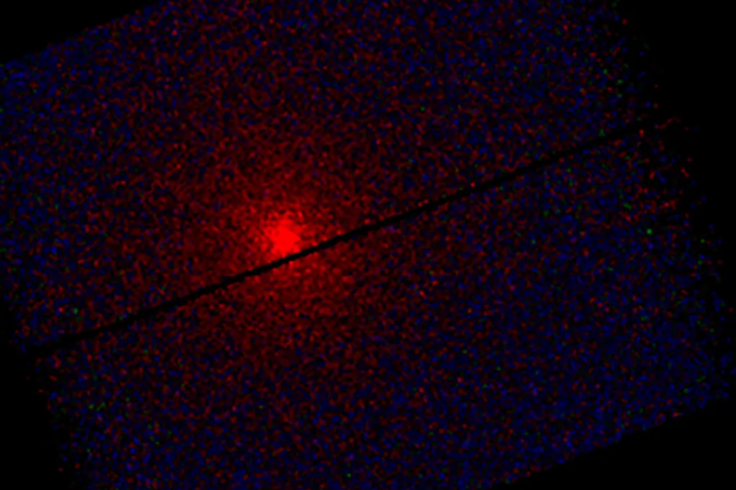
The Mystery of the 3I/ATLAS 'Anti-Tail'
Since NASA's Hubble Space Telescope first turned its keen eye toward 3I/ATLAS on July 21, observers have been puzzled by a 'strange protrusion' jutting from its icy nucleus. Most comets are famous for their trailing tails of gas and dust, pushed away from the sun by the relentless pressure of solar radiation. However, 3I/ATLAS appears to be sporting a second tail that points stubbornly in the opposite direction — straight at the sun.
This 'anti-tail' has remained a constant feature of the object's anatomy. Even as recently as Dec. 13, a sharp image captured by the Teerasak Thaluang telescope in Thailand confirmed the feature is still prominent and extends for hundreds of thousands of miles. For Harvard University's Professor Avi Loeb, this is no trick of perspective.
He argues that the feature is a 'real physical jet', and its persistent presence raises uncomfortable questions about what, exactly, we are looking at — noting that the feature has now reached its '14th anomaly' due to its rare 8-degree alignment with the sun.
Loeb, never one to shy away from provocative theories, has suggested that if the object is not a natural comet, we might be witnessing a 'swarm of objects' lagging behind an artificial craft or even a 'mothership' designed to release small probes. His theory hinges on the object's 'non-gravitational acceleration' — a slight increase in speed that isn't caused by the sun's pull.
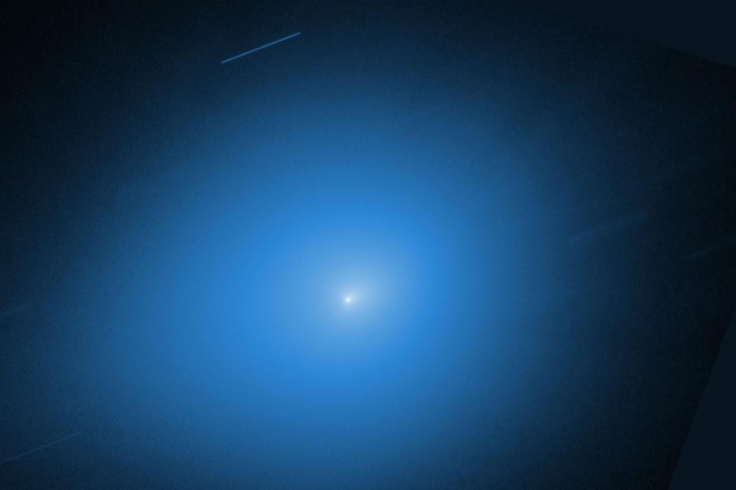
Natural Phenomenon or Interstellar Intruder?
Despite the excitement surrounding the more exotic theories, many in the astronomical establishment remain firmly grounded. Professor David Jewitt of UCLA, a renowned expert on comets, suggests that the reality is likely far more prosaic, if no less fascinating.
He points out that as 3I/ATLAS approaches the sun, its 'day side' becomes intensely hot, causing it to eject dust particles sunward. Furthermore, astronomer Jason Wright has dismissed the alien claims, explaining that the 'wobble' and straightness of the jet are consistent with large dust grains being shed from a rotating icy body.
'All these things are consistent with a comet nucleus of typical size or smaller, sublimating in sunlight and blowing out dust particles,' Jewitt told Sky and Telescope. 'Nothing really shocking there'.
This view is shared by experts at the European Space Agency (ESA), who believe the secondary tail is simply a collection of larger solid particles — too heavy to be immediately swept away by the solar wind and likely caused by simple outgassing.
Regardless of its true nature, the value of 3I/ATLAS lies in its status as a time capsule from another world. Measuring between 1,400 feet and 3.5 miles wide, it is significantly larger and more active than the first interstellar visitor, 'Oumuamua, which famously zipped through our neighbourhood in 2017.
As the object reaches its perigee on Friday, it will be passing through the constellation Leo near the star Regulus, providing a final, crucial opportunity for data collection. While it remains too faint to be seen with the naked eye (currently sitting at magnitude 11), requiring a telescope with at least an eight-inch aperture, its impact on our understanding of the galaxy will be immense.
Whether 3I/ATLAS is a wandering relic of a distant solar system or something more mysterious, it serves as a stark reminder of how much of our own cosmic backyard remains a mystery. As Loeb aptly concludes: 'By recognizing anomalies, we can learn something new. By ignoring them, we remain ignorant'.
As 3I/ATLAS hurtles towards its closest approach to Earth, the debate over its origin highlights our enduring fascination with the unknown. Whether it is a peculiar natural phenomenon or a sign of something more advanced, this interstellar visitor has already expanded the boundaries of modern astronomy.
© Copyright IBTimes 2026. All rights reserved.