

Karoline Leavitt Trashed After Vanity Fair Shoot Shows 'Botched' Lip Injections
Close-up images from a Vanity Fair profile of Donald Trump's press secretary have gone viral and provoked online speculation about possible lip fillers.
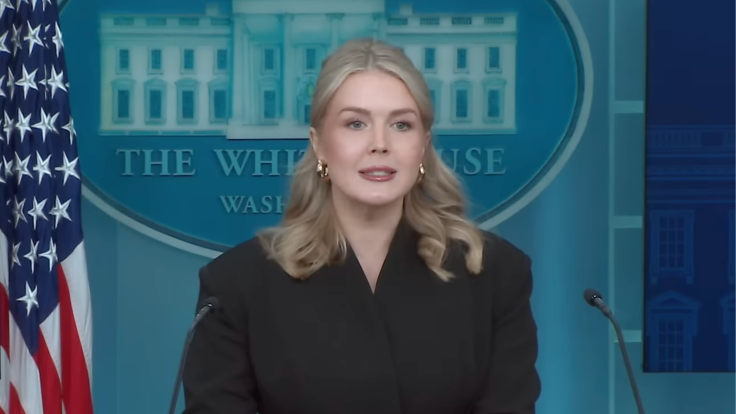
White House Press Secretary Karoline Leavitt is at the centre of an unexpected cultural storm after an extreme close-up portrait from a Vanity Fair feature drew widespread online speculation about alleged cosmetic enhancements.
The release of an unfiltered image by photographer Christopher Anderson, captured as part of a larger profile of President Donald Trump's inner circle, has eclipsed the piece's political content and sparked intense commentary on social media.
The photo, shared on Vanity Fair's official Instagram account and in the print feature, shows Leavitt's face with striking clarity.
Commenters quickly honed in on tiny red marks along the edge of her lips, interpreting them as possible signs of recent lip injections, a claim that Leavitt and her office have not confirmed.
Context of the Vanity Fair Profile and Photo Release
The contested photograph appeared alongside a two-part Vanity Fair profile by journalist Chris Whipple, who spent much of the past year conducting extensive interviews with White House Chief of Staff Susie Wiles about the first year of Trump's second administration.

In the broader article, Wiles offers candid insight into internal disagreements and leadership dynamics, including remarks about Trump's personality and administrative tensions. These revelations have already stirred controversy within political circles.
Photographer Christopher Anderson has defended his choice of image style. He told The Independent that very close-up portraiture is a recurring element of his work and that capturing 'theatre of politics' in detail was an intentional aesthetic decision.
Yet the portrait's visual impact has overshadowed much of the substantive reportage. Online users quickly labelled the image 'diabolical' and suggested it deliberately emphasised perceived imperfections. Some social media reactions even accused Vanity Fair of intentionally choosing an unflattering frame to mock Leavitt.
Online Reaction, Speculation and Expert Commentary
Much of the reaction to the image has come from platforms like Reddit, X, and Instagram. Users used phrases such as 'lip filler injection sites' and 'fresh injection marks,' fuelling rumours of cosmetic procedures. Others questioned the lighting and makeup choices, with some suggesting the image lacked professional retouching.
she's 28 years old with the face of a 58 year old. proof that lying and hatred will age you horrifically.
— cappy •ᴗ•ᵍᵐ🎩 (@leanpockets) December 16, 2025
Analysts in entertainment and beauty journalism have weighed in, offering speculative commentary rather than factual verification. Sam Escobar, senior editor of a lifestyle site, noted that strong gloss and lighting can accentuate features and marks, potentially making unremarkable skin textures appear more dramatic.
You'd think this 28-year-old's face looks ravaged, but then you watch her speak and realize that her heart is a million times worse. 🙅🏽♂️
— Eric Okafor (@KneWKeeD) December 16, 2025
Multiple commentators described how, if they had occurred, recent procedures typically produce swelling or bruising for weeks afterwards, which might be mistaken for injection sites in a high-resolution photograph.
Notably, public speculation grew in part due to the so-called 'Mar-a-Lago face' conversation, a term used online to describe a specific aesthetic observed among some high-profile Republican figures. This narrative, however, remains rooted in anecdote and commentary rather than documentary evidence.
Political Backlash and Leavitt's Response
The controversy over the photograph comes amid broader political pushback against the Vanity Fair profile.
Leavitt has publicly criticised the magazine, accusing the journalist of misrepresenting the context of the Chief of Staff's remarks.
She labelled the coverage as 'disingenuous,' asserting that essential context was omitted.
Leavitt's defence also extended to Wiles, whom she described emphatically as an 'incredible' leader whose contributions should be recognised rather than mischaracterised.
The political defence of the image and reportage has not been universal. Other members of the Trump administration, including Secretary of State Marco Rubio, claimed in separate statements that Vanity Fair intentionally sought to depict senior officials in a negative light, extending the debate to questions of media bias and editorial intent.
What began as a political profile has, through the virality of imagery and the amplifying effect of social platforms, shifted into an entirely different conversation.
© Copyright IBTimes 2026. All rights reserved.