

3I/ATLAS Update: Harvard Physicist Puzzled by Alien Comet's Striking Color Change — It Glows Green
Interstellar object 3I/ATLAS is glowing green, and Avi Loeb suggests it may not be a comet
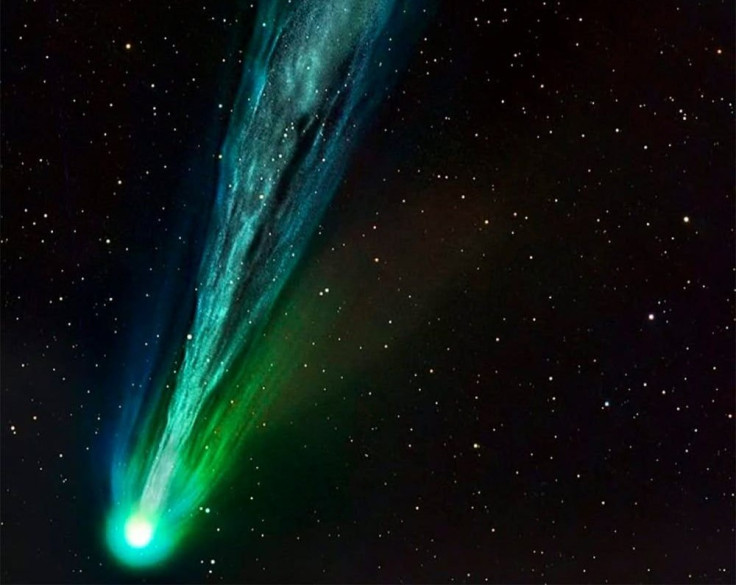
The universe just sent us a problem. It's a fast-moving, utterly bizarre object from outside our solar system, and it has baffled researchers by dramatically changing its colour as it hurtles towards its closest approach to Earth. While the idea that extra-terrestrial life exists remains purely speculative, the unusual behaviour of this cosmic visitor — known officially as 3I/ATLAS — has reignited that enduring debate, causing intense friction between mainstream astronomers and more controversial thinkers.
This comet, which some breathless commentators have already labelled a 'potentially hostile alien threat' — a description that wildly outpaces any confirmed danger — is currently the subject of intense, global scrutiny. It is only the third known interstellar body discovered passing through our solar system, according to NASA, making its every movement a rare scientific treasure. Yet, its journey has provided more questions than answers, particularly for one of science's most compelling and divisive figures.
The man closely tracking the object is theoretical physicist Avi Loeb. Loeb, known for his work at Harvard University, has staked his career on the possibility of alien technology visiting our corner of the galaxy. He has previously argued that some of 3I/ATLAS's characteristics are unusual enough to raise serious questions about whether its nature is purely organic and natural. As the object screams closer to its highly anticipated close approach to Earth on Dec. 19, fresh, perplexing observations have only added fuel to his controversial fire.
The Bizarre Colour Shift: Why 3I/ATLAS Has Theoretical Physicists Scratching Their Heads
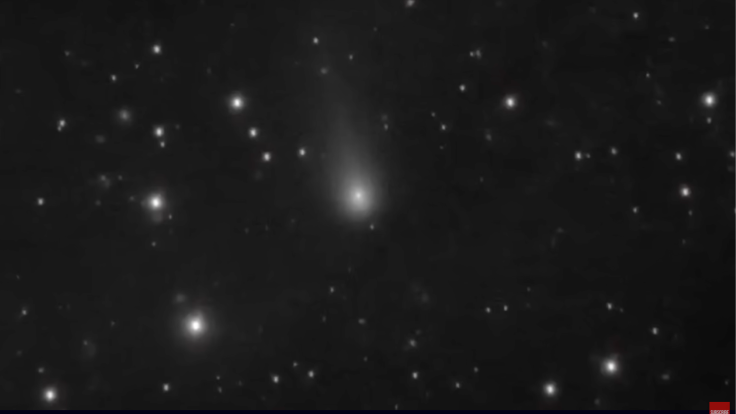
The most recent puzzle concerns the object's actual appearance. Loeb recently highlighted what he described as a striking change in 3I/ATLAS's visible appearance after it passed perihelion — the point in its orbit closest to the sun. This celestial visitor underwent a remarkable, sudden transformation.
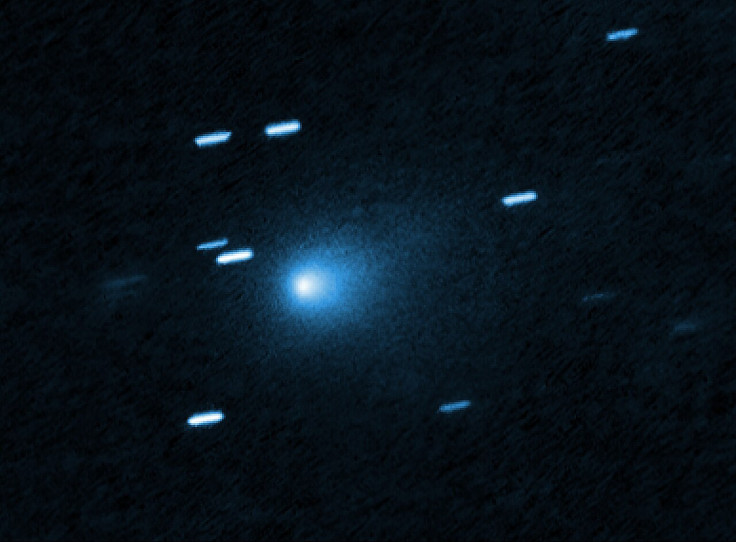
Earlier observations painted one picture entirely. Loeb recalled that a pre-perihelion image, posted on Sept. 4, 2025, from the twin 8.1-metre telescope Gemini South in Chile, 'displayed a red colour of the glow around 3I/ATLAS'. Red is often associated with the dusty, rocky materials in a typical comet's tail or coma.
However, the post-perihelion imagery told a completely different story. Writing about the newer data on Medium, Loeb explained the complex observation: 'The post-perihelion image combines exposures through four filters, blue, green, orange, and red, and its peak brightness is centered on the nucleus 3I/ATLAS'. Crucially, the halo surrounding the object seemed to have switched from a dusty red to an eerie, vibrant emerald.
Loeb concluded: 'The colour of the glowing halo appears green, possibly as a result of diatomic carbon (C2) molecules which emit green light'. Addressing the fundamental shift in chemical signature, he offered a direct explanation for the change: 'The change in colours from red to green means that the molecular composition of the plume of gas shed by 3I/ATLAS had changed near the Sun'. Essentially, the heat of the sun stripped away the surface layer, exposing different, gas-releasing materials beneath.
Is 3I/ATLAS the 'Hostile Alien Threat' or Merely a Natural Phenomenon?
Beyond the dramatic cosmetic transformation, Loeb also highlighted a glowing halo surrounding the object — a 'plume of gas' — that he had not previously observed. He suggested this plume may be linked to a burst of gamma rays.
According to Loeb, this burst was first detected around the time 3I/ATLAS was initially discovered and was later followed by a supernova event. He then offered an astonishing, yet precisely calculated, probability about the coincidence: 'A seven-hour gamma-ray burst should therefore coincide to within 17 degrees of the arrival direction of 3I/ATLAS once per 670 years'.
For many, this confluence of extraordinary change, proximity to the sun and rare gamma-ray association feeds directly into the more exotic interpretations. However, the wider scientific community remains overwhelmingly sceptical of non-natural origins. Most researchers maintain that entirely natural explanations are far more likely. While the specifics of 3I/ATLAS's composition and its subsequent colour change are highly unusual, they do not confirm the presence of alien technology or life.
The consensus is that comets are naturally volatile — they are, after all, giant, cosmic snowballs. As the object approached the intense heat of the sun, the volatile elements on its surface sublimated, or turned directly from solid to gas. The difference in the specific materials being vented, from rocky dust (red) to carbon molecules (green), is a function of the comet's unique, layer-by-layer composition being exposed to perihelion. It is a stunning display of deep-space chemistry at work.
As the world's telescopes point towards Dec. 19, when the object makes its final, closest pass to our planet, the debate will only intensify. For now, the third-known interstellar visitor remains a spectacular, if frustratingly enigmatic, subject, leaving us to wonder just how many more secrets it holds.
As the mysterious interstellar visitor continues its journey, the global astronomical community is preparing for the final, crucial window of observation. Whether 3I/ATLAS is eventually confirmed as a uniquely strange, ice-rich comet from another star system or, as controversial figures like Avi Loeb suggest, a relic of alien engineering, its passage offers a once-in-a-lifetime chance to study pristine extrasolar material.
© Copyright IBTimes 2026. All rights reserved.