

Father-Son Bondi Attack Shooters Were Licensed Owners of 6 Firearms Despite Strict Gun Laws
Bondi killers legally owned 6 licensed guns despite 'strict' Australian laws.
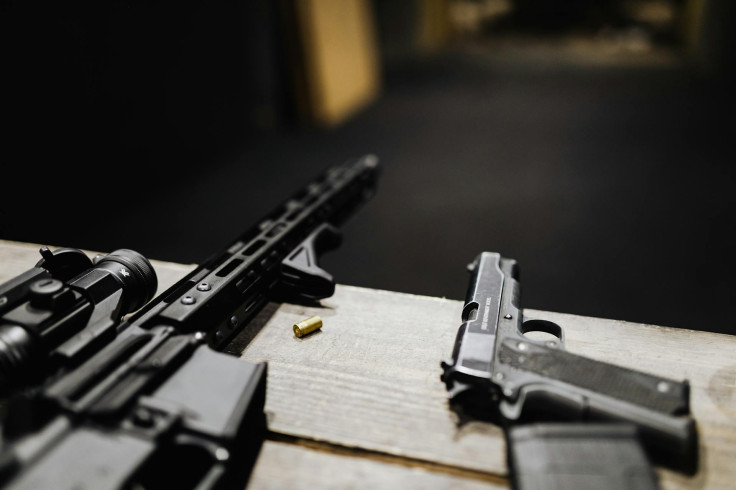
The Bondi Beach attack is reportedly the deadliest mass shooting in the country, and the suspects were a father and son duo. However, the issue has shifted from the horror of the event to a glaring question about Australia's gun control because the culprits reportedly used licensed firearms.
The disclosure has exposed a critical vulnerability in what has long been considered the 'gold standard' of global gun safety, prompting questions as to how individuals with extremist ideologies were able to pass the stringent vetting process.
Bondi Shooting Suspects Used Legally Licensed Six Firearms
A disturbing incident unfolded at Bondi Beach during a Hanukkah celebration on Sunday, 14 December, when two gunmen, a father and son, opened fire, killing at least 15 individuals and wounding dozens more. The authorities declared the shooting incident an act of terrorism.
The most shocking element, however, was that the weapons used during the incidents were fully licensed. Law enforcement officials confirmed that the attackers, Naveed Akram, 25, and his 50-year-old father, Sajid, were the licensed owners of at least six guns.
Sajid, who died during the exchange of gunfire, was reportedly a long-term gun enthusiast and had held his licence for years. He allegedly used his weapons for recreational shooting. His son was also fully licensed to carry firearms. The authorities are now investigating to determine how the pair were able to maintain their licenses despite their ideological extremism.
Australia's 'Gold Standard' Gun Control Under Scrutiny
The foundation of Australia's gun control regime is the National Firearms Agreement (NFA), a landmark reform enacted by Prime Minister John Howard following the Port Arthur massacre in 1996.
The NFA banned semi-automatic rifles and shotguns, instituted a mandatory gun buyback, and established a national firearm registry. Crucially, it also established the 'genuine reason' test for gun ownership, a stark contrast to the self-defence rationale common in other jurisdictions.
To acquire a firearm, one must obtain a license, which requires a 'genuine reason' for use. This could be for sport shooting, hunting, or primary production. The applicant has to complete mandatory safety training, provide 100 points of identification, and pass extensive background checks for criminal and mental health history.
A separate Permit to Acquire (PTA) is needed for every firearm purchase. Also, a 28-day waiting period is mandatory for first-time buyers.
The Bondi attack suggests that, despite these layers of bureaucracy, the system failed to flag the radicalisation of two licensed owners.
Implications of the Bondi Shooting
The Bondi attack could potentially accelerate the implementation of Australia's National Firearms Register (NFR). The planned centralised system aims to link all existing state and territory firearms registries for nationwide tracing and secure nationwide sharing of information. The NFR will also make the processes for administering and verifying firearms more efficient.
On 6 December 2023, the National Cabinet agreed to implement a register to improve the 1996 Port Arthur response. The programme commenced on 1 July 2024, but the implementation was slow due to the complex task of harmonising disparate systems and some reluctance from other states and territories to share their databases. However, the NFR is expected to be operational by mid-2028.
Critics believe that the sluggish progress of NFR has left a significant disparity in national security. However, once NFR is fully functional, the authorities can easily track suspicious acquisition that's easily missed in the current process.
© Copyright IBTimes 2026. All rights reserved.