Who Is Noam Shazeer? The AI Genius Whose Defection From Google to OpenAI Just Reset the Industry
Google paid $2.7 billion to bring Shazeer back in 2024 and less than two years later he's out

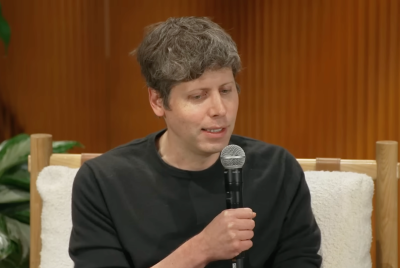
Noam Shazeer, the engineer who co-wrote the seminal 2017 paper that made ChatGPT, Gemini, and Claude possible, has quit Google to join OpenAI. His departure comes less than two years into his return, after the search giant spent roughly $2.7 billion (£2 billion) on a technology licensing deal to bring him back.
Shazeer announced the move in a post on X on Wednesday, calling it a 'difficult decision to move on' before adding that he was excited to work with the team at the ChatGPT maker. The step comes just months before OpenAI's planned listing, which Goldman Sachs and Morgan Stanley are advising on at a reported valuation of up to $1 trillion (£751 billion).
The Billion-Dollar Round Trip
Shazeer first joined Google in 2000 and stayed for 21 years before walking away in 2021, frustrated that the company declined to release a conversational AI system he had built called Meena. He went on to co-found Character.AI, a chatbot startup that drew more than 20 million monthly users at its peak.
Google brought him back in August 2024 through a $2.7 billion licensing deal for Character.AI's technology. Shazeer personally owned an estimated 30-40% of the startup, netting between $750 million (£563 million) and $1 billion (£751 million) from the arrangement, according to public reporting on the transaction. His quick departure to OpenAI makes the deal one of the most expensive talent bets in tech history to fall short.
I’m excited to share that I’ll be joining OpenAI and look forward to working with the exceptional team there.
— Noam Shazeer (@NoamShazeer) June 18, 2026
It was a difficult decision to move on. I’m incredibly proud of the amazing team at Google and everything we’ve built together. It has been an honor and a pleasure to…
The Paper That Powered the AI Era
Anyone typing into ChatGPT, asking Gemini to summarise an essay, or using Microsoft Copilot at work is, technically, talking to Shazeer's invention. He co-authored 'Attention Is All You Need', the 2017 research paper that introduced the transformer architecture now underpinning every major large language model on the market.
That single document is why the AI assistants on phones, laptops, and customer service lines exist in their current form. Shazeer was elected to the National Academy of Engineering in early 2026 for the contribution, and Google installed him as co-lead of its flagship Gemini project after his 2024 return, where he was widely credited with helping the model close the gap on ChatGPT.
Why Google Will Feel This One
A Google spokesperson told Reuters the company is 'grateful for Noam's meaningful contributions to Google over the years'. The exit is a clear blow to Alphabet in the global contest to build the most advanced AI systems.
The timing makes the loss sharper. OpenAI filed a confidential S-1 with the US Securities and Exchange Commission in June 2026 and is targeting a listing as early as September at an estimated valuation between $852 billion (£640 billion) and $1 trillion. Anthropic filed its paperwork in June at a reported $965 billion (£725 billion). Both companies are now competing for the same shrinking pool of senior researchers, which means recruitment costs are climbing across the sector.
What This Means for AI Users
For everyday subscribers, the talent war translates into pricing pressure. OpenAI is projected to post a $14 billion (£11 billion) operating loss in 2026 and needs roughly $207 billion (£155 billion) in fresh capital through 2030 to honour its compute commitments. That maths leaves little room for cheaper subscription tiers.
Analysts expect the pattern to drive consolidation, fewer independent assistants, and steady price rises across ChatGPT, Gemini, Copilot, and Claude over the next year. Shazeer built the foundation under those tools nearly a decade ago. His next chapter is being written just in time for early OpenAI hires to convert their stock options into massive liquidity and wealth.
© Copyright IBTimes 2026. All rights reserved.
- Recommended For You