

$137M AI Ad Deluge Hits US Midterms as Fake 'Death to America' and 'Celebrate 9/11' Scenes Target Candidates
Republican-aligned groups led AI ad spending, while just 27% carried AI disclaimers
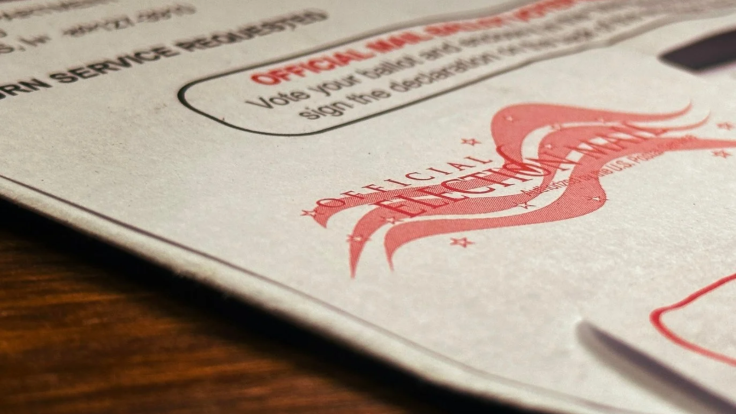
Campaigns and outside groups have spent more than £103 million ($137 million) on political adverts generated or assisted by artificial intelligence in the US midterms, according to the Wesleyan Media Project.
The figure dwarfs the less than £38,000 ($50,000) in AI advert spending the group identified for the whole 2024 cycle. Fabricated scenes include a Michigan Senate candidate pictured with cards reading 'Death to America' and 'Celebrate 9/11'.
Most of the adverts carry no AI disclaimer, and no generally applicable federal law requires political adverts to disclose AI use specifically.
Spending Soars Past 2024 Levels
The Wesleyan Media Project, which tracks election advertising, identified 220 political adverts nationwide made at least partly with AI, costing more than £103 million ($137 million), AFP reported on Monday, 26 October 2026. The tally covers adverts up to 11 October, Fortune reported.
The group said the total was almost certainly an undercount. Its co-director, Erika Franklin Fowler, said AI 'is making its way into the 2026 midterms in a big way' and called the trend 'problematic'.
Republicans dominate the spending. The project found that 81 per cent of the AI adverts were sponsored by Republicans or Republican-aligned groups, 12 per cent by Democrats and the rest by independents. Republican sponsors also accounted for 88 per cent of the spending, according to Fortune. Only 27 per cent of the adverts carried an AI disclaimer.
Cost is one driver. Fred Davis, a campaign ad maker, told The New York Times that a scene which once cost about £1.5 million ($2 million) to film can now be generated for about £150,000 ($200,000), according to a GeekWire column by AI researcher Oren Etzioni.
Fabricated Scenes Target Democrats
AFP described one hyper-realistic AI-generated video depicting a US Senate candidate laughing at cards reading 'Death to America' and 'Celebrate 9/11'.
The cards appear in an advert attacking Abdul El-Sayed, a Democratic Senate candidate in Michigan, Raw Story reported. AFP said the advert depicts El-Sayed playing a board game with two people wearing keffiyehs, alongside a family photo of four women in full-length veils, which AFP said was fabricated. Its tagline reads: 'His family values are wrong for Michigan.'
The advert was paid for by Front Line Action, a political action committee that AFP described as aligned with Republican Senator Ted Cruz, which has spent more than £69,000 ($92,000) opposing El-Sayed, according to a Federal Election Commission filing cited by AFP. The advert carries an AI disclaimer. Front Line Action said the advert was 'grounded' in El-Sayed's public statements, Raw Story reported.
In Georgia, the Senate Leadership Fund ran an AI-generated advert depicting Democratic Senator Jon Ossoff receiving beauty treatments at a salon, claiming he was covering up his 'ugly record'. The advert carried no AI disclosure, and Ossoff demanded its removal. He told C-SPAN that such deepfakes were 'deeply troubling' and a 'slippery slope'.
In Texas, a video from the National Republican Senatorial Committee shows Democratic Senate candidate James Talarico reading his old tweets and voicing comments he never made, Etzioni wrote. Talarico's own adverts now end with the line 'Made by humans, not A.I.'
Other targets include Oklahoma governor candidate Mike Mazzei, depicted cheek to cheek with Hillary Clinton beside the words 'Clinton Lover. Trump Hater' in a Make Oklahoma Great Again PAC advert that Etzioni said carried no AI label. A North Star Dawn PAC advert pictured Minnesota Senate candidate Peggy Flanagan in front of a pile of cash.
Voters Struggle To Spot Fakes
Research suggests many viewers cannot tell the difference. Hany Farid, a digital forensics expert at the University of California, Berkeley, said most people would not immediately realise the Talarico video was fake, as its 'AI GENERATED' tag is small and faint, according to Etzioni.
A June study by Utah Valley University's Center for National Security Studies found that only 16 per cent of more than 600 participants could tell a real video from an imitation, KUER reported. Etzioni wrote that participants who described themselves as experts did no better.
In a Scripps News poll conducted by Talker Research among 1,000 registered voters, 43 per cent said they had seen something in a political advert this campaign that they thought was real before learning it was AI-generated. The poll found that 77 per cent of Democrats and 79 per cent of Republicans want rules on the use of AI in politics.
A survey by the AAPC Foundation, linked to the political consultants' trade body, found that 73 per cent of respondents considered AI-generated images or video in campaign adverts unacceptable, AFP reported. Some 95 per cent said it was unacceptable to create a video of an opponent saying something they never said.
Regulation remains patchy. At least 31 states have laws on election deepfakes, Etzioni wrote, ranging from outright restrictions on certain uses to disclosure requirements. According to his account of Wesleyan's data, 29 per cent of AI adverts were labelled in states with such laws, against 32 per cent in states without them.
A federal disclaimer bill, H.R. 9922, has been introduced in the House but not passed, and the consultants' trade group wants a single national standard to replace the state patchwork. Etzioni, who founded the deepfake detection nonprofit TrueMedia.org, proposed that any paid political advert depicting a person who had not agreed to it should carry a plain on-screen and audio label or not air at all.
The London-based Institute for Strategic Dialogue said this was the first US election in which AI is built into every major social media platform, according to AFP.
© Copyright IBTimes 2026. All rights reserved.