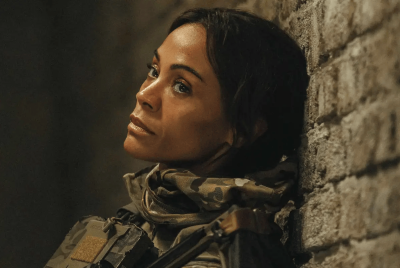
America's Next Top Model Cycle 18 Winner Claims Show Became More Extreme Due To Falling Ratings
Cycle 18 winner says producers deliberately 'wound you up mentally.'

She stood on top of a 338-metre tower in a rainstorm, the wind picking up, the camera still rolling. Production already knew about her fear of heights. They put her up there anyway. Sophie Sumner laughs when she recalls it now, but the laugh has an edge to it.
Sumner, 35, is the only international contestant ever to win America's Next Top Model. She took the Cycle 18 title in 2012 as part of the show's 'British Invasion' format, pitting seven American hopefuls against seven British all-stars from Britain's Next Top Model. She had been a runner-up on the British version at 18, lost, and came back three years later to beat the Americans on their own turf. By any measure, a good story. What she has to say about how the show actually worked is a different kind of story altogether.
A video clip of Sumner's interview circulating on Reddit has reignited conversation around the show's behind-the-scenes culture, drawing thousands of comments from viewers who say her account confirms what they long suspected. The thread has been widely shared across social media in recent days, arriving just as Netflix's three-part docuseries Reality Check: Inside America's Next Top Model drops the curtain on what production looked like from the inside.
In a BBC Newsbeat interview, Sumner is candid in a way the show never allowed her to be. The American edition, she says, made Britain's Next Top Model look like a 'fluffy little competition' by comparison. The producers, she tells the BBC, would deliberately try to 'wind you up mentally.' Duty of care? When asked about it directly, she laughs.
What drove the escalation is, to Sumner, not mysterious. 'Getting ratings and making money probably became the overall goal,' she says. She does not entirely write off Tyra Banks. She believes the host wanted 'deep down' to champion diversity and push the industry somewhere better. 'But she didn't know how to do it,' Sumner tells the BBC. 'I'm sure that Tyra says that she got swept up in a machine and she had to get the ratings and she had so much pressure.' It is a generous reading, perhaps. Though Sumner stops well short of calling it an excuse.
What the America's Next Top Model Documentary Finally Confronts
Reality Check: Inside America's Next Top Model dropped on Netflix on 16 February, directed by Mor Loushy and Daniel Sivan. All three episodes arrived at once. Neither Banks nor executive producer Ken Mok had any say over the final editorial direction, the directors confirmed. The show ran 24 cycles across 15 years, broadcast in 170 countries, and somehow feels simultaneously larger and smaller than memory suggests.
The docuseries draws in Banks herself, alongside judges Nigel Barker and Jay Manuel, and beloved runway coach J. Alexander. Former contestants from across the cycles speak too, some of them finally articulating things that have clearly sat unprocessed for years. The most disturbing account belongs to Shandi Sullivan, who competed in Cycle 2. Sullivan, now 43, reveals on camera that she was assaulted during a production-arranged gathering in Milan while blacked out from alcohol.
The cameras kept filming. What followed was edited and broadcast as a cheating scandal, framed around a tearful phone call to her boyfriend back home. When the docuseries asks Banks about it directly, she says it is 'difficult' to speak about production because 'that's not my territory,' CNN reported. Mok has maintained, in the docuseries, that the show operated like a documentary.
Barker, who was let go from the show in 2012 along with Manuel and Alexander, told CNN the judges were largely kept away from contestants during filming. What production was orchestrating backstage was not, for the most part, communicated to them. 'Unfortunately, this is the issue with a lot of these types of shows,' he said. 'The idea behind them is that they look for these really outlandish moments to happen. And when they do, they just allow them to run their course.'
The Human Cost Behind America's Next Top Model's Most Infamous Moments
Manuel, who stumbled into the creative director role almost accidentally on the show's first season, gave a lengthy interview to Interview Magazine laying out what the years of pressure looked like from the inside. He is particularly direct about the race-swapping shoot, in which contestants were made up to appear as different ethnicities. 'I remember calling my mom and saying, I don't want to do this shoot. How can we put someone in blackface,' he said. He asked to be excused. Production said no.
The docuseries reserves its quietest devastation for the third episode, when viewers learn that J. Alexander suffered a stroke on 27 December 2022 and spent five weeks in a coma. He has not yet fully regained the ability to walk. Manuel and Barker both visited him in hospital. Banks, according to Alexander, had not yet visited as of filming, though he noted she had texted to say she wanted to, Rolling Stone reported. It is, in many ways, the most telling detail in a documentary full of them.
Sumner now works as a presenter and producer in New York. She is grateful for the platform, she says, and the US access the win provided. What she refuses to grant the show is moral credit. On real industry change, she is clear: it was the #MeToo movement that shifted fashion, not anything that happened on the America's Next Top Model judging panel. 'Could she have been the person to make the change? Of course,' Sumner told the BBC, referring to Banks. 'But other people then did that instead.'
Banks has teased the possibility of a Cycle 25. Whether anyone should want that is, at this point, a harder question to answer than it might once have been.
© Copyright IBTimes 2026. All rights reserved.
- MOST POPULAR IN Entertainment