How Did Michael Jackson Die? Real Cause of Death and Why His Doctor Was Convicted
Retracing Michael Jackson's final hours, the coroner's homicide ruling and the manslaughter conviction of his personal doctor, Conrad Murray.


Michael Jackson died in Los Angeles on 25 June 2009, aged 50, after being given a powerful hospital-grade anaesthetic at home by his personal doctor, Conrad Murray, according to findings later presented in court and by the Los Angeles County coroner, which ruled the singer's death a homicide.
The news came after Jackson had been deep into preparations for his This Is It comeback concerts in London, a 50-date run that was meant to restore his career and reputation. The singer's life in the years leading up to 2009 had been dominated by financial strain, health complaints and continuing scrutiny over his private conduct. By the time he moved into a rented mansion in Holmby Hills, an upscale Los Angeles neighbourhood, he was rehearsing most nights and, by several accounts, sleeping very little.
Insomnia, Powerful Sedatives and a Desperate Routine
Jackson's battle with insomnia had stretched back decades, but witnesses told investigators it had worsened sharply in the months before he died. In an effort to get even a few hours' rest, he relied on an escalating cocktail of prescription sedatives.
Conrad Murray, a cardiologist hired in 2009 as Jackson's personal physician for the London shows, admitted during police interviews that he had been giving the singer drugs including lorazepam and midazolam in the bedroom of the Holmby Hills house. These are benzodiazepines, used in hospitals and clinics to calm patients or induce sleep. They are not the sort of drugs typically administered casually.
According to Murray's own account, even that regimen stopped working. In the early hours of 25 June, after a full rehearsal in Los Angeles the previous evening, Jackson returned home just after midnight, still wired and unable to drift off. Murray told detectives the star repeatedly asked him for propofol, a white liquid anaesthetic better known in operating theatres than in private homes.
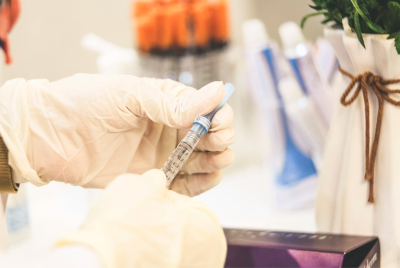
Propofol is normally delivered with close monitoring of a patient's breathing, heart rate and oxygen levels. Murray acknowledged that he eventually agreed to Jackson's demands and administered it in the bedroom. Jackson lost consciousness. Murray said he left the room for a short time to go to the bathroom. When he returned, Jackson was unresponsive with what Murray described as a weak pulse.
At that point, the chaos began. Emergency services were eventually called to the property, and paramedics tried to revive Jackson with CPR during the journey to Ronald Reagan UCLA Medical Center. Efforts to resuscitate him failed. He was pronounced dead there at 2:26 p.m. local time.
Two months later, on 27 August 2009, the Los Angeles County coroner publicly confirmed what many had already suspected from the patchwork of leaks and police statements. Jackson's death, it said, was caused by 'acute propofol intoxication with benzodiazepine effect' and was classified as a homicide. In other words, the combination of drugs in his system and the way they had been administered were judged to have caused his death.
Why Michael Jackson's Doctor Was Convicted Over His Death
The Michael Jackson death investigation moved quickly once the coroner's findings were released. On 8 February 2010, prosecutors charged Conrad Murray with involuntary manslaughter, accusing him of criminal negligence in his care of the singer. He pleaded not guilty, and the case went to trial in 2011.
Jurors were asked to decide whether Murray's actions fell so far below acceptable medical standards that they became criminal. The prosecution argued that they did. In court, experts criticised the use of propofol in a private bedroom without proper monitoring equipment or backup staff and questioned the wisdom of treating chronic insomnia with a drug designed for use during surgical procedures.
The defence team countered that Jackson had been desperate for sleep, that he bore responsibility for pressuring Murray and that the full chain of events in the bedroom was known only to the two men, one of whom could not testify. Murray maintained that he had not intended harm and that he had been trying, however clumsily, to help his patient rest before an exhausting run of shows.
The jury was not persuaded. In November 2011, Murray was convicted of involuntary manslaughter. He was sentenced to four years in prison, the maximum term allowed. Under California rules at the time, he served roughly half of that sentence and was released in October 2013.
Even after his release, the shadow of the Michael Jackson death case followed him. A decade later, in 2023, Murray surfaced again with the launch of his own medical institute, a move that prompted fresh debate over whether a doctor found criminally responsible in such a high-profile death should be practising medicine at all.
The basic facts of Jackson's final day are, at this point, well established by court records and official documents. The emotional question of how a global superstar ended up relying on surgical anaesthetic to sleep, in a mansion filled with staff yet fatally alone, is harder to parse and, for now at least, sits beyond the reach of any coroner's form.
© Copyright IBTimes 2026. All rights reserved.
- Recommended For You