

Serial Rapist Andrew Luster's Release Sparks Outrage as California Corrections Department Says It Was Not Early
California corrections officials say the convicted serial rapist completed his legally adjusted sentence, while Glendora officials demand details of his parole supervision
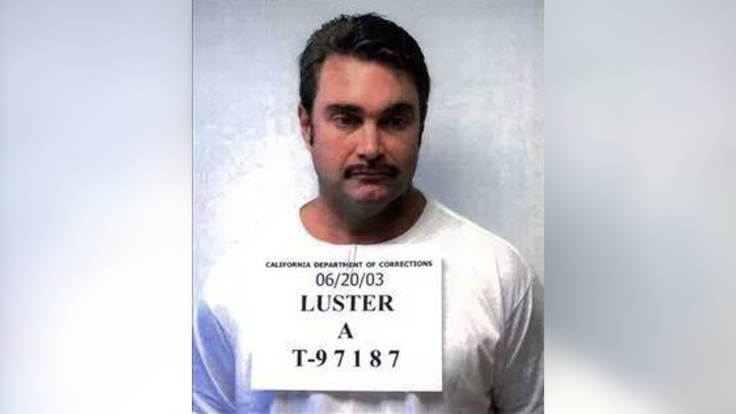
Convicted serial rapist Andrew Luster's release from prison on 11 October 2026 has provoked anger in Glendora, California. Mayor David Fredendall said the 62-year-old, once sentenced to 124 years, was reportedly living in the city.
Luster was freed after approximately two decades in prison, following a reduction of his sentence to 50 years. California corrections officials insist he completed his sentence under state law.
'This is not an early release,' the California Department of Corrections and Rehabilitation (CDCR) said.
The dispute follows a lengthy legal battle over Luster's punishment and whether he should leave custody before his sentence was deemed complete. A great-grandson of cosmetics founder Max Factor, Luster was convicted in 2003 on 86 felony counts arising from the drugging and sexual assault of three women at his Ventura County home.
His release has renewed questions about California's sentencing rules and the protection of victims.
Andrew Luster's Release Provokes Anger in Glendora
'The City of Glendora is beyond disappointed. We are outraged,' Mayor David Fredendall said in a statement on Friday. He said Luster was reportedly residing in Glendora and demanded further information about the conditions of his supervision.
The mayor challenged the outcome rather than the existence of the sentencing rules. He asked how someone originally given 124 years for serious sexual offences could leave a secure facility after serving roughly 20 years.
The original sentence, however, was no longer the sentence Luster was serving when he was released.
Fredendall pointed to Proposition 57, a measure approved by California voters in 2016, as part of the system he believes enabled the release. He argued that the legal distinction between early parole and completion of a credit‑adjusted sentence did not address the community's safety concerns.
His criticism does not establish that the corrections department breached the law or that Proposition 57 alone determined Luster's release.
Why California Says Andrew Luster's Release Was Not Early
CDCR said Luster entered parole supervision on 11 October 'after serving his full sentence as required by law'.
It explained that people serving fixed‑term sentences can reduce time spent in prison through eligible worktime and good‑conduct credits. Luster also received 977 days of pre‑sentence credit, the department said.
Those pre‑sentence credits are separate from opportunities to earn further credits while incarcerated. CDCR's public explanation did not provide a complete breakdown of every adjustment to his sentence. Its position is that the sentence was complete under the applicable rules, not that a parole panel had just granted discretionary early release.
Luster's original 124‑year sentence was set aside because the sentencing judge had not adequately explained the decision to impose fully consecutive terms. He was resentenced to 50 years in 2013.
Ventura County prosecutors had projected in October 2024 that his sentence would end on 31 October 2026, although he was released on 11 October.
The case attracted national attention when Luster fled to Mexico during his trial. A jury convicted him in his absence in 2003, and bounty hunter Duane 'Dog' Chapman apprehended him in Puerto Vallarta that June.
Investigators had uncovered recordings documenting sexual assaults against two women. The criminal case involved three victims.
Andrew Luster's Victims Opposed Earlier Parole Attempts
The distinction between early parole and the October release is important because Luster had previously sought release through the parole process.
In August 2024, a panel approved early parole, but the decision was overturned after prosecutors and the three victims opposed it. A further hearing was scheduled for April 2025.
Ahead of that hearing, Ventura County Senior Deputy District Attorney Anthony Wold, who prosecuted Luster's original case, strongly opposed his release. 'We continue to maintain he should serve his full sentence. He's earned it,' he said in an April 2025 statement. The women who survived Luster's crimes have repeatedly objected to his release.
One survivor, speaking anonymously to KCLU after the October decision, said, 'The fact that he is out almost diminishes the severity of what he did to us.' Her account underscored the personal consequences of a decision officials describe in terms of sentence calculations.
State Assemblywoman Blanca E. Rubio said she was 'deeply disturbed' by the release. Fredendall said Glendora police would work with state parole authorities to ensure that supervision requirements were followed. He also asked state officials to disclose the conditions of Luster's parole and the measures intended to protect local residents.
The corrections department's explanation has not ended the dispute over Luster's release. State officials maintain that he completed his sentence under California law, while Glendora's mayor continues to seek answers about the conditions now governing his parole.
© Copyright IBTimes 2026. All rights reserved.